
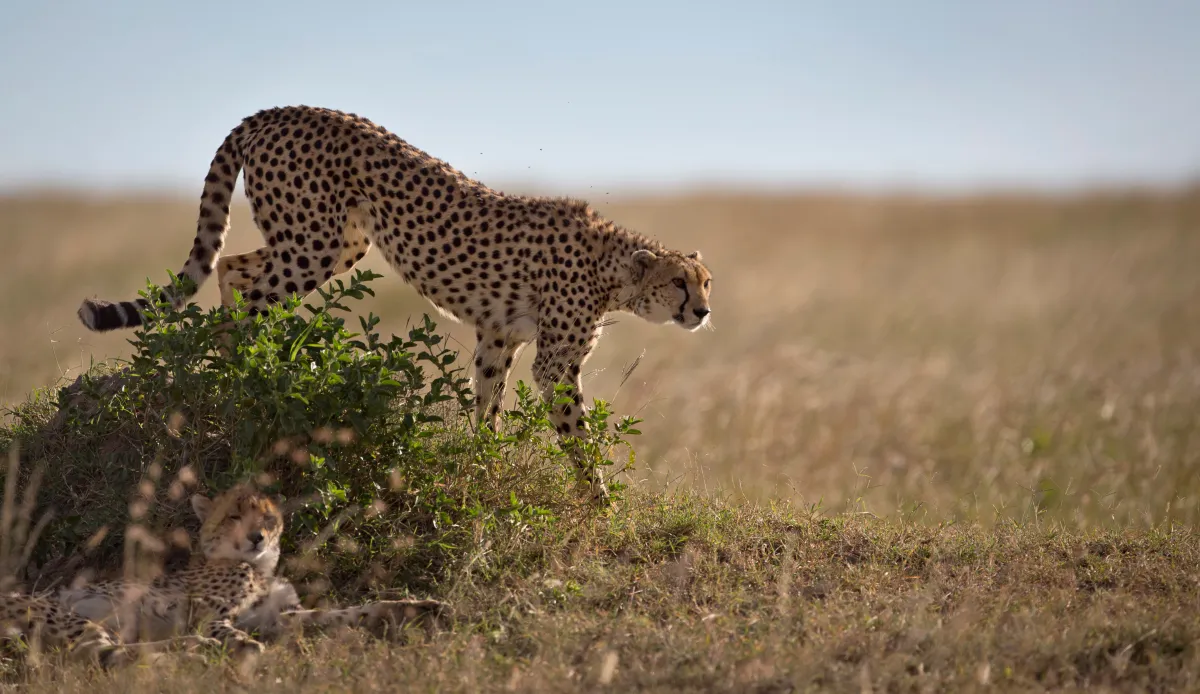
Four cheetah cubs were found dead inside Kuno National Park in Madhya Pradesh. The cubs belonged to female cheetah KGP12 and were born on April 11 this year. Forest officials reportedly said the cubs were under continuous monitoring and appeared healthy till Monday evening.
However, during routine patrolling on Tuesday morning, the monitoring team found all four cubs dead near the den.
Signs of possible predator attack
According to officials, the bodies of the cubs were found partially eaten, raising suspicion of an attack by a wild predator animal. After the incident, forest teams increased surveillance across the area and launched a detailed investigation.
Officials said the exact cause of death will only be confirmed after the post-mortem report is completed. The entire area around the den has been sealed for examination, while samples have also been collected from the site.
Mother Cheetah safe, under observation
Forest officials confirmed that female cheetah KGP12 is safe and healthy. Teams are continuously monitoring her movement following the incident. Authorities said the cheetah is currently showing normal behaviour, but security around the habitat has been tightened to prevent similar incidents in the future.
Fresh concern over Cheetah project
The deaths have once again brought attention to the challenges facing India’s cheetah rehabilitation project. Wildlife experts say protecting newborn cubs remains one of the toughest tasks in the conservation programme. Threats such as attacks by wild animals, harsh weather conditions, territorial conflicts and health-related issues continue to affect survival rates.
According to forest department data, Kuno National Park currently has 50 cheetahs, including 33 born in India. Another three cheetahs are housed at Gandhi Sagar Wildlife Sanctuary. Following the deaths of the four cubs, the total number of cheetahs in the country has now dropped to 53.
Kuno National Park was selected as the main site for bringing African cheetahs back to India after decades. The project is considered one of the country’s most ambitious wildlife conservation efforts and is being closely monitored by both the central and state governments.
