
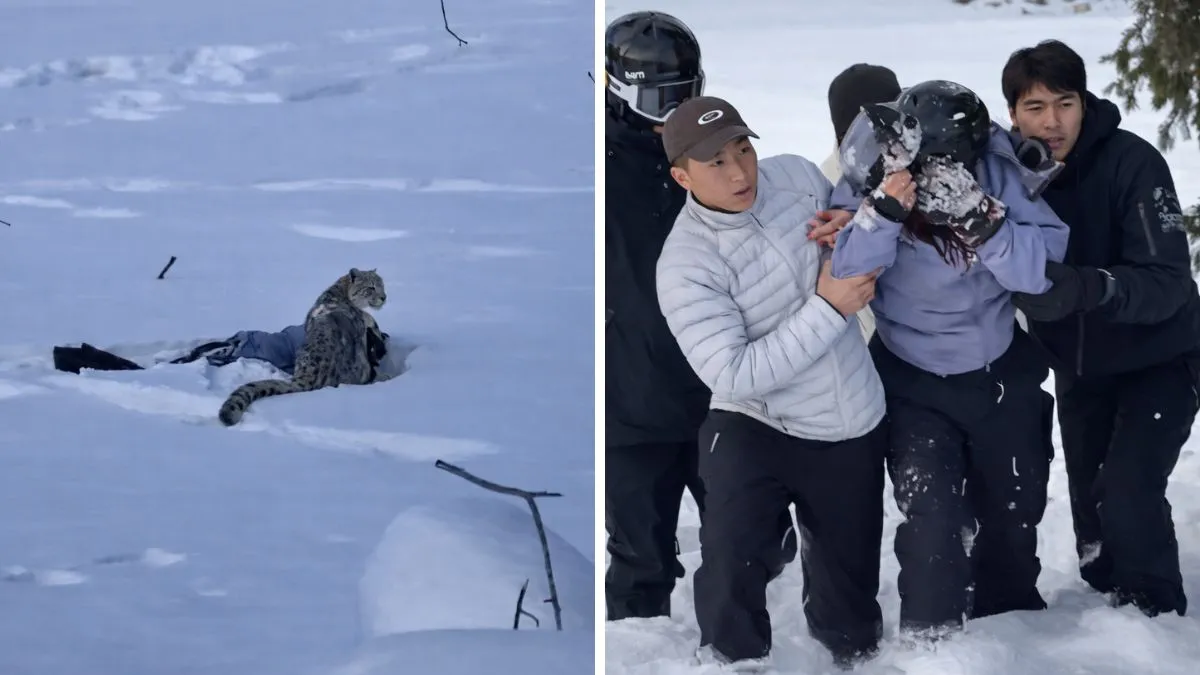
A rare wildlife attack has put the spotlight back on the risks of tourism in animal habitats. A female skier has been mauled by a snow leopard in China after attempting to take a selfie, according to reports by Chinese media and CNN. The incident took place at the Keketuohai Scenic Area in Altay prefecture, a popular winter tourism destination known for its snow-covered landscapes.
Footage circulating on Chinese social media shows the snow leopard moving across a snowfield before approaching a person lying on the ground. CNN reported that the skier was bitten while she was on her way back to her hotel. In the video, bystanders are seen helping the injured woman to safety as she clutches her face, which is partly covered by a ski helmet. She was later taken to hospital and is reported to be in a stable condition. The incident is especially striking given that China is home to the largest population of wild snow leopards in the world.
The episode has reopened conversations around how tourists behave in wildlife-heavy destinations. From misplaced confidence to underestimating animals and terrain, incidents like this reveal the gaps in awareness many travellers carry into remote natural spaces.
5 things tourists are rarely told before visiting high-risk wildlife habitats
1. Wild animals don’t behave predictably, even if they seem calm
In wildlife zones, stillness does not mean safety. In this case, the snow leopard was not displaying obvious signs of aggression before the attack. Wild predators do not communicate intent in ways humans easily recognise. What looks like distance or neutrality can shift without warning if an animal feels threatened or approached.
2. Predators can sprint faster than you can react
Snow leopards are built for extreme terrain. Even in snow and rugged conditions, they can move with sudden speed. As highlighted in the ABC News report, once the animal charged, there was virtually no time for the tourist to respond. Human reaction times simply do not match those of predators adapted to hunt in such environments.
3. Phones put you closer to danger
The incident also points to a modern risk. Mobile phones lack strong optical zoom, which often pushes people to step closer for a clearer shot. That small movement can unintentionally cross a safety boundary. In wildlife habitats, proximity itself can be enough to trigger a defensive or predatory response.
4. Local warning norms matter more than people realise
Remote wildlife regions depend heavily on local knowledge. Safety advice from guides, signs and residents is shaped by years of experience. Ignoring that guidance raises risk sharply. The ABC News report reinforces how established norms exist precisely to prevent close-contact incidents like this one.
5. Rescue times are long in remote regions
High-altitude and isolated areas do not allow for rapid emergency response. When something goes wrong, help takes time. Terrain, weather and distance slow rescue efforts, as seen in this case. In such settings, even brief misjudgements can escalate before assistance arrives.
ALSO READ: The most visited tourist site in India
Wildlife tourism offers rare experiences, but it demands restraint. In places this remote, caution is not optional. It is what keeps curiosity from turning fatal.
