
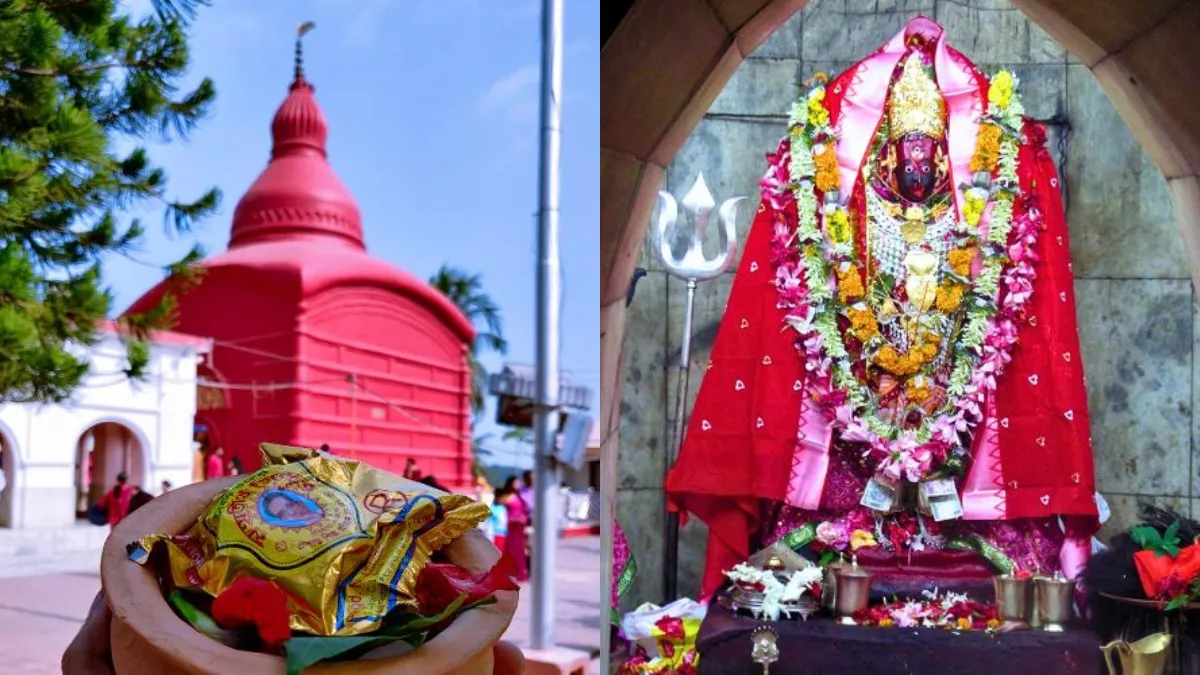
Prime Minister Narendra Modi on Monday (September 22) officially opened the renovated Mata Tripura Sundari Temple complex in Tripura's Udaipur. He also visited the temple located in the Gomati district of the state and offered prayers there. The Mata Tripura Sundari Temple is one of the ancient 51 Shakti Peethas. It is also referred to as Matabari or Tripureswari Temple by the locals. According to legend, during Lord Shiva's Tandav, a piece of Goddess Sati's right foot fell at the temple. Maa Tripura Sundari, also known as Sodashi or Lalita, is revered as the most beautiful goddess in all three worlds in the Sri Vidya religion.
In the year 1501 CE, Maharaja Dhanya Manikya built the temple. The king, who governed Tripura in the last years of the 15th century, is said to have received a vision one night in a dream when Devi Tripureswari told him to start worshipping her on the hilltop close to Udaipur, the kingdom's modern capital. The Maharaja later positioned the idol of Tripura Sundari in the shrine after experiencing recurring, similar dreams.
Unique spiritual legacy
This historic temple embodies a unique spiritual legacy that bridges the Vaishnava and Shakta sects of Hinduism, symbolising unity in diversity. Lord Vishnu is being worshipped here in the form of a 'Shalgram Shila' or a black geode. Such an instance of Vishnu being worshipped along with Shakti Devi in a Kali temple or any Shaktipitha is not only rare but also a unique feature of this temple. It is a divine destination of the unison of Shiv and Shakti, also nowhere to be found in the world.
Sri Yantra stone
Here, Goddess Shakti is worshipped as Maa Tripurasundarī, and the accompanying Bhairava is called Tripuresh. The temple consists of a square-shaped sanctum designed in the model of the typical Bengali Ek-Ratna Style, set upon a small hillock that resembles the hump of a tortoise (Kurma), which gives it the name of Kurma Pīṭha. There is a Sri Yantra stone engraved beneath the idol's feet. This Sri Yantra is no ordinary design but a mystical geometric mandala believed to embody the entire cosmos and the divine union of masculine and feminine energies. It is said that merely seeing or worshipping this Sri Yantra is equivalent to performing numerous auspicious rituals, bestowing spiritual and material blessings on devotees.
Black stone idols of the goddess
There are two similar but differently sized black stone idols of the goddess in the sanctum sanctorum of the temple. The larger and more prominent idol of 5 feet height is of Goddess Tripura Sundari, and the smaller one, adorably called Chhoto-Ma (literally, Little Mother), is 2 feet tall and is an idol of Goddess Chandi. The smaller idol was said to have been carried by the kings of Tripura to the battlefield as well as to hunting expeditions. According to the folk tales, it is said that the present idol of the deity was actually found submerged in the water of "Brahmachhara" near Matabari.
Geographical Indication (GI) tag
Local traditions hold the red hibiscus flower in high reverence as an offering to the goddess, and common prasadam includes peda sweets. Recently, the Matabari Peda, which is offered as prasad in the temple, was accorded the prestigious Geographical Indication (GI) tag.
Every year, lakhs of devotees from across the country assemble here for Diwali Mela. The two-day Diwali Mela is an official event. Diwali Mela at Matabari, with participation from across the country, is not just a fair but also a depiction of the multicultural fabric of Tripura.
Development Works of Matabari Temple Complex:
A major project was taken up under the PRASAD Scheme to renovate and beautify the temple premises. This project includes modifications in the temple premises, marble flooring and new pathways, renovated entrances and fencing, proper drainage, and a new three-storeyed complex consisting of Peda stalls, a meditation hall, guest accommodations, office rooms, drinking water kiosks, etc.
This redevelopment isn’t just about one temple—it's about branding Udaipur as a religious-tourism hub. The Tripura government envisions the Tripura Sundari Temple to be a centrepiece of spiritual tourism that also fuels hotels, transport, handicraft sales, and local food businesses. It is anticipated to bring lakhs of extra visitors per year, consequently boosting the district economy. Every year, more than 12-15 lakh people visit the temple and offer their puja from all across the country and neighbouring Bangladesh.
The project bridges the infrastructural gaps in the interest of the pilgrims as well as visiting tourists. The tortoise is worshipped as a holy animal in the Mata Tripura Sundari Temple. The entire design of the temple was done to give the shape of a tortoise viewed from above and to attract national and international pilgrims/tourists.
"Development of Mata Tripura Sundari Temple Complex" project
The Ministry of Tourism, Government of India, sanctioned the "Development of Mata Tripura Sundari Temple Complex" project under the PRASAD Scheme in 2021. Later on, some modifications were introduced in the project. The cost of the project is Rs 54.04 crore, which has been funded by the PRASAD Scheme of the Central Government (Rs 34.43 crore) and the State Scheme (Rs 17.61 crore).
The project components include shops for locals, a food court, toilet blocks, a new terrace floor, a residential area for priests, volunteers, and managers, waiting rooms for pilgrims, sitting corners, a Matabari gallery, etc. The mezzanine floor has a VIP lounge and a meditation hall for the pilgrims.
At present, the daily arrival of pilgrims/tourists at Matabari is around 3,000-3,500. It is expected that once the project is completed, the daily arrivals may double to around 5,000-7,000 persons. This project will give direct and indirect employment to the local communities, hotels, guides, taxi owners and other stakeholders.
