
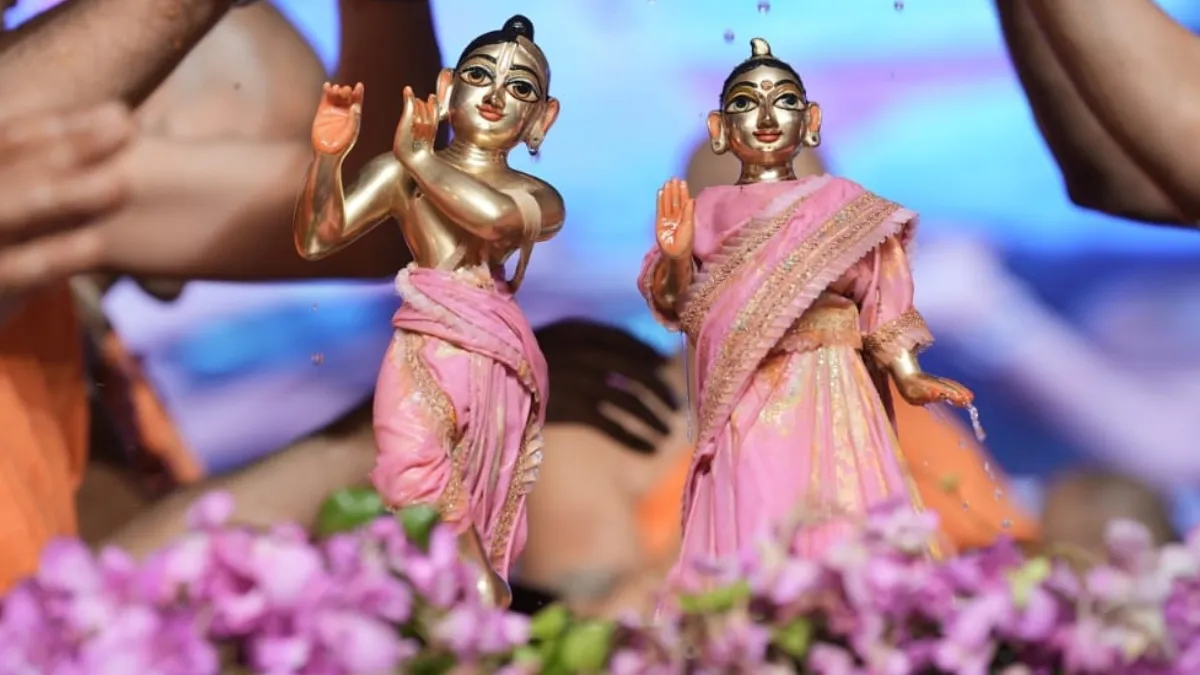
Holi, the festival of colours, finds its most profound and poetic expression in temples dedicated to Lord Krishna, where celebration becomes an act of devotion. Across India, Krishna temples transform Holi into a deeply spiritual experience, blending age-old rituals, music, flowers, and community worship that echo the divine playfulness of Braj.
From the flower-laden courtyards of Vrindavan to grand urban celebrations and serene coastal rituals, these temples offer a glimpse of Holi as it was meant to be experienced, not just with colours on the skin, but with devotion in the heart. Here are five famous Krishna temples in India where witnessing Holi feels truly divine.
Banke Bihari Temple, Vrindavan
Holi at Banke Bihari Temple is not just a celebration; it is an immersive spiritual phenomenon that begins several days before the main festival. The narrow lanes leading to the temple turn into rivers of devotion as devotees chant “Radhe Radhe” while covered in vibrant gulal. Inside the sanctum, the unique darshan tradition, where the curtain opens and closes every few seconds, heightens the emotional intensity, as if Krishna himself is playfully appearing and disappearing among his devotees. Priests shower colours and flower petals from the sanctum, recreating the Braj-style Phoolon ki Holi that Vrindavan is globally known for.
The air resonates with mridanga beats, Braj Holi songs, and spontaneous dancing by devotees from across the world. The temple is decorated with fresh flowers and special shringar of Thakurji in festive attire. Outside, the entire town participates in the celebration with thandai, peda, gujiya and traditional Ras-leela performances. Experiencing Holi here feels less like attending a festival and more like stepping into Krishna’s eternal playground.
Sri Sri Rukmini Dwarkadhish, Dwarka, New Delhi
Prominently known as ISKCON Dwarka Delhi, the presiding deities here are Sri Sri Gaura-Nitai, Sri Sri Rukmini Dwarkadhish and Sri Sri Jagannath Baldev Subhadra Maharani. ISKCON Dwarka hosts a grand two-day celebration on March 3 and 4, bringing the essence of Vrindavan to the capital. The first day marks Gaura Purnima with Gaura Katha, abhishek of Gaura-Nitai, kirtan mela and Chhappan Bhog. The next day features Phoolon ki Holi, Lathmar Holi and Matki Phod inside a massive, well-managed pandal. The presence of Grammy-nominated Gaur Mani Mataji for a live kirtan adds a global devotional appeal. With flower palanquin processions, food carnival, selfie zones and elaborate security arrangements, the celebration is designed for devotees of all age groups.
Prem Mandir, Vrindavan
Prem Mandir’s Holi celebrations are a visual and spiritual spectacle that draws thousands of devotees every year. Built in pristine white marble and adorned with intricate carvings depicting Krishna’s pastimes, the temple transforms into a glowing canvas during the festival. The celebrations begin with special shringar and bhajan sessions, followed by Phoolon ki Holi played in a highly organised and devotional manner. As flower petals are showered in the temple courtyard, the atmosphere becomes fragrant and deeply meditative rather than chaotic.
As evening sets in, the temple’s world-famous musical fountain and light show narrate scenes from the life of Krishna, synchronised with devotional music. Ras-leela performances and collective kirtans allow visitors to witness Holi not just as a festival of colours but as an expression of divine love. The vast temple complex provides ample space for families and pilgrims to participate comfortably, while prasadam counters serve festive sweets throughout the day. Prem Mandir offers a Holi experience that is grand, immersive and visually unforgettable.
Dwarkadhish Temple, Mathura
Located in the heart of Mathura, Dwarkadhish Temple celebrates Holi with a regal charm that reflects the city’s deep connection with Krishna Janmabhoomi. The temple courtyard becomes the focal point of the festivities, where priests and devotees play traditional Holi with natural colours while singing classical Holi compositions accompanied by drums and cymbals. The highlight is the Rajbhog darshan, when the deity is dressed in elaborate festive attire and offered a grand spread of sweets and seasonal delicacies.
The temple’s Rajasthani-style architecture, with its high ceilings and intricately painted pillars, provides a stunning setting for the celebration. As colours fill the air, devotees sway to Braj bhajans, creating an atmosphere that is both majestic and deeply emotional. The surrounding streets of Mathura add to the experience with processions, temple visits and local मिठाई shops offering festive delicacies. Holi here feels like a continuation of centuries-old royal temple traditions.
Jagannath Temple, Puri
In Puri, Holi is celebrated as Dol Yatra, a festival marked by grace, ritual and devotional music. The utsav deities of Lord Jagannath, Balabhadra and Subhadra are placed on beautifully decorated palanquins and taken in ceremonial processions around the temple premises. Devotees offer abir and flowers while kirtan groups sing Odia devotional compositions, creating a rhythm that is both energetic and deeply spiritual.
A key highlight is the placing of the deities on a decorated swing (dol), symbolising divine play and the arrival of spring. The temple complex hosts cultural performances, scriptural recitations and community feasts where devotees partake in mahaprasad together. Unlike the exuberant Braj-style Holi, the celebration here is more ritualistic and graceful, rooted in ancient temple traditions. The sea breeze, temple chants and the sight of the deities in procession make Dol Yatra in Puri a uniquely serene and sacred Holi experience.
