
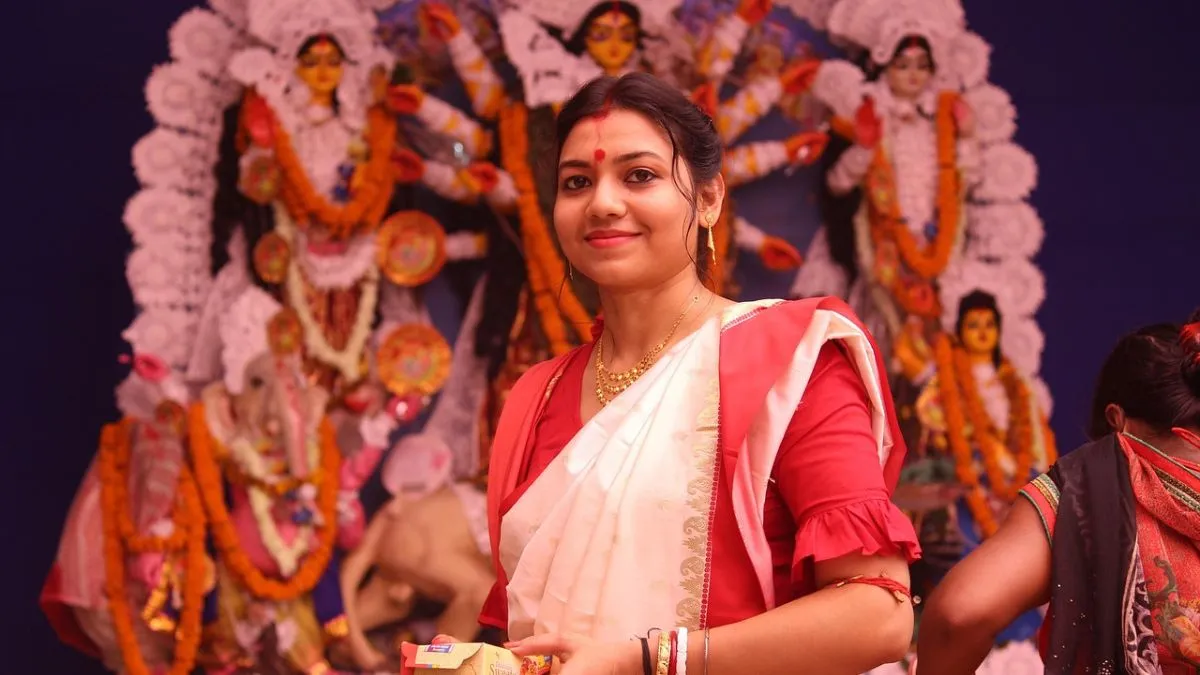
Durga Puja in Bengal is unlike any other celebration in India. While most regions mark Navratri with fasting, restraint, and vegetarian meals, Bengalis turn it into a grand feast of flavours. From scented mutton curries to a variety of fish dishes, cuisine becomes an integral component of the puja as much as rituals and prayers.
This invariably raises the question: why do Bengalis consume non-veg during a festival that elsewhere is normally associated with abstinence? The reason is to be found in Bengal's cultural heritage, religious practices, and Shakta philosophy that interprets Durga's coming not as a period of deprivation, but as a period of plenty, merriment, and coming together.
The cultural vs fasting contrast

Throughout much of India, Navratri (which overlaps with Durga Puja for many Bengalis) is associated with refraining from meat, onion, garlic, and other non-vegetarian foods. But in Bengal, the mood is different. Durga Puja is not just a festival of austerity; it’s a celebration of Maa Durga’s homecoming. Feasting, including fish, chicken, and mutton, becomes part of that welcome and of joy rather than a conflict with faith.
The historical and geographical roots
Bengal’s food culture has always been deeply influenced by its rivers, fish abundance, and fertile lands. Historically, fish have played a central role in Bengali diets for centuries. The ease of access to aquatic food sources, plus meat from domesticated animals, made non-vegetarian fare less taboo. Also, the Shakta tradition (which worships the goddess in her many powerful forms) has room for more diverse offerings. Meat has been offered in some rituals, sometimes even as prasad or part of community meals.
The religious and symbolic meaning
In Bengali Shakta belief, the festival marks the triumph of good over evil (Durga’s victory over Mahishasura). Feasting is symbolic of abundance, fertility, and celebration. Non-vegetarian dishes are not seen as a violation of purity, but sometimes as a way to express gratitude, hospitality, and fullness of life. Also, meat or fish sometimes become offerings to the goddess (or to gods/goddesses connected to her) under specific traditions.
Variations and modern practices
It’s not a one-size-fits-all rule. Some Bengali families and pandals observe stricter rules, avoid meat on certain days like Sasthi or during the initial invocation rituals. Others prepare “niramish” versions (meat-style flavours without actual meat) or delay the meat feast until after certain puja rituals (for example, after Sandhi Puja). Over time, these variations allow people to honour both tradition and personal beliefs.
For Bengalis, Durga Puja isn’t just about fasting or restraint; it’s about celebration, community, and letting devotion be expressed in full sensory richness. Non-veg food during the festival is woven into cultural identity, religious expression, and hospitality.