
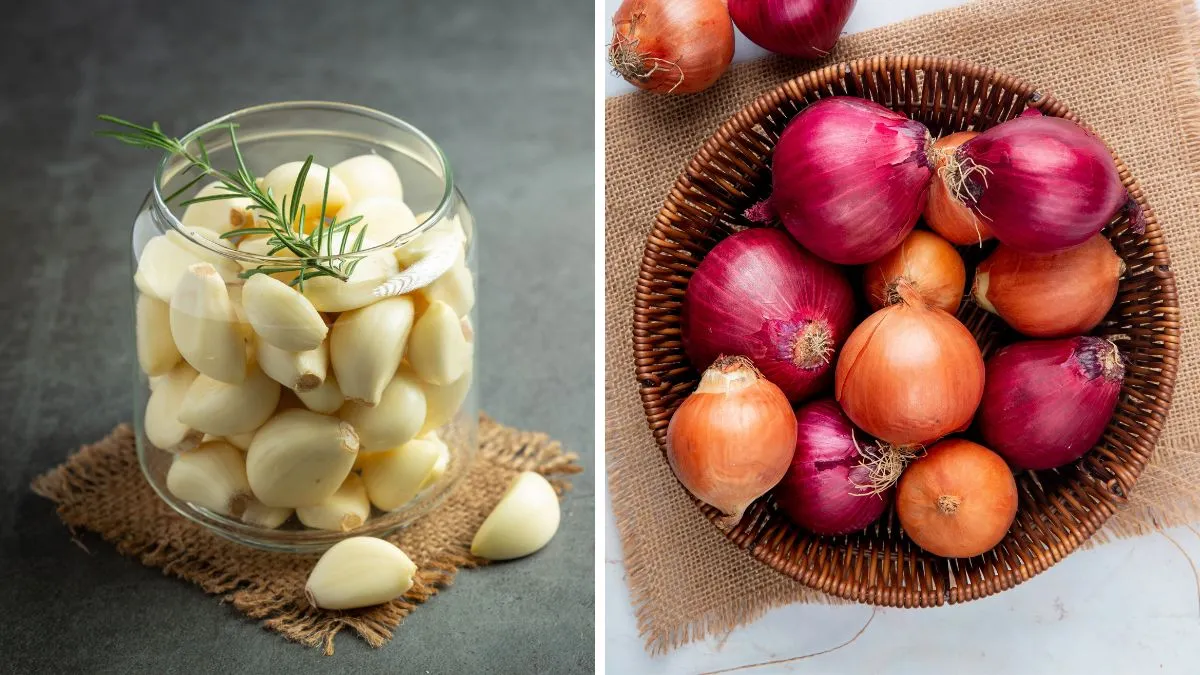
Navratri is not merely nine days of worship and celebration; it's also about spiritual and food discipline. Millions of devotees in India follow the tradition of fasting rituals, adapting to a sattvic diet for cleansing the body and soothing the mind. Perhaps one of the most prevalent practices is abstaining from onions and garlic.
But why are these food items excluded from the kitchen during Navratri? The reason lies in a combination of Ayurvedic principles, spiritual beliefs, and health knowledge. Knowing this tradition not only tells us the cultural rationale but also helps us understand how food affects our energy while fasting.
Also read: Sabudana, potatoes and more: The vrat foods you need to limit this Navratri
The sattvic diet principle explained
The main reason behind avoiding onion and garlic during Navratri is rooted in the idea of a sattvic diet. In Ayurveda, foods are classified as sattvic (pure and balanced), rajasic (stimulating), and tamasic (heavy or impure). Onion and garlic fall under the tamasic and rajasic categories, which are believed to increase passion, aggression, and lethargy. Fasting is meant to cleanse the body and elevate spiritual energy, so devotees stick to sattvic foods such as fruits, milk, nuts, and light grains.
How onion and garlic affect energy and vibrations
Onion and garlic are said to create internal heat in the body and disrupt the peace of the mind. Navratri is a period of prayer, meditation, and self-control, so foods that can enhance restlessness are not taken. Sattvic foods, however, are said to promote concentration, increase positive energy, and synchronise with the vibrations of devotion.
Ayurvedic and health views on onion and garlic
On the health front, garlic and onion are both flavorful and medicinal, but also sometimes hard to digest if eaten in excess. While fasting, when one is already getting used to lighter foods, not having them ensures that the digestion remains even and there is less of a chance for bloating or discomfort.
Not consuming onion and garlic during Navratri is a cultural as well as spiritual norm, influenced by Ayurveda and tradition. By adhering to sattvic food, the devotees try to keep their body light, their mind peaceful, and their faith pure for the nine blessed days.
Also read: Navratri 2025 bhog: Foods, fruits and offerings for nine goddesses and what to avoid
