
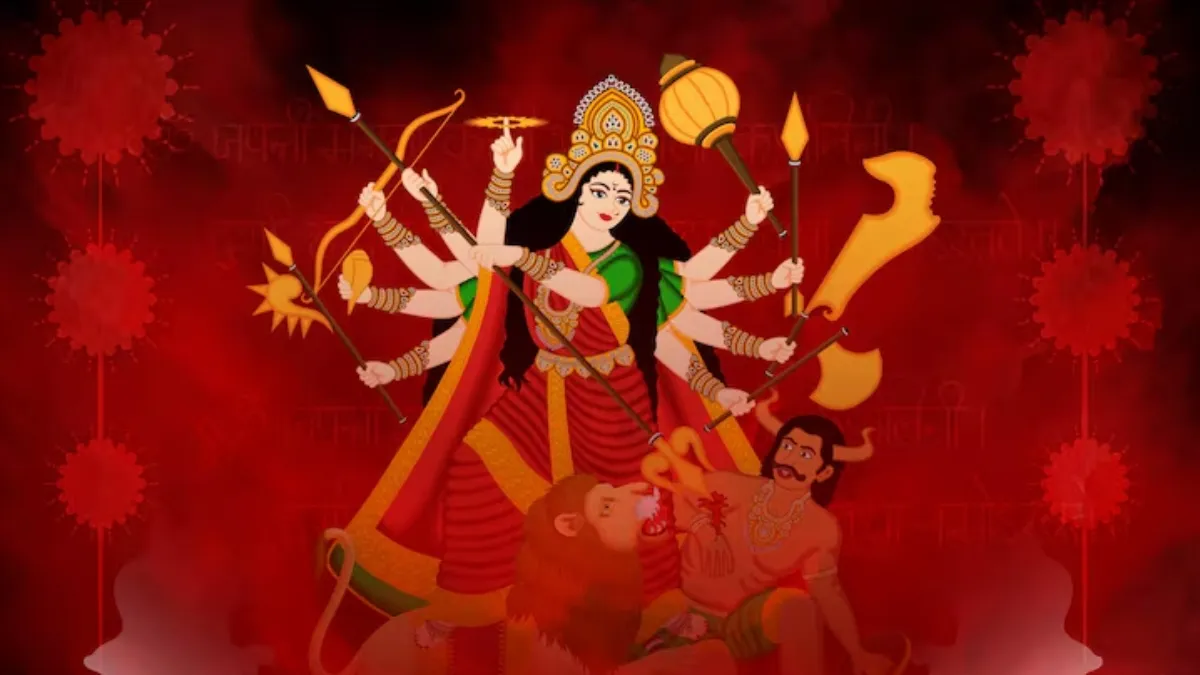
During Durga Puja, the goddess Durga is worshipped. Celebrated during Sharadiya Navratri, it is a significant celebration. Another name for this occasion is Durgaotsav. For five days, people celebrate Durgaotsav.
On the days of Shashthi, Mahasaptami, Mahashtami, Mahanavami, and Vijayadashami, Durgaotsav is particularly celebrated in Sharadiya Navratri.
Durga Puja 2025: Date and how many days left
- Mahalaya (invocation of the Goddess) will be on September 21, 2025.
- The main festival days (from Shashthi to Dashami) are:
- Maha Shashthi: September 28, 2025 (Sunday)
- Maha Saptami: September 29, 2025 (Monday)
- Maha Ashtami: September 30, 2025 (Tuesday)
- Maha Navami: October 1, 2025 (Wednesday)
- Vijaya Dashami (Dashami / Durga Visarjan): October 2, 2025 (Thursday)
How many days are left (from today, September 11, 2025) until the start of flag‐day (Maha Shashthi, September 21): 17 days.
Significance of Each Day
- Mahalaya: Not part of the main Puja days, but deeply important. It’s the awakening of the goddess. The ancestors are remembered, the Chandi Path (verses from the scriptures) begins, and expectations build. The air gets charged with a sense of return and preparation.
- Panchami: The first day of the Puja proper. Invitations are formalised. The community begins in earnest, the artisans finish their work, the pandals start glowing with lamps, and decorations begin to show.
- Shashthi: The Goddess arrives. She is awakened (Bodhan), placed in her throne (Pranapratishtha), and rituals are performed to invite her formally. There's a sense of arrival, of opening the door, so to speak.
- Saptami: Full swing worship. Devotees begin more elaborate offerings. Nabapatrika / Kola Bou abhishek (worship of the banana plant as the bride of Ganesha / as symbolic of the Goddess). Readings of Devi Mahatmya intensify. It’s also often considered the first major day when large crowds assemble.
- Ashtami: Probably the most intense spiritual and ritual day. The Sandhi Puja (very special, happens at the cusp of Ashtami and Navami) is powerful. Kumari Puja (worship of a young girl as the living goddess) is performed. There is great devotion, offerings, and midnight vigils in some places. The energies are high.
- Navami: The last day of worship. All offerings, bhog, and homa take place. Devotees seek blessings. Aarti is grand. People reflect on the journey, on the Goddess’s power, and on what to take back into daily life.
- Dashami (Vijaya Dashami): The farewell, but not without hope. The immersion of the idol symbolises her return to her abode but also a promise: next year again. There is sadness, yes, but joy, community, food, farewells, and Sindoor Khela (in many Bengali households), being a colourful ritual among women.
Rituals of Durga Puja
- Bodhan / Kalparambha: The formal awakening/invitation of the Goddess to the pandal.
- Ghatasthapana / Pranapratistha: Installation of the sacred pot (ghata), symbolic infusing of life into the idol.
- Nabapatrika / Kola Bou: Worship of nine plants (or a plant like a banana), which represent parts of the goddess, symbolising fertility, growth, and nature.
- Kumari Puja: A young girl is worshipped as the goddess; purity and innocence symbol.
- Sandhi Puja: A very important ritual at the junction of Ashtami and Navami. The last moments of Ashtami and the first of Navami are considered powerful. A special “Sandhikhan” puja with extra lamps, intense offerings, etc.
- Chandi Path / Devi Mahatmya recitations: Scriptures that describe the battle of Durga with the demon Mahishasura; readings of the texts provide mythology, moral lessons, and poetic beauty.
- Bhog / Prasad: Food offerings to the Goddess, which are later distributed among devotees. Special sweets and cooked items; in Kolkata, especially, the bhog is a big part.
- Sindoor Khela: On Dashami morning, married women smear vermilion on each other and on the idol; it’s one of the most emotionally charged rituals.
- Visarjan: The immersion of the idol in a river, lake or sea. Symbolises the departure of the goddess until next year. The procession leading up to it is often grand and emotional.
Start and End Times (Muhurats)
- Exact times depend on regional panchangs and local traditions, so here are approximate/generally accepted ones for 2025:
- Bilva Nimantran during Panchami: ~ 3:48 PM – 6:12 PM on September 27, 2025.
- Navapatrika Puja Muhurat: about 5:49 AM on September 29 (Saptami) morning.
- Sandhi Puja begins in the late part of Ashtami, at the juncture (last 24 minutes of Ashtami to first 24 of Navami). Exact local timings will vary.
- Durga Visarjan Muhurat: 6:15 AM to 8:37 AM on Dashami (October 2, 2025) morning in many places.
Durga Puja celebrations in Kolkata and across the world
Kolkata is arguably the throbbing heart of Durga Puja. For many, these days are the best of the year — a blend of devotion, artistry, community, nostalgia, food, and unrestrained joy. Every neighbourhood, from North to South, Salt Lake to Baguiati, competes in creativity. Themes, lighting, art installations, and social commentary are all done with painstaking detail.
The idols (murti) are made in Kumartuli. Artisans work for months, building clay idols, painting them, and designing accessories. From the bhog at pandals to roadside stalls selling rolls, chops, biryani, and mishti (sweets) like roshogolla, sandesh, mishti doi, etc. You’ll smell frying, mustard oil, and sweet syrup, and see people eating together.
It’s a time when many people from out of town come back to Kolkata. These days are packed with rituals, people queuing at pandals at dawn for Pushpanjali (offering flowers), attending Sandhi Puja, staying late, and participating in communal prayers.
Bengalis and other communities outside India carry the festival with them with great devotion, adapting to local conditions, yet trying to retain the essential flavour.
