
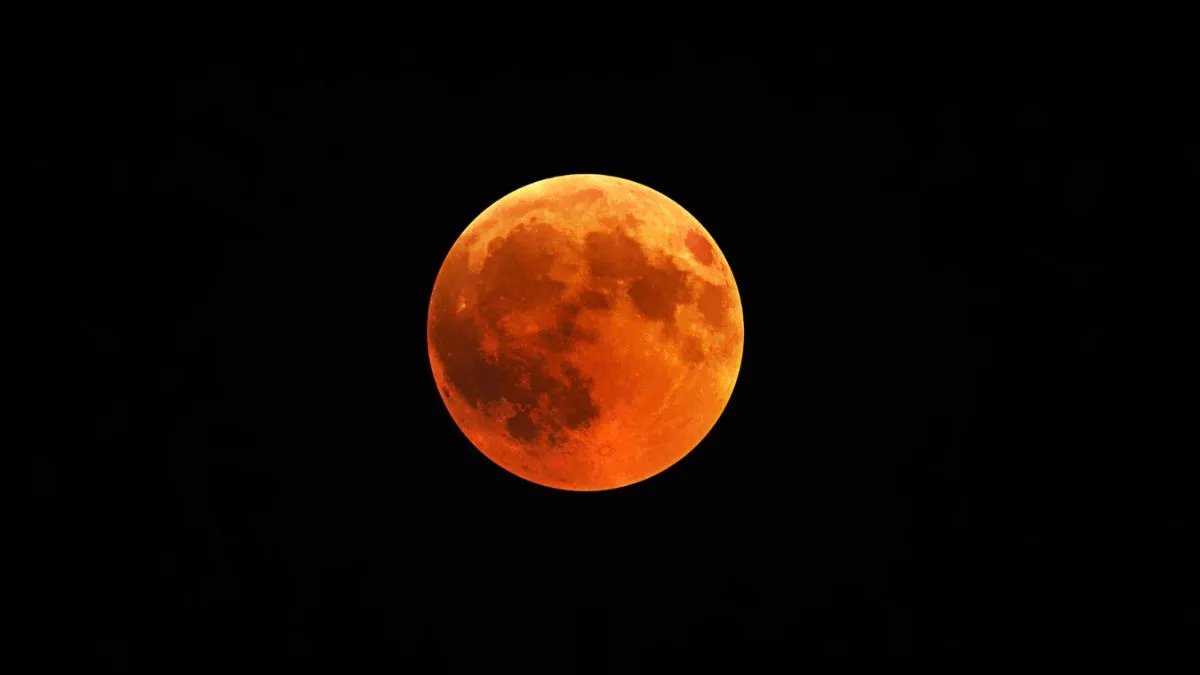
Mark the skies for the first lunar eclipse (chandra grahan) of 2026. Astronomers say it will also be the longest lunar eclipse (chandra grahan) of the year, making it one of the more closely watched celestial events on the calendar. The Moon will be transiting Leo during the eclipse, adding an astrological layer of interest for many observers.
For viewers in India, the eclipse will technically be visible, but only briefly. Most of the eclipse phases will already be underway before the Moon rises, leaving a narrow viewing window once it appears above the horizon.
Chandra grahan 2026 date and timing
According to astronomical calculations, the lunar eclipse (chandra grahan) will begin at 3:20 pm IST on March 3, 2026. The total lunar eclipse (chandra grahan) phase, when the Moon is fully covered by Earth’s shadow, will start at 4:34 pm IST and continue until the eclipse ends at 6:47 pm IST. This window marks the period when the Moon appears fully eclipsed.
Will the chandra grahan 2026 be visible in India?
Here’s where visibility becomes limited. Moonrise in India on the day of the eclipse is expected at around 6:22 pm IST. Since the eclipse ends at 6:47 pm, viewers will get only about 25 minutes to witness the phenomenon. Exact viewing time may vary slightly across states due to differences in moonrise timings. In Delhi, for instance, moonrise is expected around 6:22 pm, leaving a short post-moonrise glimpse before the eclipse concludes.
Sutak kaal for chandra grahan 2026 in India
In traditional Hindu belief, the Sutak kaal begins nine hours before a lunar eclipse (chandra grahan). Based on the 3:20 pm start time, the Sutak in India will begin at 6:20 am IST. During this period, many people avoid auspicious activities. Idols are not touched, food is typically not prepared or consumed, and practices like cutting hair or nails are also avoided. From a scientific standpoint, a lunar eclipse (chandra grahan) is simply a natural alignment of the Earth, Moon and Sun. Culturally, however, the Sutak period continues to hold significance in many households.
Disclaimer: The information provided here is based on religious beliefs and popular traditions. There is no scientific evidence to support it. India TV does not vouch for the accuracy of any of the information.
ALSO READ: Amalaki Ekadashi 2026: Date, tithi, paran muhurat and remedies to follow
