
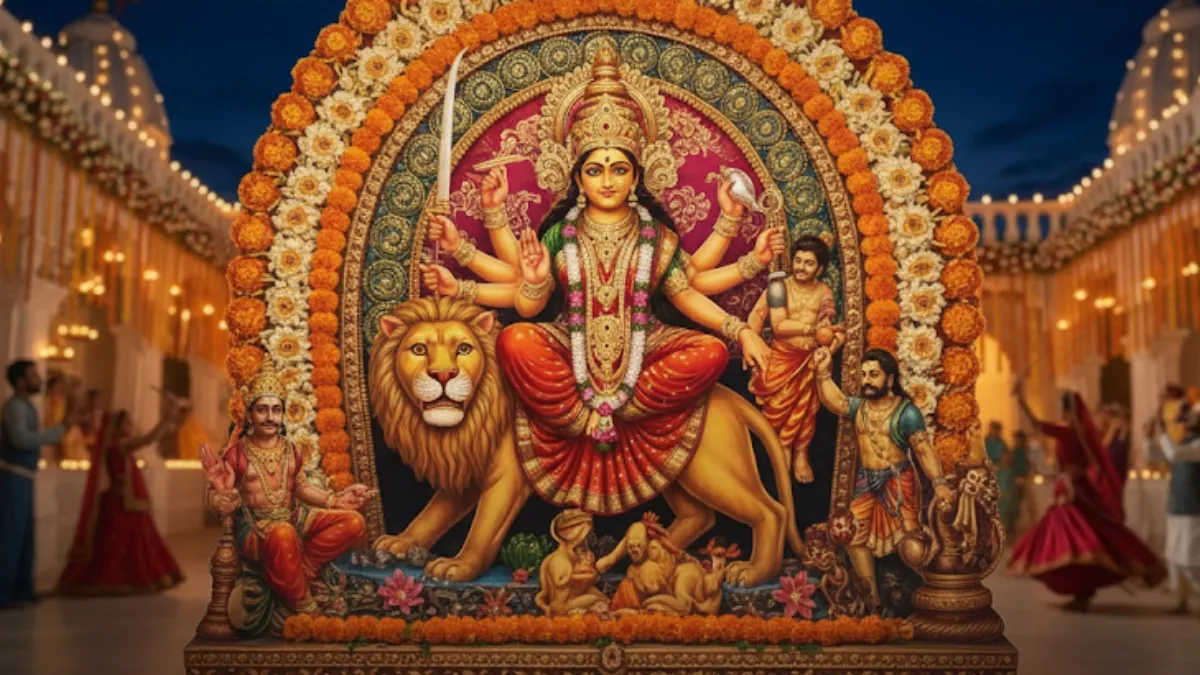
Navratri is one of the most celebrated Hindu festivals, observed twice a year with devotion and joy. The word Navratri means “nine nights,” and during these days, devotees worship the nine forms of Goddess Durga, also called Navdurga. Each day is dedicated to a different form of the Goddess, with special prayers, rituals, and cultural celebrations.
While both Navratris hold deep religious significance, the one celebrated in autumn is Shardiya Navratri, which is more widely observed across India. The other, Chaitra Navratri, is celebrated in spring. Though both share the same essence of worshipping Goddess Durga, their timing, cultural practices, and seasonal symbolism differ.
Chaitra Navratri: Meaning, timing, and spiritual significance
Chaitra Navratri, also known as Vasant Navratri, falls in the Hindu month of Chaitra (March–April). It marks the arrival of spring, a season symbolising fertility, growth, and new beginnings. This festival culminates in Ram Navami, the birthday of Lord Rama, adding special devotional significance to the celebrations. Many devotees observe fasting, perform Ram Navami puja, and take part in processions, especially in northern India.
Shardiya Navratri: The most widely celebrated Navratri
Shardiya Navratri is the most popular Navratri in India. It is observed in the Hindu month of Ashvin (September–October), marking the onset of autumn. This Navratri is closely linked to the story of Goddess Durga’s victory over the demon Mahishasura, symbolising the triumph of good over evil. The tenth day, celebrated as Vijayadashami (Dussehra), also commemorates Lord Rama’s victory over Ravana. The festival is celebrated with grandeur across India, from Durga Puja pandals in Bengal to Garba nights in Gujarat.
Two Navratris, one spiritual essence
The main difference between Chaitra Navratri and Shardiya Navratri lies in their timing and seasonal symbolism. While Chaitra Navratri celebrates the spirit of spring, renewal, and fertility, Shardiya Navratri signifies autumn, harvest, and abundance. Despite these differences, both Navratris carry the same spiritual essence—devotion to Goddess Durga and the victory of good over evil.
ALSO READ: Shardiya Navratri 2025: Maa Durga to arrive on elephant, know what it means
