
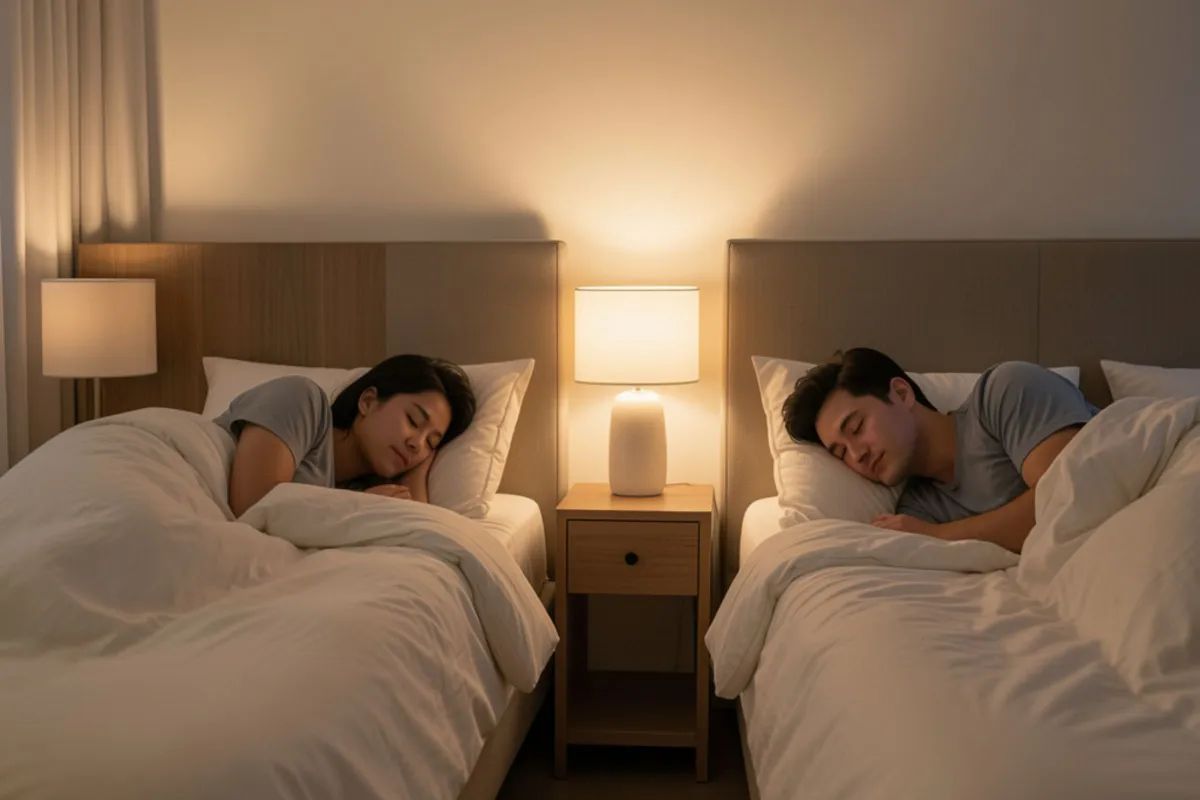
Sharing a bed has long been seen as a symbol of intimacy in relationships. But for many couples today, getting a good night’s sleep is becoming just as important. As sleep problems, different schedules and lifestyle habits affect rest, some partners are choosing a different approach, often referred to as “sleep divorce.”
Despite the dramatic name, sleep divorce doesn’t necessarily signal relationship trouble. Instead, it simply means partners choose to sleep in separate beds or rooms to improve their sleep quality. According to Dr Shweta Chhabra, Consultant Psychiatrist at Apollo Clinic, Bellandur, Bengaluru, this trend is becoming increasingly common.
“In clinical practice, I increasingly see couples reconsidering how they sleep, not because of relational distress but because of chronic exhaustion,” says Dr Chhabra. She explains that many couples are beginning to view sleep as a health priority rather than a traditional relationship expectation.
“Sleep divorce simply refers to partners choosing separate beds or rooms to protect sleep quality while remaining emotionally connected,” she says.
How poor sleep can affect relationships?
Sleep deprivation does not just affect physical health, it can also influence emotional well-being and relationships. “Physiologically, poor sleep contributes to fatigue, lowered immunity, metabolic strain and headaches,” Dr Chhabra explains.
Lack of sleep can also affect mood and communication. “Psychologically, it weakens emotional regulation, attention and stress tolerance. In relationships, this often shows up as irritability, quicker conflict escalation and reduced empathy,” she adds.
Because of this, couples sometimes believe their relationship is deteriorating when the real issue may simply be chronic sleep deprivation.
Can sleeping separately improve intimacy?
Interestingly, some couples report that separate sleeping arrangements can actually strengthen their relationship. “When the decision to sleep separately is mutual and openly discussed, some couples report better intimacy,” says Dr Chhabra.
Rested partners often communicate more clearly, have greater patience and are more emotionally present with each other. Instead of reducing closeness, separate sleeping arrangements can sometimes make shared moments more intentional.
When should sleep problems be addressed first
Experts emphasise that sleep divorce is not always the first solution. In many cases, sleep disturbances can be managed through simple changes. “Snoring, different schedules, late screen use or untreated sleep disorders can often be addressed through sleep hygiene changes, medical care or behavioural interventions,” Dr Chhabra explains.
Identifying the root cause of sleep problems can sometimes help couples continue sharing the same sleeping space comfortably.
The key is emotional connection
According to mental health experts, sleeping separately only becomes concerning if it leads to emotional distance. “The concern arises only when physical separation becomes emotional disengagement,” Dr Chhabra says.
Couples who continue to maintain daily conversations, shared routines, and affection usually remain emotionally connected regardless of where they sleep.
When to seek professional help
If sleep disturbances persist or begin affecting daily life, consulting a professional can be helpful. “Consulting a sleep specialist or mental health professional is advisable when sleep problems are persistent, medically unclear, or begin affecting mood, functioning or relationship stability,” she advises.
While the idea of sleeping separately may once have been seen as unusual, attitudes around sleep and health are changing. For some couples, prioritising quality sleep can actually support both personal well-being and relationship harmony.
In the end, experts say the goal is not necessarily to share a bed every night, but to ensure that both partners feel rested, healthy and emotionally connected.
