
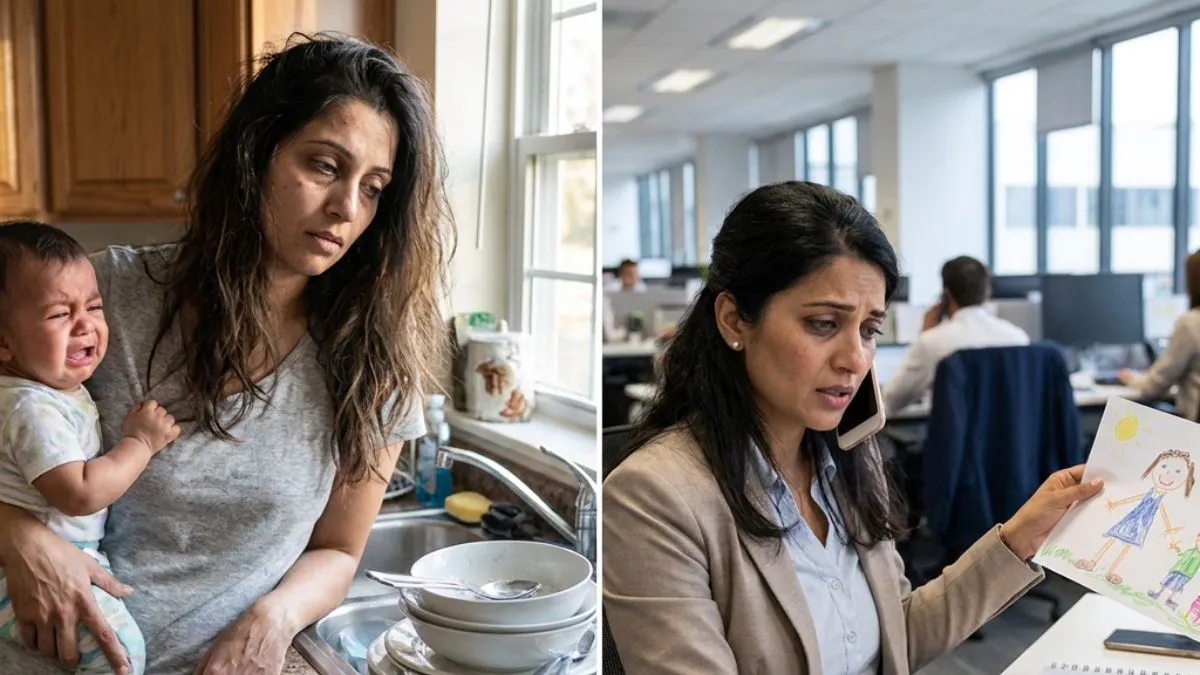
The discussion about who, between housewives and working mothers, has a tougher life, tends to be quite polarising. However, mental health experts say the comparison is far more complex than it appears. Both groups of women experience different forms of emotional, mental and physical stress, and each comes with its own set of health risks.
Dr Anureet Kaur, Psychologist at Apollo One, Pusa Road, New Delhi, explained that it is difficult to decide which role is harder because both involve invisible responsibilities that can deeply affect a woman’s overall wellbeing. According to her, chronic stress can quietly impact physical health, emotional balance and mental resilience over time.
The hidden emotional burden many housewives carry
Housewives often spend their days managing households, caring for children, cooking and handling family responsibilities with very little personal time. While this labour keeps homes functioning smoothly, it often goes unnoticed or unacknowledged. “Many women do not recognise their own health concerns while caring for others,” Dr Kaur explained. According to the psychologist, many housewives experience fatigue, body pain, weight gain, stress, emotional exhaustion and poor sleep patterns. In some cases, the lack of financial independence or appreciation may also contribute to feelings of isolation, anxiety or low self-worth.
Why working mothers face a different kind of pressure
For working mothers, however, balancing their work and personal life is no easy task. Short deadlines, lengthy working hours, bad eating practices, and inadequate rest lead to a vicious circle of stress and tiredness. Dr Kaur noted that prolonged stress in working women may increase the risk of hypertension, obesity, diabetes, migraines and anxiety-related conditions. Emotional guilt is another major challenge many mothers silently experience while trying to balance career and family expectations.
Why chronic stress should never be ignored
According to Dr Kaur, both housewives and working mothers are vulnerable to chronic stress, even though the causes may differ. Over time, emotional overload can begin affecting mental and physical health in serious ways. “Many women ignore warning signs such as irritability, body aches, headaches, sleep problems, emotional numbness, frequent crying, or constant fatigue. These are not ‘normal responsibilities’, they may be indicators of chronic stress or emotional burnout,” she warned. She also stressed that seeking psychological support should never be viewed as a weakness. Early support, rest and emotional care are extremely important for long-term wellbeing.
Small lifestyle changes can make a big difference
The psychologist emphasised that prioritising health should not come with guilt. Simple daily habits such as walking, yoga, meditation, journaling, stretching or even quiet tea breaks can significantly reduce emotional exhaustion. “A mother may work inside the home or outside it, but in both roles, she carries invisible responsibilities that deserve care, respect, and compassion,” Dr Kaur said.
Experts believe that when women begin prioritising their own wellbeing, it ultimately strengthens the emotional health of the entire family as well.
Also read: Overthinking after midnight? Psychotherapist explains why the brain struggles to switch off
