
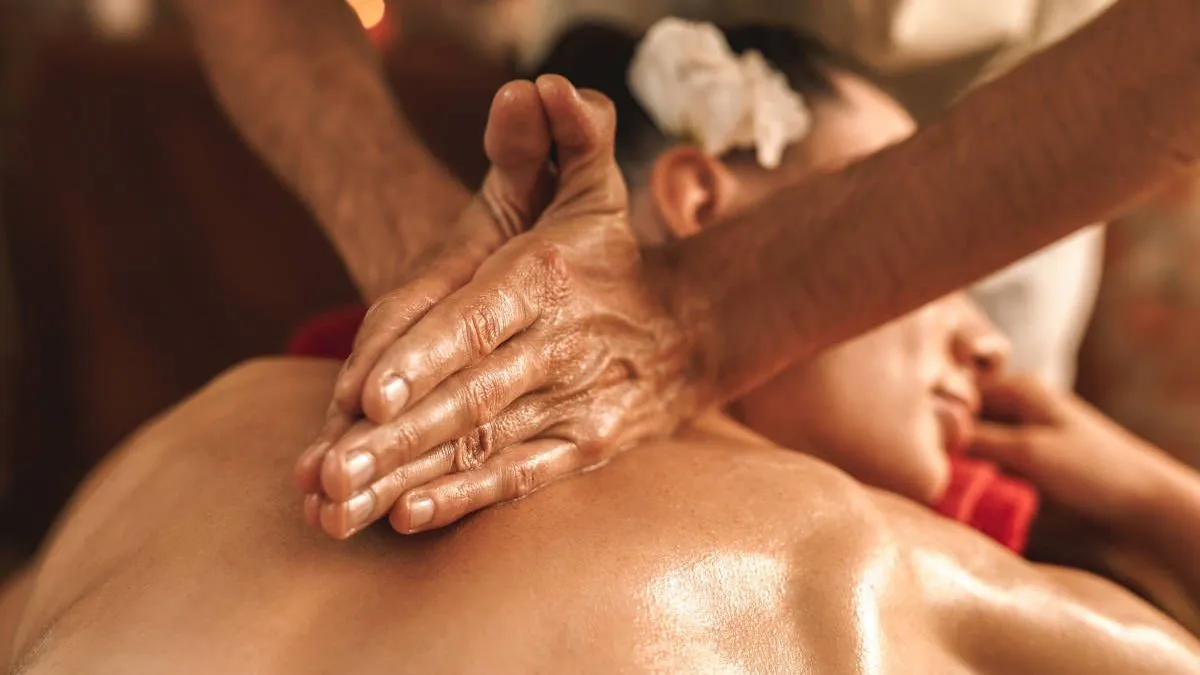
Ayurveda focuses on the importance of self-care rituals that help maintain the balance between the body, mind, and spirit. One such practice, Abhyanga, has been done for centuries. Abhyanga is the self-massage therapy that not only benefits the skin but also overall well-being.
It helps in calming the nervous system and improving circulation. Unlike regular massages, Abhyanga is performed with warm herbal oils that are chosen according to your dosha (body type). Read on to know more about abhyanga.
The meaning and origins of Abhyanga in Ayurveda
The word Abhyanga comes from Sanskrit, where “abhi” means “towards” and “anga” means “limb.” It translates to “massaging the limbs with oil.” This therapy dates back thousands of years, mentioned in Ayurvedic texts like the Charaka Samhita and Sushruta Samhita. Traditionally, it is done in the morning before bathing, allowing the oil to penetrate the skin and remove toxins.
Benefits of Abhyanga for body, mind and spirit
Abhyanga is more than just a beauty ritual; it is a holistic healing practice. The warm oil penetrates deep into the skin tissues, improving circulation, reducing stiffness and lubricating the joints. Regular practice can relieve muscle tension, strengthen the immune system and improve sleep quality. Also, the slow, and rhythmic strokes help calm the nervous system, reduce anxiety, and improve mental clarity.
Choosing the right oils for Abhyanga based on dosha
Selecting the right oil is important to reap maximum benefits. According to Ayurveda, each dosha responds best to specific oils:
- Vata types should use warming and grounding oils like sesame or almond oil.
- Pitta types should use cooling oils like coconut or sunflower oil.
- Kapha types should use light and stimulating oils like mustard or flaxseed oil.
These oils are usually infused with Ayurvedic herbs such as ashwagandha, brahmi or neem, which boost their therapeutic effects. If you’re unsure of your dosha, you can opt for a neutral oil like sesame or coconut.
Step-by-step guide: How to perform Abhyanga at home
Abhyanga can easily be practiced at home in just 15–20 minutes. Warm the oil slightly and apply it generously over the body, starting from the scalp and working your way down. Use circular motions over joints and long strokes along the arms and legs. Massage the abdomen in clockwise circles to improve digestion. After completing the massage, let the oil sit for 20–30 minutes before taking a warm bath or shower. Practicing this regularly, even 2–3 times a week, can leave you feeling relaxed, rejuvenated and more connected.
ALSO READ: Pranic healing techniques to support mental health on Suicide Prevention Day 2025
