
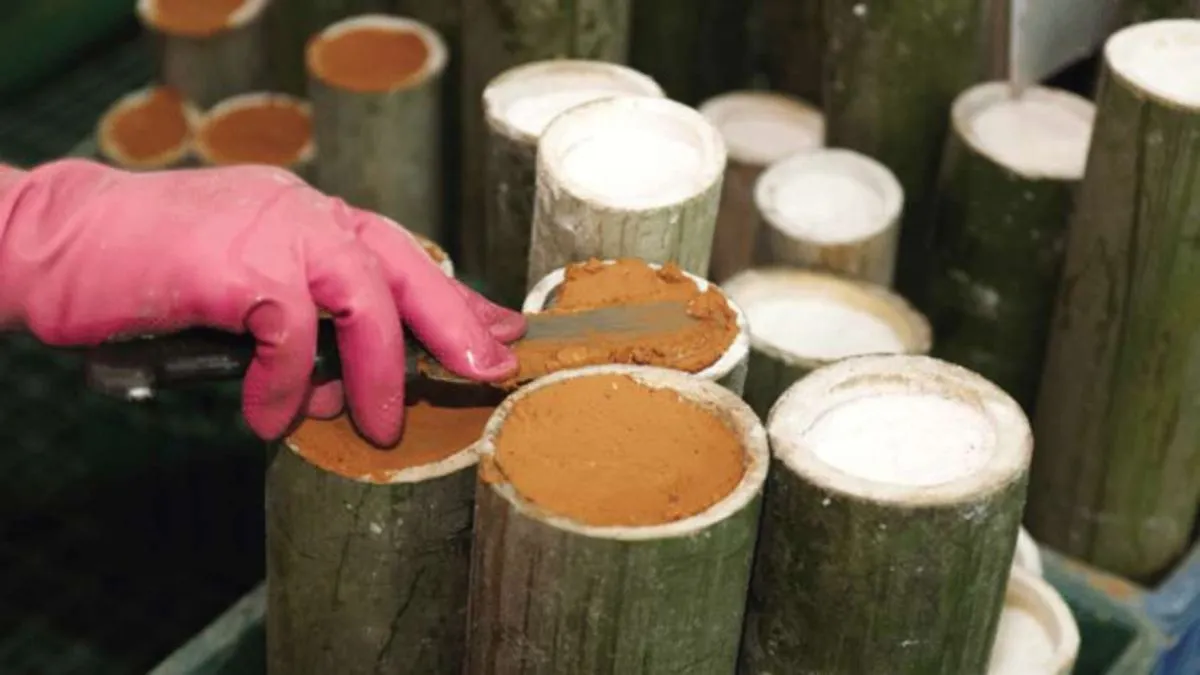
Korean bamboo salt, Jukyeom, is not your everyday table salt. Clocking in at around INR 30,000 per kilogram, it commands a premium price. This is thanks to its rare, traditional preparation and the unique flavour, mineral infusion, and lore it carries.
But beyond the price tag, does bamboo salt really deliver health magic? We have the answers! Let’s break down the facts, tradition, and what modern studies say.
What makes bamboo salt so special?
Crafted through a labour-intensive process, sea salt is packed into bamboo canisters, sealed with yellow clay, and roasted atop pine wood fires in an iron oven at soaring temperatures, often around 800 °C, for 12–14 hours. This ritual is repeated up to nine times, deepening the flavour into what's described as “Gamrojung”, a smoky-sweet profile, and dramatically transforming its colour and texture. The bamboo imparts minerals, the repeated roasting purifies, and the clay seal filters impurities.
Traditions, claims and mineral magic

Traditionally, bamboo salt has been cherished in Korean folk remedies: believed to aid digestion, clean teeth, boost immunity, and even act as a detoxifier due to its alkaline nature. It’s also said to carry trace minerals like iron, potassium, calcium, silicon, and magnesium, though the exact levels are hard to confirm.
Also read: Why using iodised salt is important? Doctor reveals the truth
What does science say? Promising but still early
Anticancer and anti-inflammatory potential
In lab tests, 9× roasted bamboo salt (the most intensely roasted version) inhibited growth by over 50% in human colon cancer cells (HCT-116) and activated cell-death mechanisms more potently than sea salt. It also lowered inflammatory markers and reduced metastasis in mice. According to a report published in Research Gate, purple bamboo salt showed similar effects in tongue carcinoma cells and even slowed tumour growth in mice with buccal cancer, outperforming conventional sea salt.
Immune-boosting and anti-inflammatory effects
A 2016 study published in Spandidos Publications, on both immune cells and mice, found that bamboo salt—and its hydrogen sulfide component—enhanced immune responses, increasing cytokines like TNF-α, IFN-γ, and IL-2 while also improving activity in a stress test model.
Protecting the gut and easing infection
In a mouse model of Helicobacter pylori infection (a major cause of gastric issues), bamboo salt combined with standard triple therapy (antibiotics plus acid reducers) reduced inflammatory markers and gastric damage more effectively than antibiotics alone.
Skin and oral health
In hairless mice, bamboo salt helped prevent UVB-induced skin ageing by preserving dermal collagen and elasticity. Dental research shows bamboo salt in toothpaste reduced plaque, gum inflammation, and enamel demineralisation, though professionals advise more conclusive trials before widespread recommendation.
Risks and caution
Though generally seen as non-toxic, there’s a documented case of a healthy young woman developing severe hypernatremia (dangerously high blood sodium) after consuming excessive bamboo salt as a folk remedy. She recovered with treatment, but the episode underscores the danger of overuse.
Bamboo salt: worth the hype or just the price?
With its rich history and striking production method, bamboo salt is an intriguing culinary and cultural curiosity. Preliminary studies suggest antimicrobial, anti-inflammatory, anticancer, immune-supportive, and even skin-protective properties. That said, rigorous human trials are still lacking, and the price remains sky-high. In moderation and with proper understanding, bamboo salt is an artefact of tradition and a curiosity of science. But for now, it's best savoured slowly, not over-salted.
Also read: Switching salt with substitutes can lower the risk of stroke, death: Study