
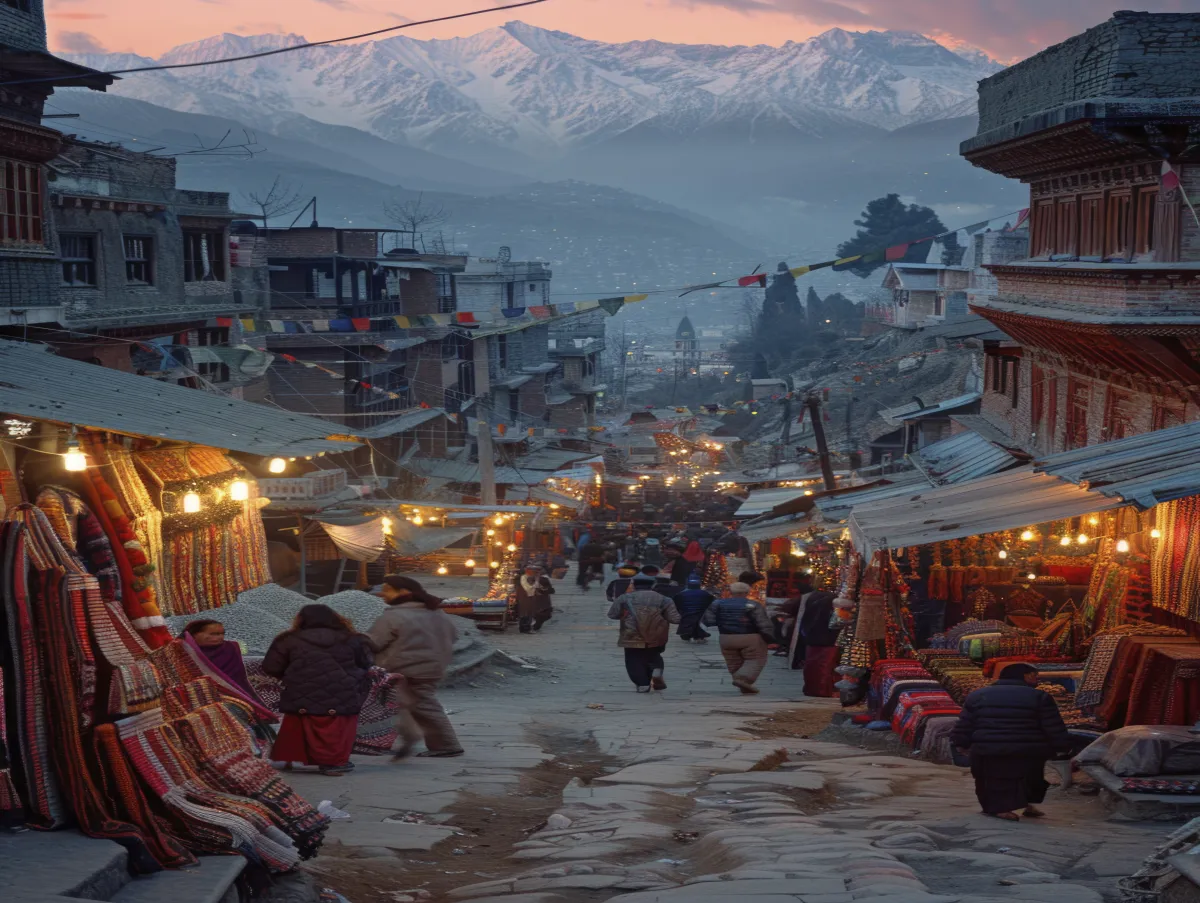
High in Himachal’s Kinnaur district, where the valleys stay quiet and the pines seem to whisper their own secrets, Raulane arrives each spring like a gentle shake of the shoulder after a long winter. It’s one of those festivals that isn’t simply celebrated, it’s felt. In the thrum of drums that bounce off the cliffs, in the scent of pine smoke, and in the way entire villages seem to breathe in unison.
This is the moment when Kinnaur bids farewell to its winter spirits and welcomes a new season. And for a traveller, Raulane isn’t just a festival; it’s an invitation into a world that rarely reveals itself so openly. The Kinnauri festival procession is spellbinding!
Kinnauri festival procession: Tradition and magic
The morning begins quietly, as if the mountains are holding their breath. Then the sound arrives, slow, rhythmic, steady. Villagers dressed in ceremonial woollens and magenta turbans step out in formation, carrying drums, horns and offerings of local liquor and freshly gathered flowers.
At the heart of this procession is a theatrical pairing: one man playing the “Raula,” the groom, his face covered in red cloth, and another playing the “Raulane,” the bride, adorned in ornate women’s attire, layered jewellery and sometimes a striking mask.
Together, they lead the village towards its temple, moving with a gravity that is both playful and sacred. The masks and headgear transform their identities as the "bride" and "groom" reach the temple.
It’s a moment that feels outside of time — half ritual, half folk theatre, wholly mesmerising.
Where fairies linger and spirits depart
Local lore gives Raulane its soul. During the harsh Himalayan winter, villagers believe that protective mountain spirits, the Sauni, descend from the peaks to guard the land and its people. Raulane marks their departure, a ceremonial send-off that blends gratitude, reverence and a touch of melancholy. The offerings of flowers and alcohol aren’t mere tokens; they’re gestures of relationship. Here, nature isn’t a scenic backdrop — it's family.
As the “bride” and “groom” reach the temple, the masks and headgear transform their identities. Roles flip, lines blur, and for a few hours, the village becomes a liminal world where humans, spirits and ancestors coexist.
The fashion of a ritual
For a travel photographer, Raulane is a dream. For a culture lover, it’s a revelation.
The costumes tell stories of their own:
- Woollen cloaks that shield from icy winds.
- Hand-woven pattus that cling to local memory.
- Magenta turbans that pop against the muted mountain palette.
- Masks that transform familiar faces into mythic beings.
There's a richness to the textiles and layering, not born of pageantry but of centuries-old necessity and pride. Even the jewellery carries weight, literal and symbolic, signalling marital status, clan identity and the village’s collective artistry.
Where to feel Raulane at its most authentic
The festival is celebrated across Kinnaur, but the villages around Kalpa offer the most atmospheric experience. Narrow stone paths, terraced orchards, and age-old wooden temples create a setting that feels lifted from folklore.
Travellers should expect cold air, unpredictable timings (mountain festivals follow their own calendars), and a kind of intimacy that demands respect. Raulane isn’t designed for tourists, and that’s precisely what makes it so special. Observe gently. Photograph thoughtfully. Let the moment guide you rather than the other way around.
Why Raulane matters now
In a world where traditions often shrink under the weight of modernity, Raulane feels defiantly alive. It carries forward Kinnaur's tribal identity and strengthens community bonds, while keeping alive a cosmology that valorises both nature and spirit. For anyone looking for travel that is more than sightseeing, Raulane offers something rare: a window into how a community understands itself, celebrates itself, and connects itself to forces larger than life.
