
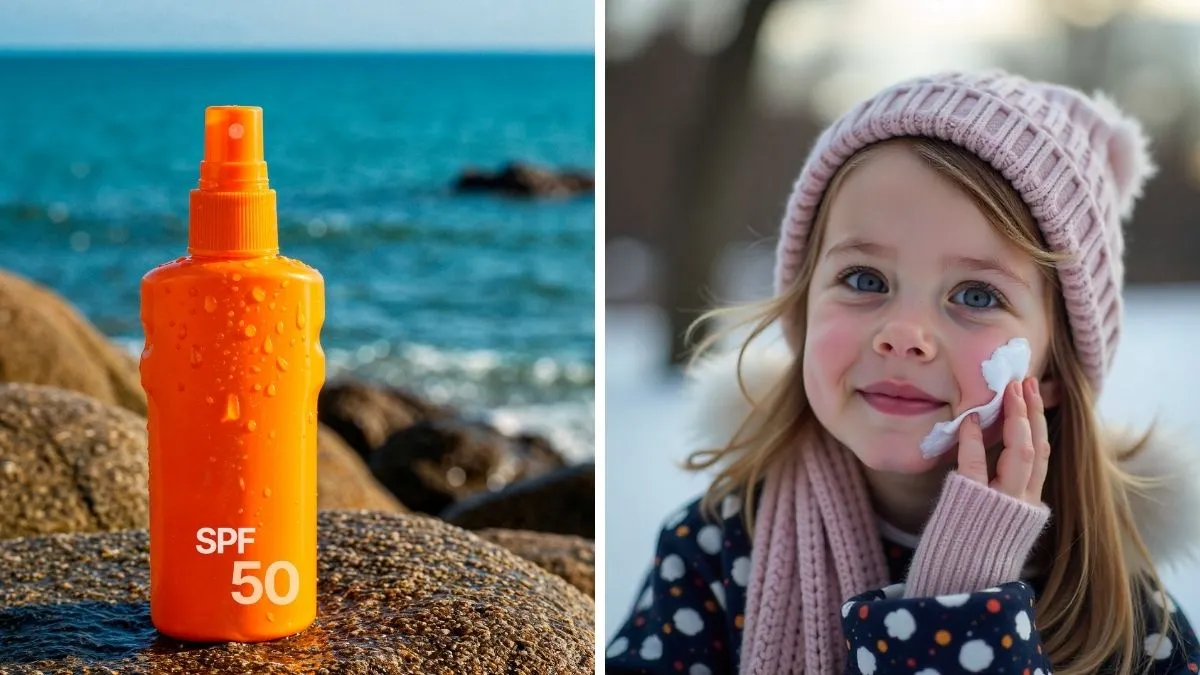
Winter may feel gentler on the skin, softer light, cooler air, and far fewer sweaty outdoor hours, so it’s no surprise that sunscreen often slips off skincare routines this season. But dermatologists warn that this is exactly when people make their biggest skincare mistake: assuming low temperature equals low UV exposure.
According to Dr Vinata Shetty, Medical Advisor and Consultant Dermatologist at Kaya Limited, winter doesn’t weaken the sun’s impact on your skin. The risks simply become less obvious. UV rays continue to penetrate the atmosphere, silently ageing the skin, dulling the complexion, and contributing to long-term damage, even on days when the sun doesn’t show up at all.
Why winter UV is more dangerous than you think
Two types of UV rays reach your skin year-round: UVA and UVB. Winter does very little to stop them, especially UVA.
UVA: The “ageing rays” that never take a holiday
These rays penetrate deep into the dermis and are the biggest culprits behind:
- Premature wrinkles
- Fine lines
- Sagging
- Uneven pigmentation
Dr Shetty explains that UVA rays remain constant throughout the year, whether it’s cloudy, foggy, or freezing. You may not feel them, but they’re ageing your skin silently.
UVB: Less intense in winter, but still harmful
UVB rays (the ones responsible for sunburn) reduce slightly in winter. However, they:
- Still causes cumulative cellular damage
- Still contribute to tanning and freckles
- Still increases skin cancer risk
Snowy or high-altitude locations can even bounce UV light back to the skin, doubling exposure.
What happens if you skip sunscreen in winter?
1. Faster ageing
Constant UVA exposure accelerates collagen breakdown, leading to:
- Fine lines
- Dullness
- Early wrinkles
- Brown spots
2. Higher skin-cancer risk
Long-term UVA damage increases the chances of both melanoma and non-melanoma skin cancers.
3. Uneven pigmentation
Patchiness, tanning, and stubborn winter freckles can intensify without proper UV protection.
How to choose the right sunscreen for winter
Dr Shetty recommends the following:
Go for SPF 30 or above
For everyday winter routines, SPF 30 is the minimal requirement.
If you’re outdoors for long hours, go higher.
Look for PA+++ or more
The PA rating indicates UVA protection. Winter has a strong UVA presence, so you need at least PA+++.
Use broad-spectrum formulas
These protect against both UVA (ageing) and UVB (burning) rays.
Switch to hydrating winter sunscreens
Ceramides, hyaluronic acid, niacinamide, and squalane help keep dry winter skin comfortable and protected.
Winter sunscreen tips for maximum protection
- Apply sunscreen every morning, even if you’re staying indoors.
- Cover all exposed skin: face, neck, ears, hands.
- Reapply every two hours outdoors, and at least once in the afternoon indoors.
- Pair sunscreen with a moisturiser for extra hydration and barrier support.
Skipping sunscreen in winter might feel harmless, but the damage accumulates quietly. Dr Shetty emphasises that sunscreen is a year-round essential, not a summer-only habit.
Winter sunlight may be soft, but UV damage is not. A simple layer of sunscreen each morning is the easiest anti-ageing and skin-protecting habit you can adopt.
Also read: How to fix winter dryness in 2025? The easy skin routine everyone needs this season
