
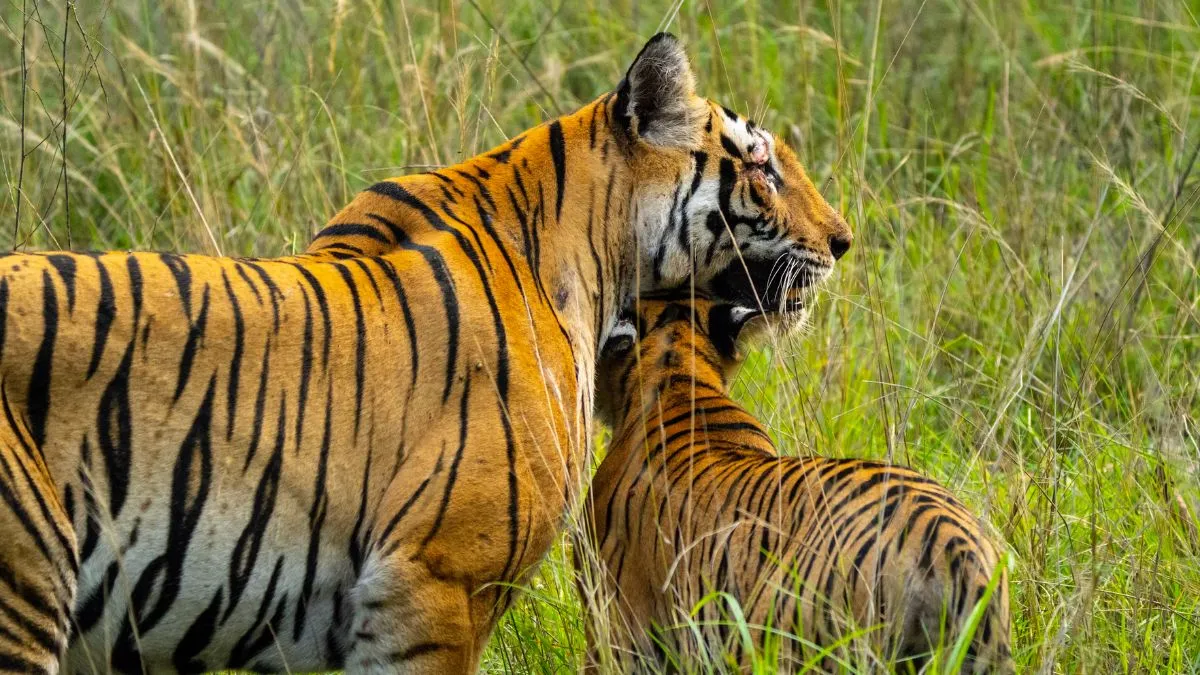
In a tragic incident, a tigress and her four cubs were found dead in Hoogyam forest range of Karnataka’s Male Mahadeshwara Hills Wildlife Sanctuary. Authorities suspect poisoning as the likely cause, with a poisoned cow carcass found near the site believed to have been used as bait.
The deceased tigress, aged around 11 years, was first identified in 2014 and is believed to have killed and partially consumed the cow before returning to feed on the poisoned remains along with her cubs. The deaths are thought to have occurred on Wednesday, June 25.
Administrative negligence alleged
Environmental activists have blamed the forest department for alleged lapses, particularly pointing to reports of non-payment of salaries to forest watchers for over three months. The absence of routine surveillance and ground patrols may have enabled miscreants to enter the protected area and poison the animal, they alleged.
Prominent environmentalist Joseph Hoover criticised the lack of accountability, questioning the role of the Deputy Conservator of Forests (DCF). “What was the DCF doing? These forest watchers haven’t been paid for months, and they have raised these issues with the officers. How do we expect them to do their duty under such conditions?” Hoover asked, reported News 18.
Government orders inquiry, vows action
Karnataka’s Minister for Forests, Ecology and Environment, Eshwar B. Khandre, called the incident “heart-wrenching” and confirmed that the initial reports point to unnatural deaths.
“Preliminary reports indicate that all these are unnatural deaths. According to protocol, a postmortem will be conducted. I am instructing the vigilance squad to work more efficiently and increase monitoring rounds at all national parks and sanctuaries in the state,” the Minister said. A high-level inquiry committee has been formed to investigate the deaths. The committee includes senior forest officials, a veterinary officer, and a wildlife expert, and is expected to submit its report within 14 days.
Forensic tests underway
In accordance with National Tiger Conservation Authority (NTCA) protocol, necropsies have been conducted and samples collected for toxicology, histopathology, and DNA profiling to confirm the exact cause of death.
Outrage across conservation circles
The loss of five tigers in a single incident is a major blow to India’s tiger conservation efforts and has reignited calls for stronger protection and better funding of frontline forest staff.
Wildlife activists and experts are urging the government to not only investigate the deaths but also take systemic steps to ensure such tragedies do not recur.
