
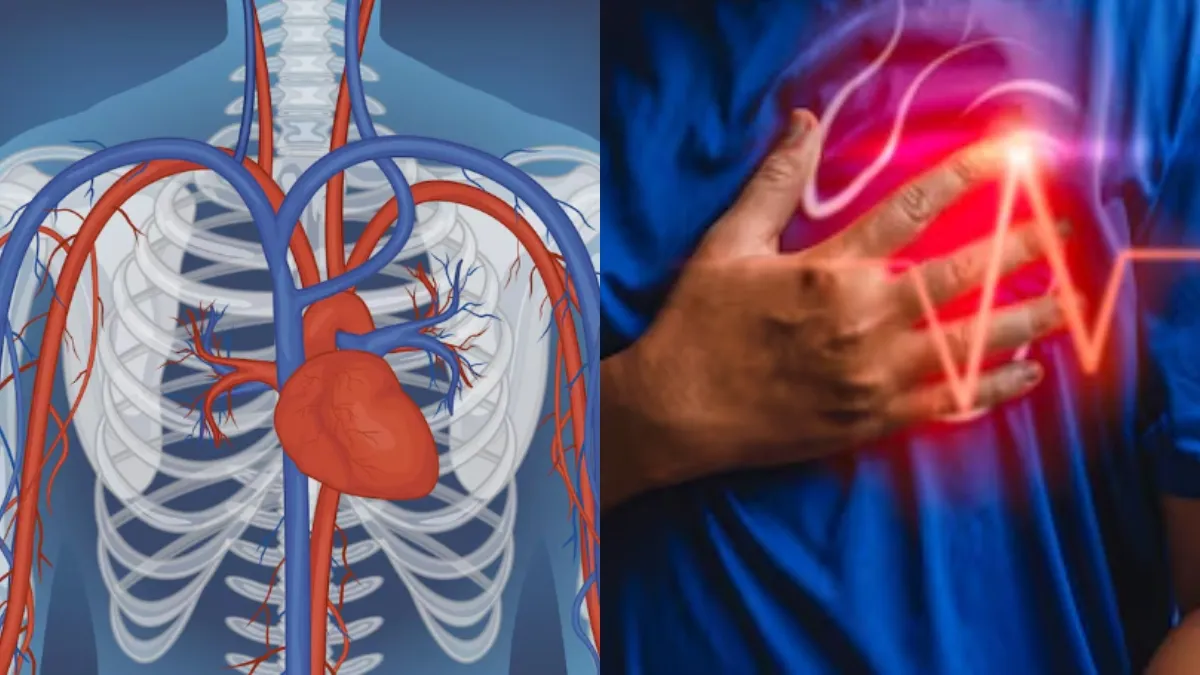
Not every chest pain is a heart attack; sometimes it’s far more deadly. According to the studies published by the National Library of Medicine (NLM), nearly one in three patients with an aortic dissection is first misdiagnosed, most often as a heart attack. This is because of the early signs like severe chest pain, sweating and breathlessness, which may overlap with symptoms of a heart attack and confuse people and experts, leading to wrong treatment costing precious time, or a life.
What is an Aortic Aneurysm?
According to Dr Anshul Kumar Gupta, Consultant - Interventional Cardiology, Manipal Hospital, Jaipur, an aortic aneurysm is a weakened, bulging section in the wall of the aorta, the body's main artery that carries blood from the heart. These bulges can occur in the chest (thoracic) or abdomen (abdominal), with abdominal aortic aneurysms being more common. They often have no symptoms, but can lead to life-threatening complications like a rupture (bursting) or a tear called a dissection, which causes internal bleeding and can be fatal. If the aneurysm ruptures, blood can flow between the layers, resulting in sudden and severe chest pain, difficult breathing, or collapse.
Why is misdiagnosis so common?
The studies under NLM reveal that about one-third of cases are misdiagnosed at first evaluation. More than 80% of patients report pain that begins abruptly and is at its peak right away, a sharp contrast to the gradual build-up typical of a heart attack. Misdiagnosis is not harmless, but treatments used for heart attacks, such as blood thinners, can worsen bleeding in an aortic dissection. Some common symptoms of the dissection of the aorta include:
- Sudden, Severe Chest or Back Pain – Often appearing as a sharp, tearing, or ripping sensation, which may radiate to the back or between the shoulder blades.
- Pain Moving to Other Areas – Unlike typical heart attack pain, aneurysm-related pain may travel to the abdomen, lower back, or legs.
- Unequal Pulse or Blood Pressure – A noticeable difference between the pulses in the left and right arm, or a sudden drop in blood pressure, can signal an aortic problem.
- Difficulty Breathing or Speaking – Shortness of breath, fainting, or stroke-like symptoms can occur if the dissection blocks blood flow to vital organs
Recognising these symptoms and early diagnosis with the help of quick tests like CT angiography or echocardiography is the key to saving lives. The NLM study shows how often aortic dissections are mistaken for heart attacks, and why that error is so dangerous. The two conditions look alike, but the wrong diagnosis delays life-saving treatment and, in some cases, makes the outcome worse. When chest pain hits unexpectedly and it seems to be unbearable, do not wait. It can be the heart or the aorta, but in any case, immediate treatment is the safest option.
ALSO READ: Delhi’s AQI hits 426: Doctors warn toxic air is damaging your heart, immune system and mental health
