
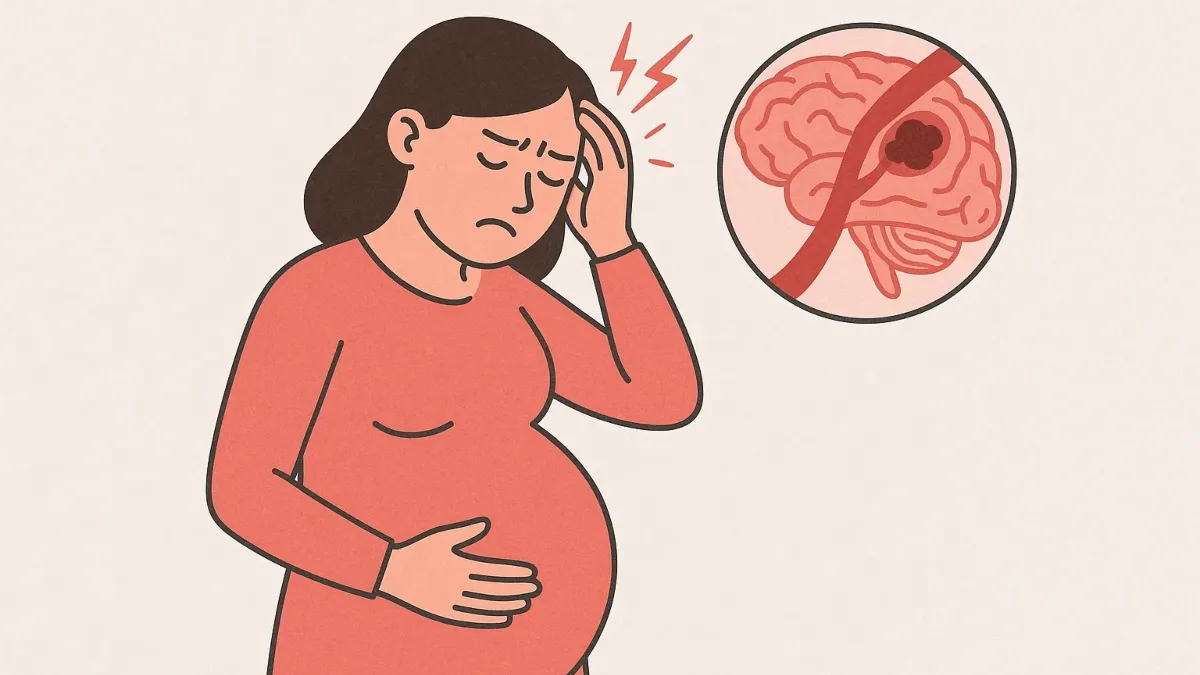
When the blood supply to a part of the brain is hampered for any reason, the clinical condition that it causes is known as a stroke.
Did you know? Strokes are not only seen in adults or senior citizens but also in women. If we compare similar age groups, women who are pregnant or have just had a delivery are more prone to stroke than their non-pregnant counterparts.
The causes of stroke:
- Vasculitis
- Vasculopathy
Preeclampsia syndrome, which means BP increases during pregnancy.
Chronic hypertension, which means the woman already had high blood pressure when she became pregnant, can also be a risk factor for stroke.
She may already be having an arteriovenous malformation, meaning there is a structural defect in the lining of blood vessels in the brain, which may lead to the spontaneous rupture of some blood vessels known as arterial dissection.
Some clots may form in the brain. If it is in the artery, it is known as arterial thrombosis; if it is in the veins, it is known as venous thrombosis.
In sickle cell disease faulty haemoglobin structure causes a change in the shape of red blood cells. With an altered shape, RBCs get stuck in the microvasculature & are coupled with the hypercoagulable state of pregnancy; clotting in the brain can occur and give rise to a stroke.
Cocaine and methamphetamine drug abuse also puts pregnant women at more risk.
The symptoms of stroke:
Those pregnant women suffering from a stroke may present with
- Sudden onset of severe headache
- One-sided paralysis
- Fits
- First episode of migraine
- Other neurological deficits.
Many times, decreased blood supply is transient and reversible, and symptoms recover within 24 hours. This clinical entity is known as a transient ischaemic attack. Ischaemia means less blood supply.
The diagnosis of stroke: If a pregnant woman presents with a stroke, then MRI and angiography of the brain and 2D ECHO are done to arrive at a diagnosis and to determine the probable cause. In blood, anti-phospholipid antibodies and lupus anticoagulants are checked, and tests are carried out for sickle cell syndrome.
The treatment of stroke: Timely treatment is crucial. It is imperative to take the patient to a stroke-ready hospital to save her and the baby’s lives and avoid complications like paralysis or any lifelong disability.
Disclaimer: Tips and suggestions mentioned in the article are for general information purposes only and should not be construed as professional medical advice. Always consult your doctor or a dietician before starting any fitness programme or making any changes to your diet.
ALSO READ: High blood pressure during pregnancy? Expert says it could be a sign of preeclampsia
