
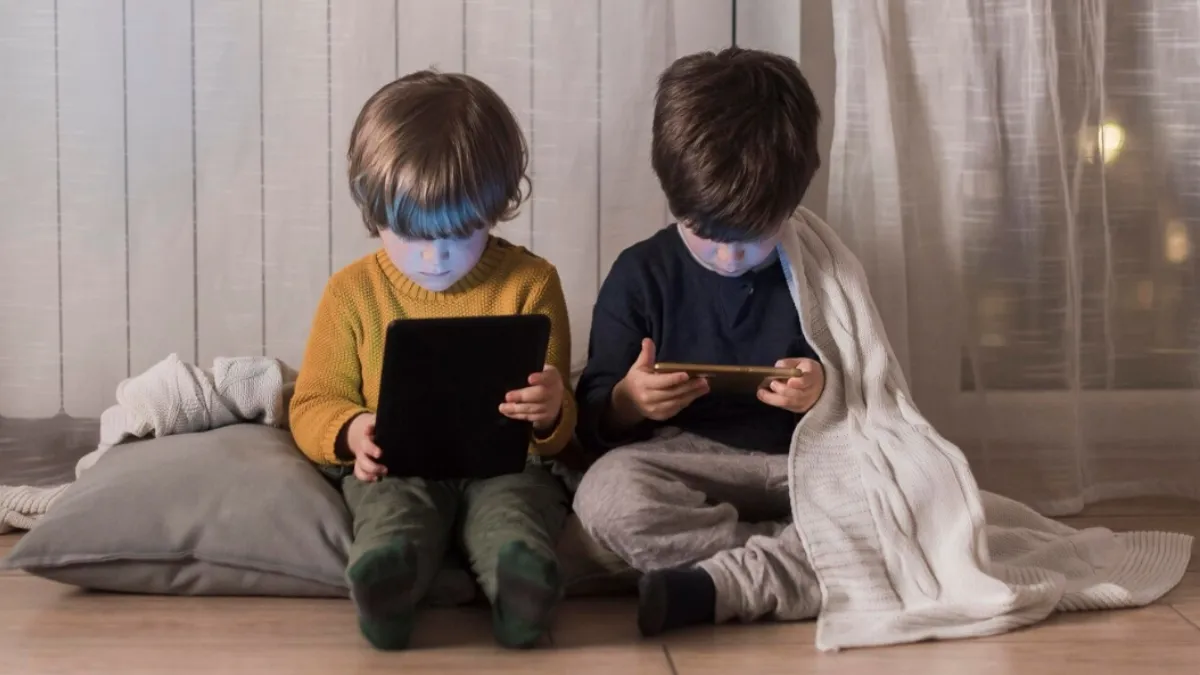
The last few decades of development accelerated our world from a connected to a hyperconnected one. And COVID-19 turned screen time from a leisure activity to a way of life. While the support that technology brings is undeniable in education, entertainment, and connecting with loved ones living across the globe, we hyper-focused on the crutches and forgot about our legs!
This is a cause of concern across ages, but most in children. Screens have replaced traditional forms of play that boost and support the overall development of our brain and body. Long-drawn exposure to screens causes a quick surge in dopamine (the feel-good chemical), which can lead to low tolerance to frustration and irritability, hamper novel thinking and problem-solving, and therefore spill the impact from your emotional brain to your rational brain.
According to Ms Aarushi Kohli, counselling psychologist and rehabilitation therapist and independent and licensed practitioner, the physical impact of high screen time has been observed for decades, increasing a sedentary lifestyle and impacting physical development both structurally (bones and muscles, height and weight, etc.) and functionally (motor development – reflex, picking, balancing, etc.). Recent studies have found that blue light exposure from screens not only is harmful for your eyes, but it also interferes with melatonin production, making it harder for children to fall and stay asleep.
Social skills and Interpersonal relationships
Screens can displace quality family time or social interactions in general because they mimic interactions. One-on-one interactions are important for emotional intelligence, as they attune you to your own and the other person’s emotions and emotion-related cues, nonverbal communication, etc. Therefore, one might feel connected to the world in terms of information but report feelings of loneliness, numbness, social anxiety, etc., as often seen in my practice, too. It might also impact empathy and therefore cause aggression towards others or oneself.
Looking at the influence and impact that screens have on our children, we want to understand how to support them and not guilt them. Children may respond with anger or emotional withdrawal, creating a cycle of conflict and guilt. These are biological and psychological reasons behind these reactions. And this often also leads to fracturing relationships or the adult falling into the digital pacifier trap—"Let's give it to him/her; at least they will be quiet or in a better mood.”
Remember, sudden transitions are hard. Switching from a high-stimulation activity (like a video game) to a low-stimulation one (like playing a board game or tag or helping you prepare a snack) is a difficult shift. Both these activities release dopamine – “the feel-good chemical”. Although one more easily and suddenly feels like a rush. When it’s taken away, the brain experiences a crash that might lead to frustration, irritability or even aggression.
And children are still growing; they do not always have the appropriate tools to express or regulate their emotions, so the default outlet becomes a “tantrum”.
While growing, children like and must be supported in practising autonomy and independence. And while screens can create an illusion of the two, it is important for the adult to find alternatives for the same without discouraging their agency. This could be done collaboratively between the parent and the child by establishing clear and consistent boundaries of how much screen time they can be exposed to.
They can also lead by example – avoid using phones while eating and in social interactions, have screen-free hobbies, practice unstructured and imaginary play with the children, spend time outdoors and use screens together – opening space for discussion and critical thinking and turning passive consumption into active learning.
Am I addicted? – Ask a professional
Allowing boredom to seep in once in a while, it fuels imagination. We know technology is here to stay; therefore, understanding its measured use for our benefit is understandable. While occasional struggles with screen time might arise, we want to look out for the following signs and seek professional help if needed:
- Screen use begins to interfere with daily life (e.g., sleep, school performance, friendships).
- The child shows signs of addiction—such as lying about screen time, irritability without screens, or inability to stop even when consequences arise.
- There are co-occurring concerns such as anxiety, depression, ADHD, or family conflict exacerbated by screen behaviour.
- Parental boundaries lead to extreme reactions (e.g., aggression, meltdowns, withdrawal).
Disclaimer: Tips and suggestions mentioned in the article are for general information purposes only and should not be construed as professional medical advice. Always consult your doctor or a dietician before starting any fitness programme or making any changes to your diet.
