
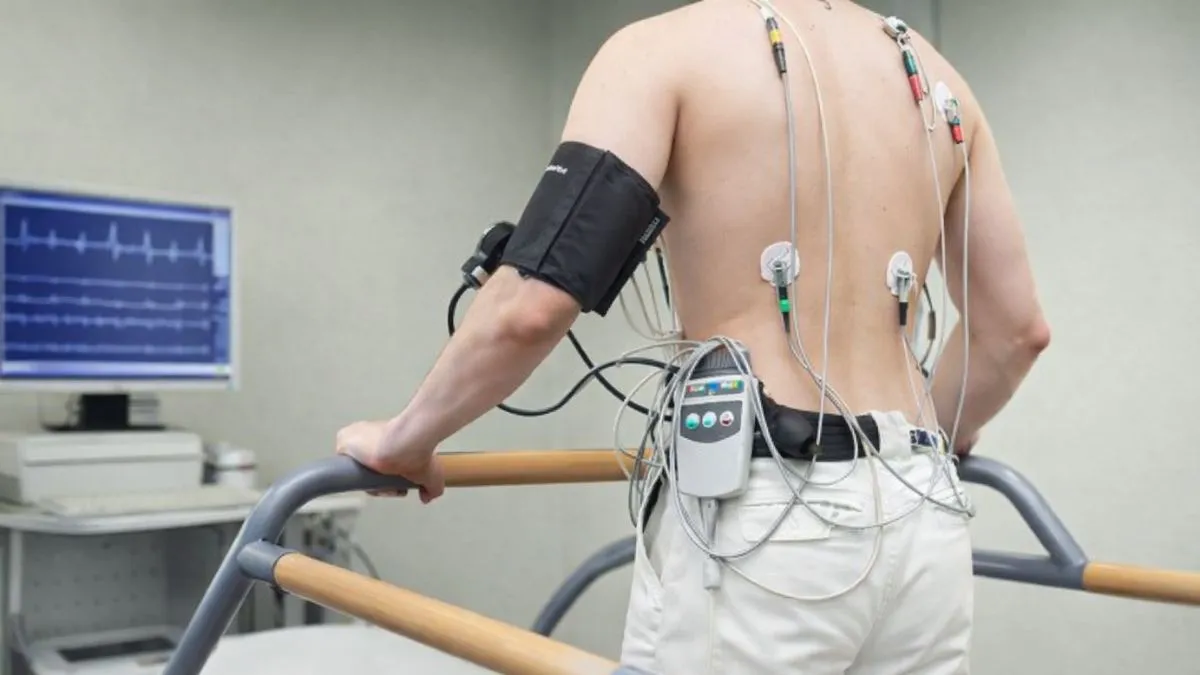
A treadmill stress test is often used to understand how the heart performs during physical activity. It helps doctors pick up abnormalities, if any, and decide on further treatment. It sounds fairly straightforward. And in many cases, it is.
But it does come with limits. That part is easy to overlook. Dr Sudhir Kumar, MD, DM, neurologist at Apollo Hospitals, Hyderabad, explained this through a case he shared on X on March 27. The idea was simple. A normal result does not always mean everything is fine.
Case study highlights treadmill stress test limitations
Dr Kumar recalled the case of a 55-year-old man who went to a doctor with intermittent chest discomfort. His local physician advised a treadmill stress test. The results came back normal, and the patient was reassured. No further tests were carried out.
Six weeks later, the man suffered an acute myocardial infarction. “Coronary angiography showed significant multivessel coronary artery disease,” Dr Kumar said.
What the treadmill stress test detects and what it does not
Dr Kumar explained that the issue was not exactly with the test itself. “The treadmill test detects flow-limiting obstruction in the arteries,” he said, adding that this usually reflects a later stage of disease.
He pointed out what the test misses. It does not detect plaque burden or vulnerable plaques. Plaque is the build-up of fat, cholesterol and other substances inside artery walls.
“Most heart attacks occur due to rupture of non-obstructive plaques,” Dr Kumar said. This means even if someone clears the test, the risk can still remain.
He summed it up clearly. “A normal stress test rules out ischemia, but not atherosclerosis.”
How a treadmill stress test is done
According to the Cleveland Clinic, the test typically follows these steps:
- Vitals are recorded while the person is at rest
- The patient starts walking on a treadmill
- Vitals are monitored every three minutes as intensity increases
- The exercise continues until the person reaches or nears maximum heart rate
- This is followed by a gradual cool-down period
The test gives useful information. But as the case shows, it does not capture everything.
