
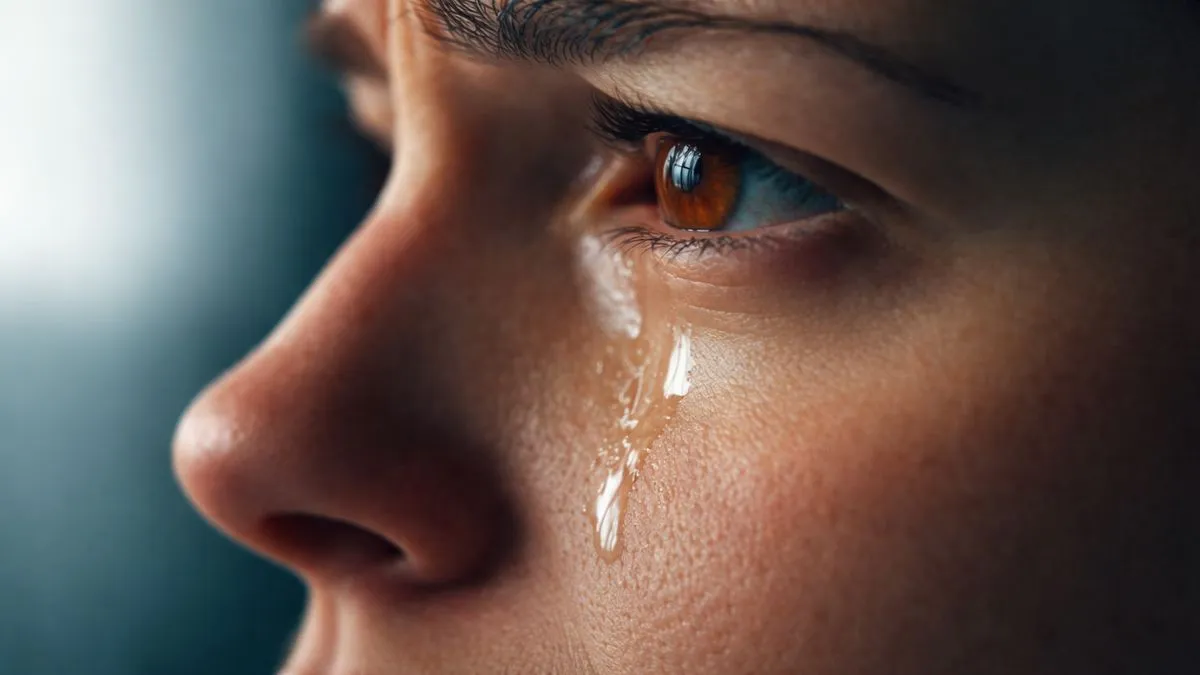
Crying is often misunderstood or played down as a childish emotion or tantrum. For some, it feels like a loss of control. For others, a release they secretly rely on. In a culture that still equates emotional expression with weakness, many people suppress tears and wonder later if that suppression is doing more harm than good.
Psychiatrists say crying is neither inherently good nor bad. What is important is the reason for it, how often, and how one feels afterwards. Crying, according to Dr Sanjay Kumawat, Consultant Psychiatrist and Sexologist, Fortis Hospital, Mulund, can be described as an important human function of great emotional, social, and even physiological importance.
Why humans cry in the first place
At its core, crying is a form of communication. “Tears often emerge at the peak of intense emotions such as pain, overwhelm or deep emotional release,” Dr Kumawat explains. “They signal that something significant is being experienced.”
From an evolutionary and psychological perspective, crying helps externalise inner distress. In moments of helplessness, it can act as a silent request for care and support, alerting others that we may need understanding or assistance.
Can crying actually make you feel better?
Yes, in many cases. Weeping can be considered an emotionally adaptive behaviour. Studies have confirmed that weeping can actually help lower stress hormones in the body, which often leaves a person feeling lighter or grounded after weeping.
“This is why many people report a sense of relief after crying,” says Dr Kumawat. “It helps restore emotional balance and clears emotional overload.” However, the benefit depends on context. Crying that leads to emotional processing and calm is different from crying that feels endless, overwhelming or uncontrollable.
Not all tears are the same
An important point that often gets overlooked is that crying is not limited to pain or grief. People also cry when they experience joy, achievement or deeply meaningful moments, whether it’s receiving good news, reaching a long-awaited goal, or witnessing an emotionally charged event. “These tears reflect emotional overflow,” Dr Kumawat explains. “They are just as healthy and reinforce the idea that crying is a sign of emotional authenticity, not weakness.”
When crying may signal a concern
While crying is usually linked to emotional states such as grief, despair, anger, pleasure or helplessness, there are situations where it deserves attention. Excessive tearing without any emotional trigger may point to an underlying eye-related condition and should be medically evaluated. From the perspective of mental issues, excessive, out-of-proportion, or otherwise persistent crying, accompanied by feelings of hopelessness, numbness, or lack of control, could indicate mental health conditions like depression or anxiety. Such instances are not crying that needs to be cured. They are crying that needs to be understood.
The role of crying in emotional regulation
Psychiatrists even view crying as an emotional reboot. Crying allows the mind to process the experience by surfacing emotions rather than suppressing them. Many people find that after crying, they are able to think more clearly and respond rather than react. “Ultimately, crying helps restore balance,” Dr Kumawat says. “It allows emotional release and helps a person regain a sense of calm.”
Crying is not a sign of weakness, instability or poor mental health. In most cases, it is a healthy emotional response that adds to psychological balance.
What we need is to listen to what the tears are saying. Tears that prevent us from feeling relieved, clear, and connected can mean that something is wrong. Yet tears that prevent us from feeling overwhelmed or that are present all the time could mean that we need some support.
In either case, tears are not something to be afraid of, as they are part of the healing process of the human mind.
Disclaimer: Tips and suggestions mentioned in the article are for general information purposes only and should not be construed as professional medical advice.
Also read: Walk more, eat better, stress less: A cardiologist’s no-nonsense guide to longevity
