
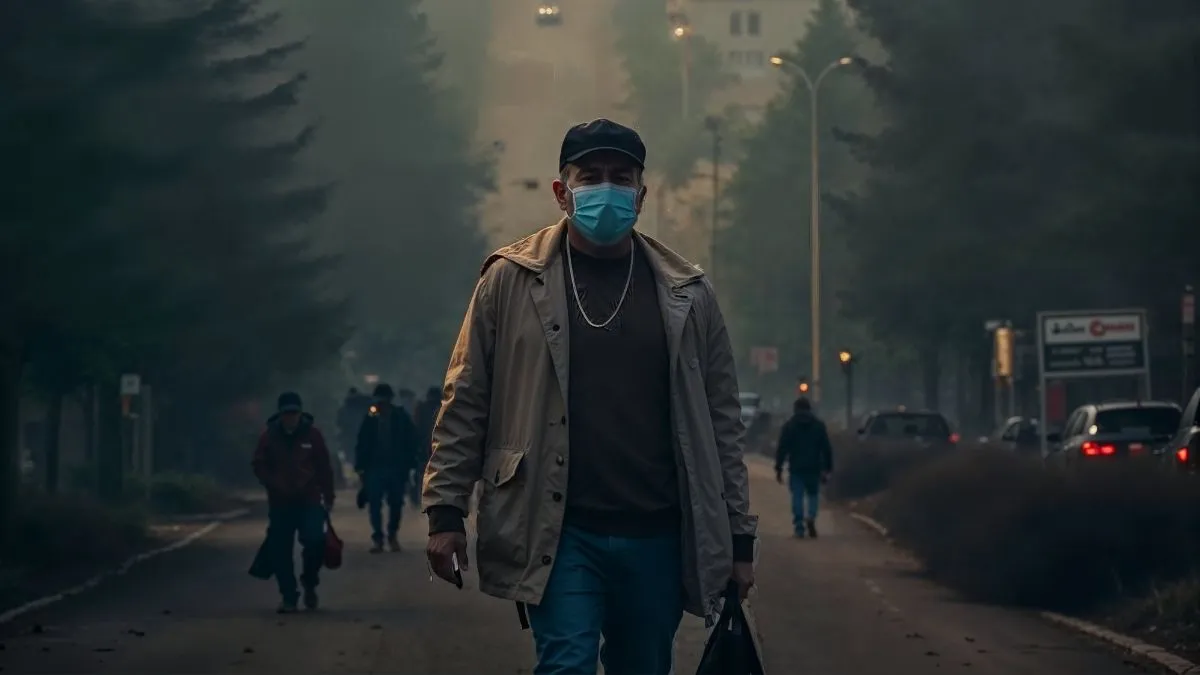
Walk through any Indian city on a winter morning and you’ll feel it before you even see it. the sting in your throat, the heaviness in your chest, the burnt smell hanging in the air. It’s a season when masks come out again, not for a virus, but for the smog that settles over our homes, our commute and our lungs. Yet even as we worry about coughs and itchy eyes, the real danger is far quieter and much deeper.
Doctors say polluted air today behaves frighteningly like tobacco smoke. It weakens the lungs, dulls our natural defences and creates the perfect ground for dangerous infections like pneumonia, especially in children, older adults and anyone with asthma or COPD. And with pollution spikes becoming the new normal, India is staring at a slow-burning health crisis hidden behind the haze."
Why dirty air raises your pneumonia risk
Dr Harsha Jain, Consultant – Chest & Pulmonology, Sahyadri Hospitals, Pune opens up on the subject. Most of us associate pneumonia with winter viruses, but Dr Jain explains that polluted air is now a major reason this infection is rising sharply across Indian cities.
Fine particulate matter, PM2.5 and PM10, is the biggest culprit. These microscopic particles travel deep into the lungs and even seep into the bloodstream. “PM2.5 triggers inflammation and suppresses the immune system,” she notes, making it harder for the body to fight viruses and bacteria. Over time, constant exposure weakens the airway’s cilia — the tiny hair-like structures that normally sweep out dust and germs.
Once this defence breaks down, infections take hold faster and hit harder. That’s why hospitals in Delhi, Gurgaon, Lucknow and Kolkata consistently see a surge in pneumonia cases every winter, right when smog levels spike.
The long-term danger: lungs that age before time
Pollution doesn’t just irritate, it alters the lungs structurally. Children are especially vulnerable because their lungs are still developing, and polluted air limits that growth. Adults face a different set of dangers: chronic inflammation, scarred airways, COPD and premature ageing of lung tissue.
Dr Jain warns that long-term pollution exposure “behaves like years of passive smoking”, reducing lung capacity and lowering oxygenation, making every infection significantly more dangerous.
Pollution and pneumonia: a deadly partnership
Dr Mihir Gangakhedkar, Consultant – Pulmonology, Fortis Hospital Mulund, also shares his input on the issue. Dr Gangakhedkar says the comparison between polluted air and cigarette smoke isn’t just a metaphor; it’s measurable.
“PM2.5 exposure has a well-documented equivalence to environmental tobacco smoke,” he notes. Once the lungs become inflamed and clogged, their ability to clear mucus drops sharply. This creates stagnant pockets inside the airways, warm, moist spaces where bacteria and viruses thrive.
Patients with asthma, COPD or weakened immunity fall ill faster, stay sick longer, and are more likely to be hospitalised.
In severe cases, repeated cycles of pollution-induced inflammation lead to bronchiectasis, a chronic condition where the airways are permanently widened and prone to frequent pneumonia.
Why children are hit the hardest
Their developing lungs need long periods without infection to grow fully. But in polluted cities, they rarely get that window.
That’s why paediatric pneumonia peaks sharply during smog season, a pattern doctors now expect every year.
What you can do to protect yourself
While experts stress that personal measures alone cannot solve a public health crisis, some protection is possible:
• Wear N95 masks outdoors
• Use air purifiers at home, especially in bedrooms
• Ventilate when outdoor AQI improves
• Stay updated with flu and pneumonia vaccines
• Avoid early morning and late evening outdoor exercise
• Eat antioxidant-rich foods that support lung health
• Keep kids, seniors and asthma patients indoors on severe AQI days
But both doctors reiterate: these are band-aids, not solutions. Lasting change must come from cleaner transport, stricter industrial regulation, and large-scale environmental reform.
Air pollution may look like a seasonal nuisance, but doctors call it the “silent epidemic” for a reason. It chips away at lung health day after day until a routine cough becomes a dangerous infection. If urgent action isn’t taken, collectively and individually, India risks a future where pneumonia is not the exception, but the cost of simply breathing.
Also read: Is Delhi’s pollution making you weak? The doctor explains how smog harms your blood
