
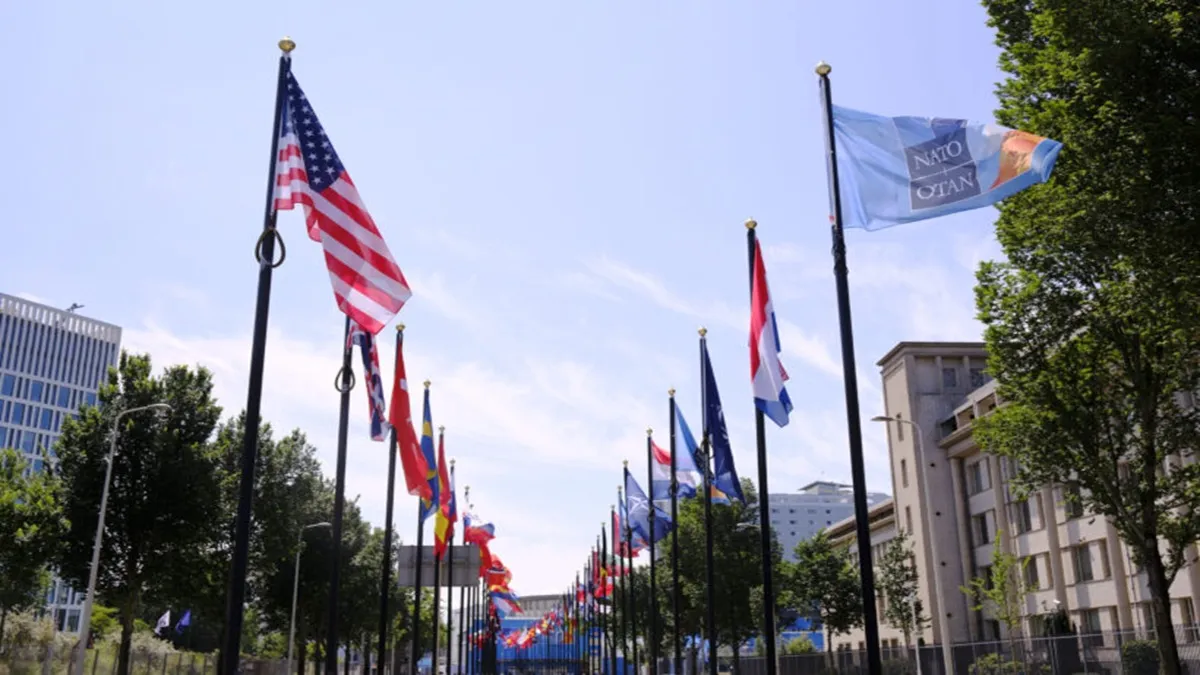
The North Atlantic Treaty Organization (NATO) member nations on Wednesday pledged to raise their annual defence spending to 5 per cent of their gross domestic product (GDP) by 2035. They also reiterated their unified stance on collective defence, emphasising that an attack against one ally would be considered an attack against all. The announcement came at a tightly secured summit in the Dutch city of The Hague, where collective defence, burden-sharing, and future war readiness topped the agenda.
Why is NATO raising its spending target?
The decision marks a sharp shift from the current 2 per cent goal, reflecting growing concern over the threat posed by Russia, the need to modernise military infrastructure, and NATO's desire to reduce dependence on the United States. The 5 per cent figure includes both core defence spending and funds for critical areas such as cybersecurity, logistics, infrastructure and civilian resilience.
Rutte calls it 'necessary'; Trump claims victory
NATO Secretary-General Mark Rutte called it a "necessary step" to keep the alliance strong in an increasingly unpredictable world. "The threats we face are not in the future, they are already here. This is about ensuring we’re ready," he said after the closed-door session.
US President Donald Trump, who previously criticised European nations for "free-riding" on American security, welcomed the outcome. "It's a great win. Everyone must do their part," he said, adding that Washington would continue to stand by its allies but expected them to step up.
Spain, Belgium, Slovakia and Luxembourg express reluctance
While most member states supported the target, the summit also exposed cracks within the alliance. Countries such as Spain, Belgium, Slovakia and Luxembourg expressed reluctance to commit to the 5 per cent goal, citing budgetary pressures and domestic priorities.
Spain, in particular, made headlines after it requested an opt-out clause, agreeing instead to focus on meeting its earlier 2 per cent commitment. Belgium and Slovakia also pushed back against the deadline, saying the 5 per cent benchmark was unrealistic in the short term. Luxembourg, which spends less than 1 per cent of GDP on defence, has long relied on its NATO partners and again raised concerns about the proportionality of the target.
Mid-term review planned for 2029
Despite these reservations, the final communique, signed by all 32 members, reaffirmed NATO's commitment to collective defence under Article 5. A mid-term review has been scheduled for 2029, allowing countries to report progress and adjust strategies if required.
Eastern Europe leads the way on military spending
Several Eastern European nations such as Poland, Estonia and Latvia have already surpassed the 3 per cent mark and are on track to hit the new target within the decade. NATO officials say the increase is critical to maintaining deterrence, especially as Russia expands its military footprint and global instability grows.
New focus on cyber, logistics, and resilience
The summit also underscored the growing emphasis on non-conventional defence. A significant share of the 5 per cent figure will go towards protecting critical infrastructure, boosting cyber capabilities and strengthening civilian defence networks. Officials said this broader definition reflects the nature of modern threats, which are not limited to traditional battlefield scenarios.
The road ahead: Pledges vs performance
With the clock ticking towards 2035, the real challenge now lies in execution. While the pledge may look united on paper, the road ahead could see more political debates over military budgets, fiscal limits, and public opinion.
