
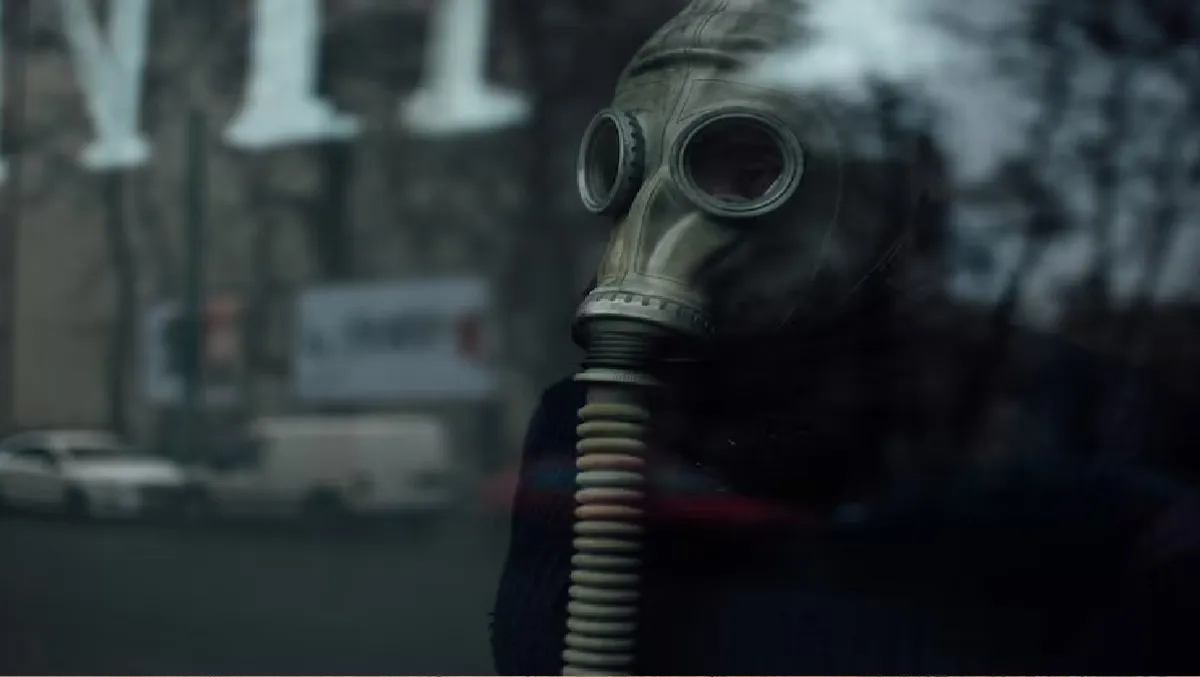
Humanity has already witnessed the horrors of conventional war, chemical attacks, nuclear explosions, and cyber warfare. Now, biological weapons, which turn microorganisms into instruments of mass destruction, pose an invisible threat with devastating potential. Unlike bombs, these weapons leave no crater, no fireball. But they can silently infect millions. Recently, External Affairs Minister S Jaishankar has warned of a possible misuse of biological weapons in view of the uncertain international security environment. Let's first understand what Jaishankar said, and then, in this article, we will explain what biological weapons are and how significant a threat they pose to humanity.
'Biological terrorism is a matter of concern'
Given the uncertain international security environment, India has pitched for a global mechanism to prevent the potential misuse of biological weapons. Jaishankar has said that the misuse of biological weapons by non-state actors is not a remote possibility and that international cooperation is essential to address such a challenge.
Addressing a conference marking the 50th anniversary of the Biological Weapons Convention (BWC), he said, "Biological terrorism is a serious concern for which the international community must be fully prepared. However, the BWC still lacks a basic institutional framework."
"It has no compliance system, it has no permanent technical body and no mechanism to track new scientific developments. These gaps must be bridged in order to strengthen confidence," he added.
India, the minister said, has consistently called for stronger compliance measures within BWC, including verification designed for today's world. "India supports international cooperation and assistance enabling exchange of materials and equipment for peaceful use," he said.
"We have further called for systematic review of scientific and technological developments so that governance does indeed keep pace with innovation," he added.
What is Biological weapons?
Biological weapons are tools of warfare that rely on bacteria, viruses, fungi, or natural toxins to harm humans, animals, crops, or entire ecosystems. Examples include anthrax, smallpox, plague, botulinum toxin, and various hemorrhagic fever viruses—including their engineered forms. The illnesses they trigger can be deadly, spread quickly, and are extremely hard to contain, which is why such weapons are often referred to as "silent killers." In many cases, an attack becomes noticeable only after the infection has already taken hold.
The use of biological agents in conflict has a long history. In ancient times, infected animals or corpses were used to spread infection in enemy territory. During the Battle of Kaffa in 1346, an epidemic was spread by dumping plague-infected bodies into a fortress. During World War II, Japan's infamous Unit 731 used biological weapons against thousands of people. During the Cold War, both the United States and the Soviet Union conducted extensive biological research programs. In 1972, the Biological Weapons Convention (BWC) was enacted, banning the development, stockpiling, and use of biological weapons. However, the strictness with which it is enforced remains a matter of debate.
Biological weapons and countries that possess
It's important to note that no country officially admits to possessing biological weapons today, as the BWC prohibits them. However, historical records, intelligence findings, and investigative reports suggest otherwise.
Soviet Union/Russia
The former Soviet Union is believed to have operated the world's largest biological weapons program, known as 'Biopreparat,' during the Cold War. The 1979 Sverdlovsk anthrax leak is widely thought to be connected to this secret initiative.
US and Japan
The United States also ran biological weapons programs during World War II and the early Cold War. President Richard Nixon officially terminated these programs in 1969–70. Since then, the US has limited its work to defensive biological research, which is allowed under the BWC.
Japan's infamous Unit 731 conducted brutal experiments and deployed pathogens like plague, anthrax, and cholera during World War II.
North Korea, China, and Syria
Some international assessments have accused North Korea of possessing active biological preparedness, but there has been no official confirmation. Syria is also suspected of developing biological capabilities along with chemical weapons.
China, a signatory to the BWC, has faced questions from Western intelligence agencies about certain "dual-use" research activities, projects that can serve both civilian and military purposes. However, there is no publicly available proof of any offensive program. Many claims rely on classified assessments or political narratives, making it difficult to determine the actual situation.
How serious is the threat of biological weapons?
The greatest danger posed by biological weapons is delayed detection. Infections often spread silently; a single infected person can trigger a large outbreak within days. Creating harmful pathogens does not require large, sophisticated infrastructure, some can be engineered in small laboratory environments. Once released into air or water, a biological agent spreads indiscriminately, potentially causing widespread regional infection or even a global pandemic.
Another serious concern is terrorism. The 2001 anthrax attacks in the United States are a prime example.
Is the world truly safe?
Over 180 countries have signed the Biological Weapons Convention, but the treaty has a major flaw: it lacks a strong monitoring and inspection mechanism. Verifying violations is difficult, especially since many laboratories worldwide are "dual-use," meaning they conduct legitimate medical research while also having the capability to support military applications.
The first step to protecting against biological weapons is to strengthen global surveillance systems. National health systems must be strengthened to quickly detect any suspected outbreaks. Transparent research and international oversight are essential in the world's leading laboratories. Strict regulations are necessary for synthetic biology experiments to prevent misuse. The recent coronavirus pandemic has proven that viruses respect borders, so countries must work together.
