
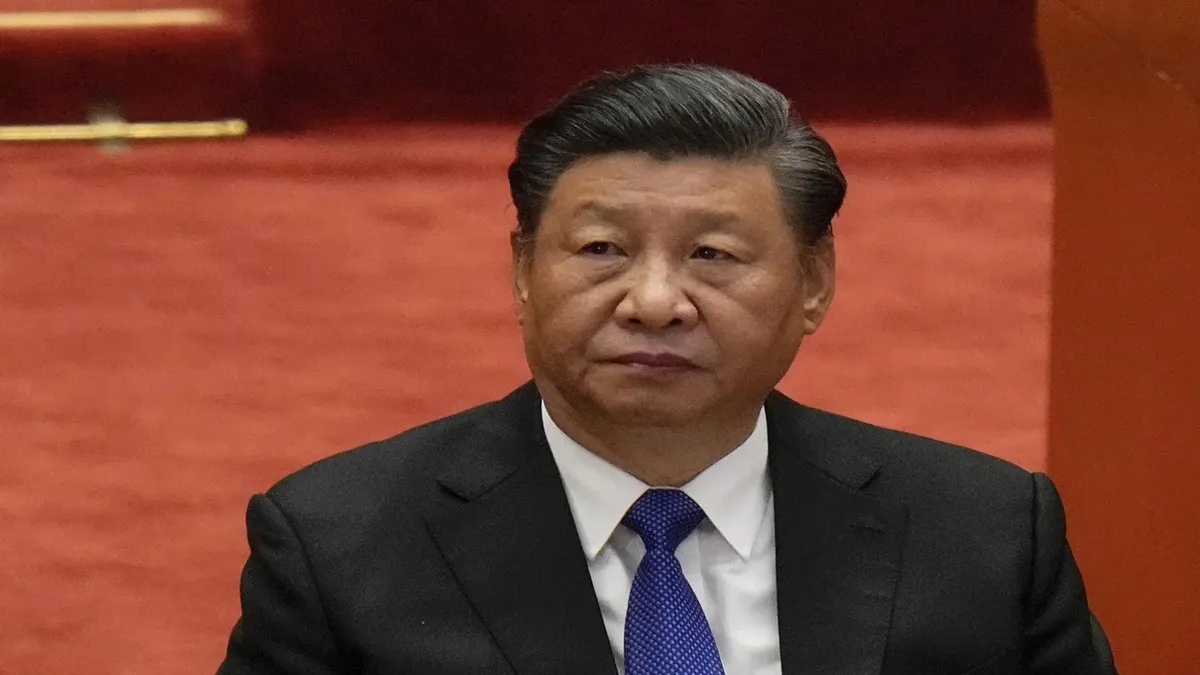
In China's rigid, stage-managed political system, silence speaks volumes. So when President Xi Jinping vanished from public view for two weeks earlier this year without explanation, it didn't go unnoticed. Now, for the first time since taking power in 2012, Xi is skipping the annual BRICS summit. Officially, the reason is a "scheduling conflict". But the timing, coupled with a sweeping purge in China's military and whispers of discontent among senior Communist Party officials, is fuelling speculation that the once unquestioned strongman may be facing the greatest internal challenge of his reign.
Between May 21 and June 5, 2025, Xi Jinping, General Secretary of the Chinese Communist Party (CCP), Chairman of the Central Military Commission (CMC), and President of China, was nowhere to be seen. Not on state media. Not in official readouts. Not in diplomatic engagements. It was the longest unexplained absence of his presidency.
When he finally reappeared in early June, it was during a low-key meeting in Beijing with Belarus President Alexander Lukashenko. Gone were the red carpets, the usual fanfare and the dominant media coverage. Observers noted that Xi appeared visibly tired and subdued. Even his usually tight personal security team was notably thinner.
For a leader who has cultivated an image of unwavering strength, enshrining 'Xi Jinping Thought' into school textbooks and the party constitution – the optics were hard to ignore.
The PLA purge and a quiet rebellion
Behind the scenes, a far more serious shake-up is underway. Since late 2023, the Chinese military, particularly the elite Rocket Force and sections of the PLA's Western Theatre Command, have been rocked by a series of purges. High-ranking officers have vanished or been replaced, often without explanation. State media has offered little more than vague references to "disciplinary violations". General Zhang Youxia, long considered a Xi loyalist and current First Vice Chairman of the CMC, is reportedly asserting more independent control over the military. Some reports even suggest he's being backed by senior CCP figures linked to Xi's predecessor, Hu Jintao.
If true, it marks a dramatic shift. Xi's authority over the military has been central to his rule. He took personal command of the PLA early in his first term, purged hundreds of officers, and installed allies in key positions. The current round of dismissals suggests that grip is weakening or being challenged from within.
Hu Jintao's legacy: Comeback of collective leadership?
One of the most symbolic moments of Xi's rise came during the 20th Party Congress in 2022, when Hu Jintao, China's president from 2003 to 2013, was abruptly escorted out of the Great Hall of the People. State media claimed he was unwell. But the images told a different story, a reluctant Hu reaching for documents, Xi turning away, and no one intervening.
That moment appeared to signal the end of China's previous consensus-based model of governance. Xi had sidelined rivals, extended his term indefinitely, and stamped out dissent. The party was no longer led by committee, it was Xi's alone.
Now, that era might be ending. Figures associated with Hu Jintao's administration are reportedly regaining influence. Chief among them is Wang Yang, a reform-minded technocrat once tipped to join the top Politburo Standing Committee but blocked during Xi's power consolidation.
State media slips and strange omissions
In China, the Communist Party's message is carefully curated down to every headline and photo caption. Which is why small lapses matter.
In June, China Central Television (CCTV) briefly referred to Xi without any of his official titles during a broadcast, something unheard of in over a decade. Though the slip was corrected and may have been accidental, it comes amid other signs that Xi's dominance in state media is being dialled back.
His daily presence on the front pages of People's Daily has become irregular. Official announcements now frequently come from Premier Li Qiang or Foreign Minister Wang Yi. Xi is still visible but not omnipresent.
In China's political ecosystem, that shift in visibility often reflects something deeper: a redistribution of power, or at the very least, a recalibration.
An unwell leader, a shrinking inner circle
Xi Jinping's decision to skip this year's BRICS summit in Brazil is more than a scheduling footnote. Since joining the bloc in 2011, China has consistently positioned itself as BRICS' economic engine and political leader. Xi has never missed a summit. Until now.
China's economic headwinds
Beijing's economy is under strain. Youth unemployment remains above 15 per cent. The real estate crisis continues. Local governments are drowning in debt. Foreign investment is drying up, and trade tensions with the US are escalating again.
The absence is especially notable because Indian Prime Minister Narendra Modi will be attending in person. It was expected that BRICS might offer a venue for the first Modi–Xi meeting since the Galwan clash in 2020. That now won't happen.
Implications for India
India cannot afford to ignore what's happening inside China. Historically, Chinese leaders have turned to external aggression in times of domestic political weakness. The 1962 war, the 1979 Vietnam invasion, the 2017 Doklam standoff, and the 2020 Galwan clash all followed periods of internal turmoil or transition in Beijing.
India's strategy remains cautious, focused on building defensive capabilities, strengthening Quad partnerships, and increasing presence in the Indian Ocean. But New Delhi knows that a distracted or divided leadership in Beijing can often be more dangerous than a strong one.
