
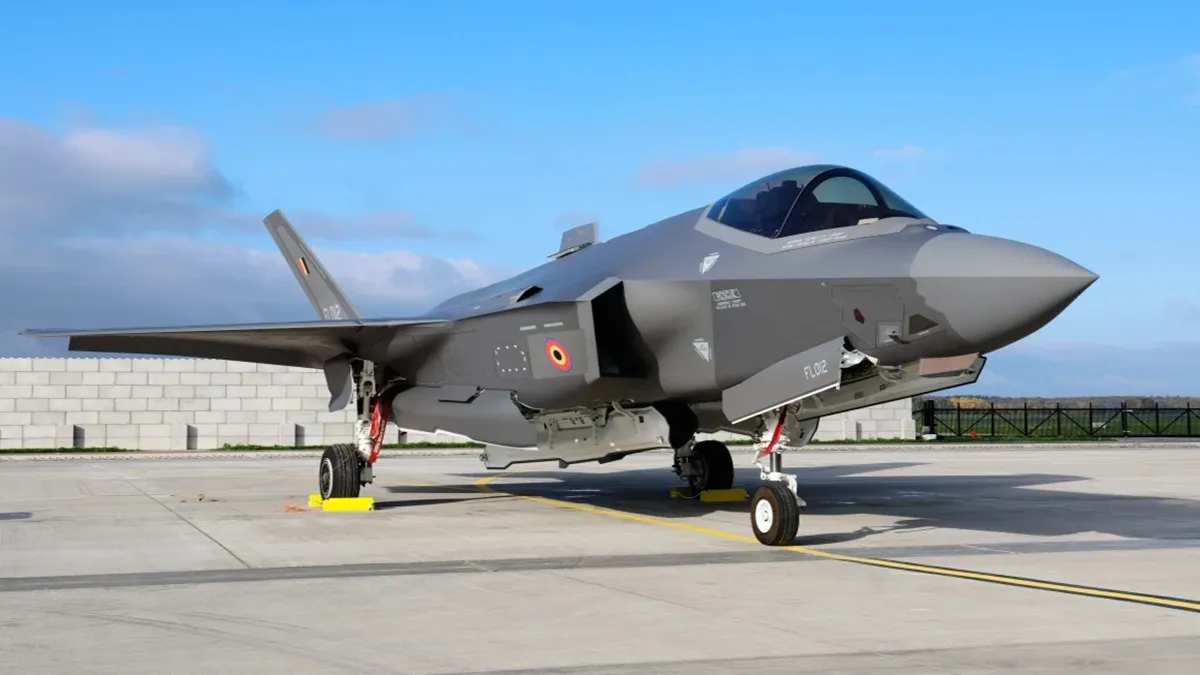
In a sensational escalation amid the West Asia tensions, Iran has claimed that it successfully targeted the highly advanced F-35 Lightning II fighter jet, considered one of the most powerful and expensive combat aircraft in the world. The stealth jet, known for evading radar detection, was hit and seriously damaged on Thursday. Over 19 countries have already flown or are preparing to fly the Lightning II, which is in great demand both within the USAF and among its allies. According to the Islamic Revolutionary Guard Corps (IRGC), the incident took place at 2:50 am local time when its air defence systems intercepted the jet inside central Iranian airspace. The IRGC said the interception came after Iranian units had already countered more than 125 American and Israeli drones. Iran has also released a video claiming to show the moment the F-35 was struck.
How Iran says it targeted the F-35
Reports in Iranian media suggest that the strike involved the indigenous Bavar-373 air defence system. Experts believe passive sensor technology may have played a role in detecting the stealth aircraft without emitting radar signals. While independent verification remains pending, Iranian state outlets claim the system locked onto and hit the jet accurately.
The United States has acknowledged that the F-35 was forced to make an emergency landing at an American air base in the Middle East after being hit by what is suspected to be Iranian fire. According to Capt Tim Hawkins, spokesperson for the US Central Command, the fifth-generation stealth fighter was "flying a combat mission over Iran" when the incident occurred, CNN reported. He confirmed that the aircraft landed safely and said a detailed investigation is currently underway.
Why an attack on the F-35 is significant
The F-35 is regarded as the backbone of American and allied air power. Each aircraft costs more than 100 million dollars and integrates stealth features, advanced sensors and next-generation battlefield networking capabilities. It can conduct air-to-air combat, air-to-ground bombing and surveillance simultaneously. With speeds exceeding 1,900 kilometres per hour and a 360-degree sensor suite, the F-35 is designed to enter heavily defended airspace while remaining undetected. Even minor damage to this jet is considered strategically significant.
How the F-35's sensor fusion makes it unique
The fighter’s sensor fusion technology collects and processes inputs from radar, infrared sensors, satellites and other aircraft to create a real-time battlefield image. This enables pilots to identify threats early and strike before being detected. This advanced system is one of the reasons the F-35 is seen as unmatched in modern aerial warfare.

What the incident suggests about F-35 weaknesses
The incident has led to a debate about the F-35's inherent vulnerabilities. The fighter is engineered to defeat radar detection by deflecting and absorbing radio-frequency waves, but it cannot mask its heat emissions. Iran has invested in air defence systems that rely on passive infrared sensors instead of traditional radar which makes them harder to detect and counter. These passive systems do not emit signals, depriving aircraft of early warning cues that radar-based threats typically trigger. This technology had already shown its effectiveness in Yemen, where Iranian-backed Houthi groups reportedly used similar tracking methods.
Passive Sensors Vs Stealth: Why this matters
The F-35A is equipped with the Distributed Aperture System (DAS), a suite of six infrared cameras designed to provide a 360-degree awareness of threats. However, identifying a threat and evading a silent infrared-guided attack remain separate challenges. Passive tracking systems remain especially dangerous because they offer minimal advance warning, reducing a pilot’s reaction time and heightening the risk posed even to sophisticated stealth aircraft.
US has lost over a dozen aircraft so far
A report by Bloomberg states that at least 16 US aircraft have been lost since the conflict began on February 28. Several MQ-9 Reaper drones have also been downed and many of them shot down by Iranian defence systems. These drones are often deployed in high-risk missions because they are engineered to minimise losses if destroyed.
ALSO READ: US F-35 fighter jet 'damaged' by Iran; aircraft makes emergency landing | WATCH