
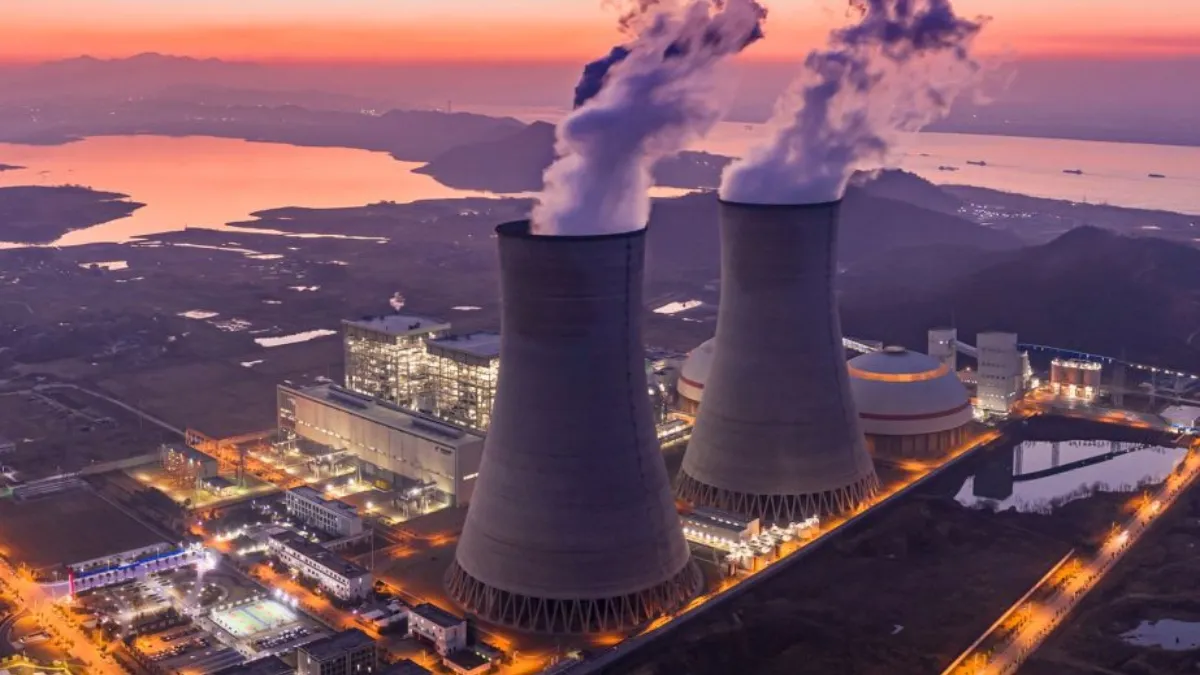
In a monumental step toward clean and safe nuclear energy, China has successfully launched the world’s first thorium-based nuclear reactor. This pioneering project, set in the remote Gobi Desert in Wuyi City, Gansu Province, is not just a scientific breakthrough but a bold statement in global nuclear innovation—especially as energy geopolitics tighten amid China’s ongoing trade tensions with the United States.
China’s Milestone: The thorium molten salt reactor
Initiated in October 2023, the Thorium Molten Salt Reactor (TMSR) is designed to generate 2 megawatts (MW) of electricity—modest, but symbolically powerful. Backed by a substantial $444 million investment since 2011, this project marks the world's first operational instance of thorium-based nuclear energy.
China’s ambition does not stop here. Plans are underway to scale up to a 10 MW thorium reactor by 2030, demonstrating its long-term commitment to advancing this alternative fuel technology.
Why thorium matters
Thorium offers significant advantages over conventional uranium fuel:
- It generates less radioactive waste
- It is inherently safer, reducing meltdown risks
- It is non-proliferative, making it harder to weaponise
However, thorium itself is not fissile. It must be converted into uranium-233 (U-233) through a complex process. While this adds to development costs, the long-term benefits in safety, sustainability, and geopolitics have made thorium an attractive option for future energy systems.
India: A longtime advocate of thorium energy
Although China has taken the lead in deployment, India has been at the forefront of thorium research for decades. India possesses 25% of the world’s thorium reserves, the largest globally. The country’s nuclear roadmap, developed under the visionary Dr. Homi Bhabha, has long aimed to utilise thorium as a core energy resource, especially given India’s limited uranium reserves.
Thorium research began in earnest in the 1950s with the three-stage nuclear program, the final stage of which focuses on thorium-fueled reactors. India’s strength lies in its deep technical expertise, built over decades through institutions like the Bhabha Atomic Research Centre (BARC).
India’s nuclear vision: From thorium to smrs
India’s ambitions have been renewed in the Union Budget 2025–26, with the launch of the Nuclear Energy Mission for Viksit Bharat. The goal is to achieve 100 GW of nuclear power capacity by 2047, including through thorium, Small Modular Reactors (SMRs), and fast breeder technologies.
A budget of Rs 20,000 crore has been allocated specifically for SMRs, with plans to develop five indigenous models by 2033. These reactors, with capacities ranging from 30 to 300+ MWe, offer scalable, cost-effective solutions and are suitable for deployment even in remote and industrial zones.
India is also pushing forward with the Bharat Small Reactors (BSRs)—220 MW Pressurized Heavy Water Reactors (PHWRs)—that can serve as captive power plants for steel, aluminium, and other heavy industries.
Fast breeder reactors: India's bridge to thorium
The Prototype Fast Breeder Reactor (PFBR) at Kalpakkam is critical for India’s thorium roadmap. By breeding U-233 from thorium, this 500 MWe reactor is a technological enabler for the third stage of India’s nuclear program.
In March 2024, the PFBR achieved a major milestone: successful sodium filling and pump commissioning, followed by core loading. Its commercial operation is expected to set the stage for thorium utilisation at scale.
Expanding India’s nuclear footprint
As of January 2025, India’s nuclear capacity stands at 8,180 MW, with plans to scale up to 22,480 MW by 2032. Major new projects include:
- Indigenous 700 MWe PHWRs at Kakrapar (KAPS-3 & 4)
- A 6 x 1208 MW plant at Kovvada, in collaboration with the USA
- The Mahi-Banswara project in Rajasthan under the ASHVINI JV between NPCIL and NTPC
India is also exploring molten salt reactors, similar to China’s, with BARC leading R&D efforts aimed at thorium deployment in the next decade.
Safety, sustainability, and sovereignty
India maintains a strong record on nuclear safety, with radiation levels well below global benchmarks. Its commitment to a closed fuel cycle, indigenous technology, and public-private collaboration positions the country to be a global leader in next-generation nuclear technology.
A recent discovery of additional uranium deposits at Jaduguda Mines has also boosted India's confidence in maintaining a self-reliant nuclear fuel supply for decades to come.
A two-horse race in thorium innovation
While China has achieved the world’s first operational thorium reactor, India remains a formidable player with unmatched thorium reserves, strong scientific foundations, and a clear roadmap.
The two Asian giants are now leading a global race toward cleaner, safer, and more secure nuclear energy—with thorium as a potential game-changer. As India pushes forward with SMRs, fast breeders, and public-private partnerships, its ambition to generate 30% of electricity from thorium by 2050 looks increasingly feasible.
The world will be watching as these developments reshape the nuclear energy landscape—one atom at a time.
