
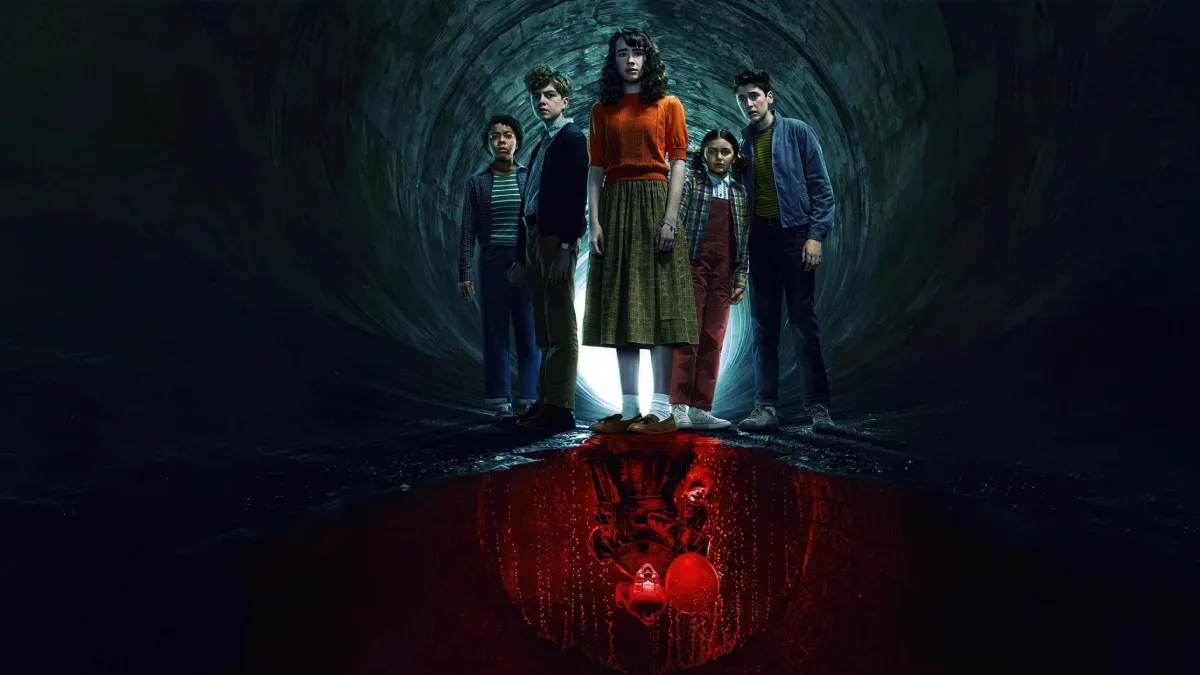
The first episode of It: Welcome to Derry presents a daring narrative twist, re-imagining the roots of terror in the town of Derry, Maine, and making the audience face the uncomfortable reality: in this prequel, no character is safe.
As the first episode of the It universe prequel progresses, the season finale makes its mark on horror television by removing expectation and comfort. Taking place in 1962, Derry, the narrative centres around a group of children and adults unknowingly pulled into the clutches of the monstrous being known as Pennywise the Dancing Clown.
It: Welcome to Derry first episode ending explained
In the final act, years of build-up culminate in a brutal sequence: a projection-theatre scene that erupts into carnage as the creature manifests in a winged-baby mutation, attacks the children and leaves only two of the group alive.
By choosing to kill characters who appeared to be central, the series signals that the rules are changing. Co-showrunner Jason Fuchs said the goal was to make viewers feel “anything is possible, no one is safe.”
What makes this ending different from the original It?
But the ending does more than shock. It humanises the horror. The survivors, particularly Lilly and Ronnie, are left not as triumphant heroes but as deeply traumatised witnesses. Their screams, the severed hand in their grasp, the blood-spattered lobby, all underscore the emotional cost of evil rather than the spectacle.
What does the finale reveal about Pennywise’s origins?
Meanwhile, the mythology deep-end: the series doesn’t merely show Pennywise as an unstoppable evil, but begins answering long-standing questions: why Derry? Why this creature? What does it feed on? The conclusion, therefore, serves both functions of closure and invitation: closure of what has been done, and an invitation to greater terror to follow.
Why the It: Welcome to Derry finale changes horror TV
For series fans, the finale is a shift: it gets the story away from the comfortable "kids vs monster" formula and towards something grittier, more psychological, and much less predictable. The real horror isn't what's in the sewer; it's what's inside the hearts of Derry's people, and the finale makes that very explicit.
Also Read: The Family Man Season 3 release date: Manoj Bajpayee returns on Prime Video this November
