
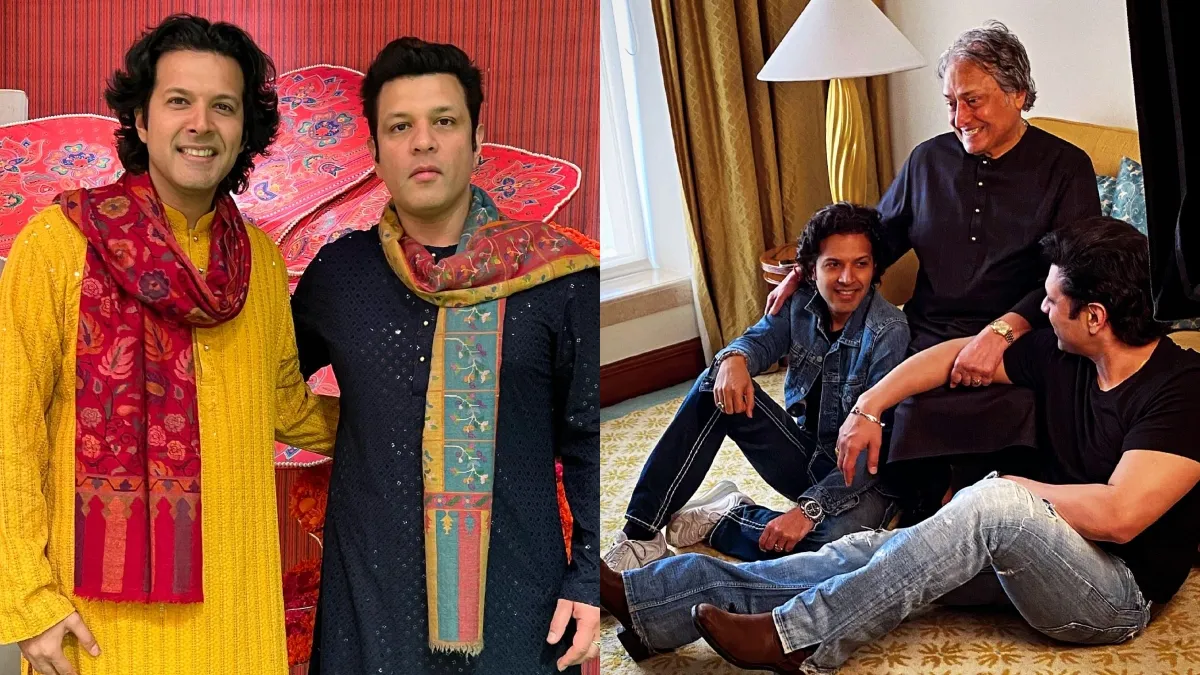
For sarod players Amaan Ali Bangash and Ayaan Ali Bangash, music was never just a profession. It has always been something deeper, more personal. A way of living, almost instinctive. And somewhere along that journey, it began to merge with something else they care about just as much, nature. It did not start as a big idea or a planned project. In fact, as Amaan puts it, it began quite simply. Amaan and Ayaan, sons of legendary sarod player Amjad Ali Khan, spoke exclusively to India TV about winning a Grammy, growing up with a superstar father and their seven-track musical odyssey offering a sophisticated exploration of India’s premier tiger habitats.
Excerpts from the interview:
Amaan Ali Bangash on 'Celebrating Our Tigers' album
Their recently-released landmark album 'Celebrating Our Tigers', as newly-appointed Goodwill Ambassadors for WWF-India, did not begin as a structured idea. In fact, as Amaan recalls, it started with something very simple.
Amaan Ali Bangash: “Everyone is excited to see tigers since childhood. When we see jungles and wild cats. But when Ayaan bhai’s children were born, we had a discussion at home about how to connect them to nature so they don’t become very materialistic.”
That conversation soon turned into lived experiences. The family travelled to forests like Corbett, Ranthambore and Bandhavgarh, spending time rather than just visiting.
Amaan Ali Bangash: “When you go into nature, you feel one with God because you feel so small. In the jungle, you are helpless, at the mercy of animals. That’s where the interest began.”
Over time, the connection deepened, even musically.
Amaan: “We also realised that in our music there is Raag Durga, which is connected to divinity, and the tiger is the vehicle of Maa Durga. So there was a connection. I don’t think we chose the tigers, I think the tigers chose us.”
For Ayaan, the idea was never about alarm, but about celebration.
Ayaan Ali Bangash: “Instead of pleading, we wanted to celebrate what has been achieved in India because we have the highest population of tigers. For us, celebration is music.”
This approach shaped the sound of the project as well.
Ayaan Ali Bangash: “Every region has its own folk influence. Ranthambore has Rajasthani colour, Assam has Bihu, Bengal has Bhatiyali and Baul. It’s a meeting of music and nature.”
In fact, the focus moved beyond just tigers.
Amaan and Ayaan: “More than tigers, we fell in love with nature and the jungle. The album is not named after tigers, it’s named after jungles.”
They also ensured the project stayed grounded and authentic.
Amaan and Ayaan: “Corbett is known for birds, termites are essential for forests, animals like sambhar, bears, elephants. We also collaborated with wildlife photographers and WWF, which added authenticity. Everything just fell into place.”
For Amaan, the link between music and nature feels almost instinctive.
Amaan: “Nature itself is music. If you close your eyes in a jungle, all you hear is natural sound, and music is also natural sound. It’s an amalgamation of two sounds.”
Ayaan, meanwhile, sees it as a story of resilience.
Ayaan: “Tiger numbers went down and then increased again. It shows hope. As Indians, we should take pride in our flora and fauna. We always talk about achieving more but rarely appreciate what we already have.”
And in their own way, this became their contribution.
Ayaan: “This is our contribution as artists, to create awareness for an endangered species. We also want to honour forest rangers and frontline workers because they make all this possible.”
On Grammy win, humility, and growing up around music
Their work has also reached global platforms, including a Grammy-winning project, 'Meditations: The Reflections of His Holiness the Dalai Lama'. But even that began with a simple idea.
Amaan: “About the Grammy-winning project with the Dalai Lama, it started as an idea to create an audiobook-style album combining music and words. Instrumental music has no lyrics, so this helped people understand it better.” At its core was a deeply rooted concept.
“So we decided that nobody bigger than a man of his stature. He was very generous. He gave us his time and words for the album.”
Despite the recognition, their outlook has stayed unchanged.
Amaan: “As a family, we were taught to keep working without talking too much about achievements. If something comes, good. If it doesn’t, even better. Just keep working.”
There is, however, one moment they still remember with a sense of disappointment.
Amaan: “But the only regret was that Ayaan and I had to go to receive the award on behalf of the team. We would have gone too, but both of us fell ill. We had viral fever, both of us. So for the first time, I just could not take that flight.”
Watch India TV's exclusive interview with Amaan Ali Bangash and Ayaan Ali Bangash here:
On growing up as Amjad Ali Khan's son, legacy, pressure, and what really matters
Growing up as the sons of Ustad Amjad Ali Khan could have come with pressure, but their upbringing kept things grounded.
Amaan and Ayaan: “Growing up with a legendary father was very natural, thanks to our mother, who balanced everything. We never felt special; we were taught to work hard.”
The lesson was simple, but firm.
Amaan and Ayaan: “Not getting opportunities is not a crime, wasting them is.”
They also speak openly about fear and responsibility.
Amaan and Ayaan: “Responsibility comes from within. Fear and anxiety are not negative, they push you to work harder. If you are too relaxed, you won’t improve." They add, “If you have practised well, you won’t feel anxious. Like exams, if you are prepared, there’s no fear.”
And when it comes to performing, their mindset shifts entirely.
Amaan and Ayaan: “Before a performance, it’s a celebration, not a test. You should enjoy the journey, from home to stage.”
Still, not every moment has been easy.
Amaan and Ayaan: “There have been performances that didn’t go well. Once [very early in their careers], in front of respected musicians, our performance failed. Our father felt embarrassed and worried we weren’t serious.”
That moment, they say, stayed with them.
Amaan and Ayaan: “That’s when we realised how much music means to him.”
