
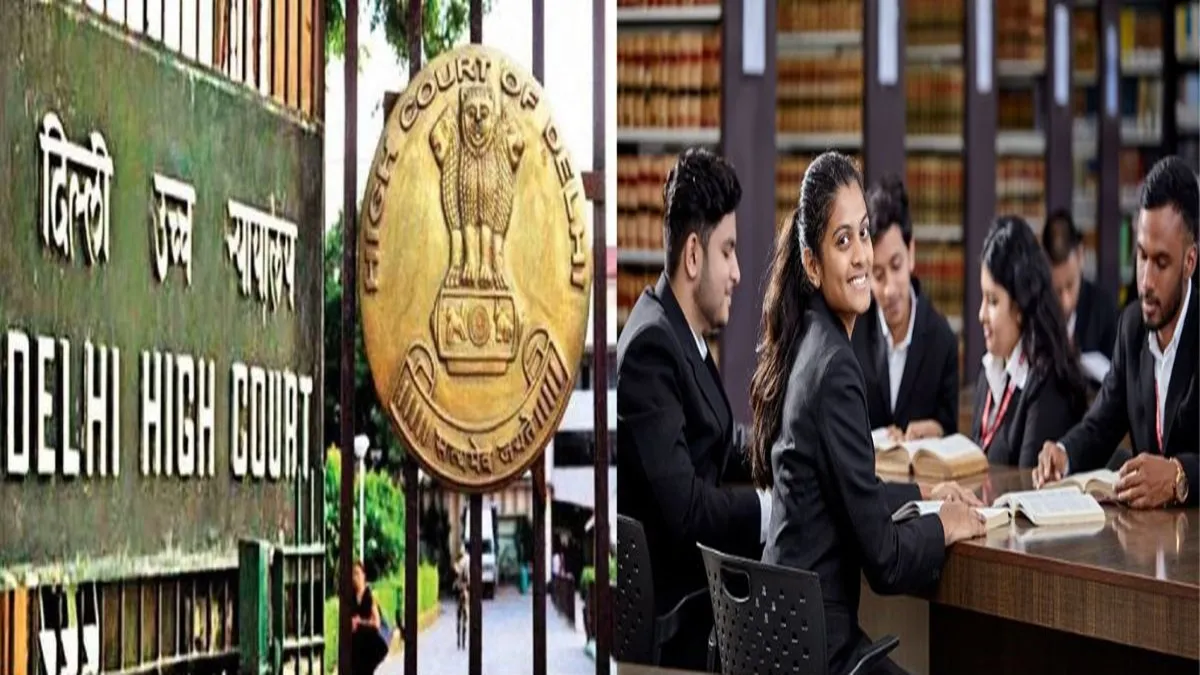
The Delhi High Court on Monday ruled that no law student in the country should be stopped from taking examinations only because they have a shortage of attendance. The bench of Justices Prathiba M Singh and Sharma said that academic policies in legal education cannot become so rigid that they harm a student's mental wellbeing. The court was hearing a suo motu matter which was initiated after the death of law student Sushant Rohilla in 2016. The bench said, "Having heard at length the submission of all stakeholders in this case over the course of hearing and having considered the stark realities that have come to the surface, this court is strongly of the view that norms education in general and legal education in particular, cannot be made so stringent so as to lead to mental trauma, let alone death of a student."
Order links back to 2016 Rohilla tragedy
On August 10, 2016, Sushant Rohilla, a third-year law student of Amity University, died by suicide after he was allegedly not allowed to write his semester exams over an attendance shortage. He left behind a note, saying he was a failure and did not wish to live. The Supreme Court had taken note of the matter in 2016 and later transferred it to the Delhi High Court in 2017.
Court tells BCI to make changes and consult stakeholders
While pronouncing the judgment, the high court said, the Bar Council of India (BCI) should undertake a stakeholder consultation, including student bodies, parents and teachers for this purpose, in an expeditious manner in order to safeguard the life and mental health of students keeping in mind the impact on students at detention or non-appearance in exams due to mandatory attendance requirements can have. “While the consultations by the BCI are underway, in the interregnum, it is directed as under -- no student enrolled in any recognised law college, university or institution in India shall be detained from taking examination or be prevented from further academic pursuits of career progression on the ground of lack of minimum attendance,” the bench said.
It added that no law college, university or institution should be permitted to mandate norms of attendance, norms which are over and above the minimum percentage prescribed by the BCI.
Attendance norms fixed by the BCI
In so far as mandatory attendance norms fixed by the BCI are concerned, all law colleges, universities and institutions recognised which impart three year and five year degrees should, with immediate effect, implement accelerative measures, including, firstly, weekly notification of attendance of students to online portal or a mobile app, monthly notice to parents and legal guardians regarding any shortage in attendance, conducting extra physical or online classes for such students who do not fulfil the minimum attendance norms.
ALSO READ: Justice system must inspire confidence, compassion in women: CJI-designate Surya Kant
