
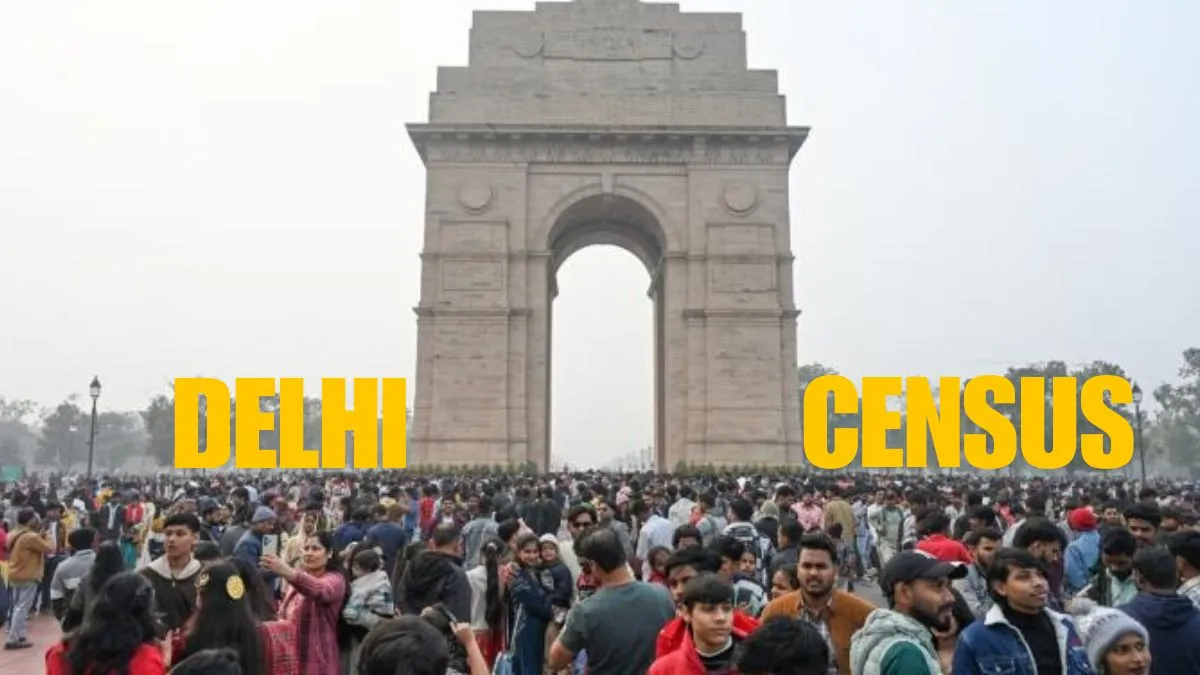
Delhi is set to witness a crucial administrative exercise as the first phase of the Census is set to kick off from Thursday (April 16), marking the beginning of a massive data collection drive that will shape policy planning and governance for the next decade. With officials preparing to fan out across the national capital, residents can expect door-to-door visits as part of the process that lays the foundation for India's population database.
What is phase 1 of the census?
The first phase of the Census is known as the House Listing and Housing Census. In this stage, enumerators will collect detailed information about households, buildings, and living conditions. This phase focuses on mapping every structure and household in Delhi, rather than counting individuals.
The citizens will be posed with 33 questions during the exercise regarding basic facilities in their houses, information about the head of the household, such as the name and sex, and the ownership status. In the first phase, the exercise will be completely digital, with enumerators using a special mobile application created for the purpose on their phones to collect the information.
Key dates and areas to be covered
The exercise will run in two 30-day windows -- from April 16 to May 15 for areas under NDMC and Delhi Cantonment, and for areas under MCD from May 16 to June 15 as outlined in the schedule. Enumerators have been trained and assigned specific blocks to ensure smooth and systematic coverage. The second phase, which involves population enumeration and counting individuals, will be conducted at a later stage, as per the nationwide Census schedule.
The exercise will cover all districts of Delhi, including urban, semi-urban, and rural pockets. From densely populated colonies to unauthorised settlements and slum clusters, no area will be left out. Authorities have divided the city into multiple enumeration blocks to ensure that each locality is covered efficiently. Special attention is being given to high-density zones and areas with frequent migration to avoid data gaps.
How the process will work
Trained enumerators will visit households and collect data through structured questionnaires. In many cases, digital devices may be used to record responses, making the process faster and reducing errors. Officials have also emphasised confidentiality, assuring citizens that their personal data will be used only for statistical purposes.
As per officials, the people will also have the option of self-enumeration on the official website.
How to self-enumerate for the census 2027
• Visit the self-enumeration portal at https://se.census.gov.in
• Log in using your mobile number and mark your location on the map
• Enter your family details and submit the information
• Receive the 16-digit unique Self-Enumeration ID (SE ID) and provide it to the enumerator during their visit
What residents should keep in mind?
Residents should be prepared to share basic household information when enumerators visit. It is important to verify the identity of officials before providing details and to ensure that the information shared is correct. Authorities have urged people not to fall for misinformation and to participate actively in the process. Cooperation from citizens will be essential for the success of the Census exercise, as per officials.
ALSO READ: Census 2027 begins from today in digital mode: Here is how citizens can self-enumerate
