
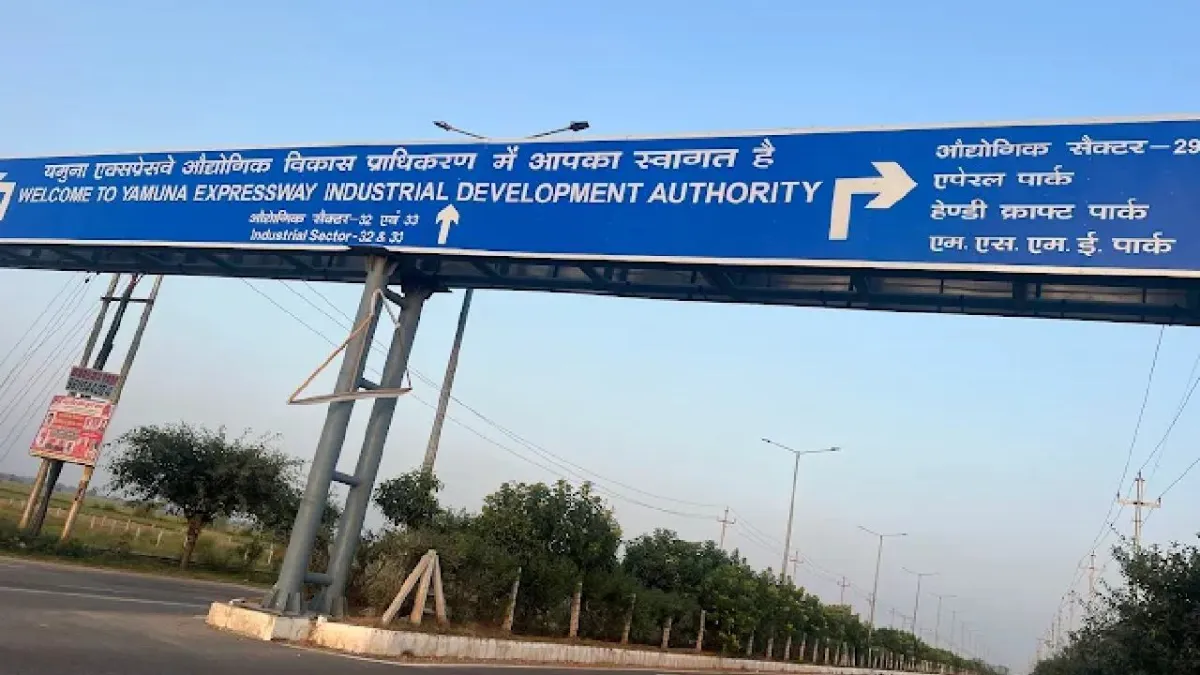
In its 85th board meeting held on Wednesday, the Yamuna Expressway Industrial Development Authority (YEIDA) approved a series of key infrastructure, housing, and recreational projects aimed at supporting development around the upcoming Noida International Airport. The initiatives will utilise land designated as ‘recreational greens’ in the 2041 master plan.
Housing scheme for economically weaker sections
A major highlight of the meeting was the approval of a housing scheme for the economically weaker sections (EWS). YEIDA CEO Arun Veer Singh stated that 30,000 residential plots, each measuring 30 square metres, would be allotted to individuals with an annual income below Rs 3 lakh. This move aims to accommodate the expected influx of workers linked to the airport and nearby industrial zones, while preventing unauthorised settlements.
In the first phase, 4,268 plots will be offered across Sectors 17, 18, and 20.
New police station and fire stations approved
To ensure law enforcement and emergency services are in place for the rapidly developing area, the board sanctioned the construction of a police station on a 1,000 square metre plot, with 60% ground coverage and a permissible height of 24 metres under FAR 2.5 norms.
Two new fire stations will also be set up in Sectors 18 and 32, each on 7,485 square metre plots. The fire department has been allotted this land at a nominal rate of Rs 1 per square metre.
Development of large-scale recreational hubs
YEIDA has approved the development of expansive recreational zones in Sectors 22F and 23B, which will become part of the region’s broader green belt. Proposed facilities include a golf course, a Gymkhana Club, and the Yamuna Haat.
Additional attractions under consideration are the Kingdom of Dreams, an Olympic Village, an Aviation Museum, and the Oxford Golf Course. These projects aim to enhance the region's recreational and tourism appeal.
The board has instructed officials to frame detailed terms and conditions for implementing these recreational projects under the public-private partnership (PPP) model. This approach is expected to bring in private investment and operational expertise for timely and sustainable development.
