
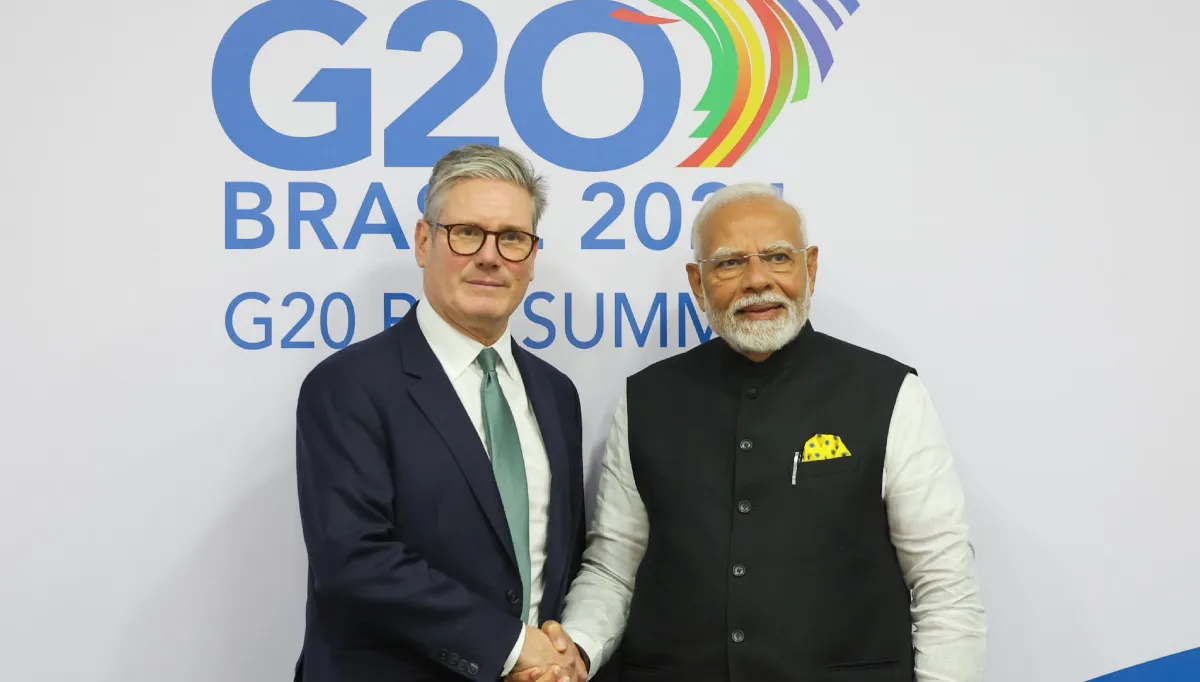
The India-UK Free Trade Agreement is finally going to be signed as Prime Minister Narendra Modi is slated to visit the United Kingdom on Thursday. The FTA between both nations has been negotiated for almost the last three years. Once the deal gets legal clearances from India's Union Cabinet and the British Parliament, it will come as India’s first major bilateral trade agreement with a developed economy for over a decade.
From India’s context, import duties on Scotch whisky and gin will decline from 150 per cent to 75 per cent immediately. Later, it will fall to 40 per cent over 10 years. When it comes to the automobile sector, India will be benefiting as tariffs on UK-made cars, which currently exceed the 100 per cent mark, will be reduced to 10 per cent under a quota system. Along with this, UK products, including medical devices, cosmetics, salmon, biscuits, and chocolates will witness tariff cuts.
On the other hand, almost 99 per cent of Indian products will get duty-free access to the UK market. It covers nearly all of New Delhi’s current trade value. Several sectors of the Indian industry will benefit, including gems and jewellery, textiles, sports goods, chemicals, furniture, and machinery. Currently, the majority of these products face tariffs between 4 per cent and 16 per cent in the UK.
Notably, under the new quota system, Indian firms manufacturing electric and hybrid vehicles will also gain preferential access.
According to projections from the British government, the FTA with India may translate into £4.8 billion (Rs 56,150 crore) annual increase in UK’s economy. Additionally, British consumers are likely to benefit from lower prices on Indian garments, food products, and footwear. India is likely to reduce tariffs on almost 90 per cent of UK goods.
PM Modi, who will be on his fourth visit to the UK since taking office in 2014, is slated to hold talks with his British counterpart Keir Starmer. The talks will cover issues, including trade, energy, health, education, and security.
