
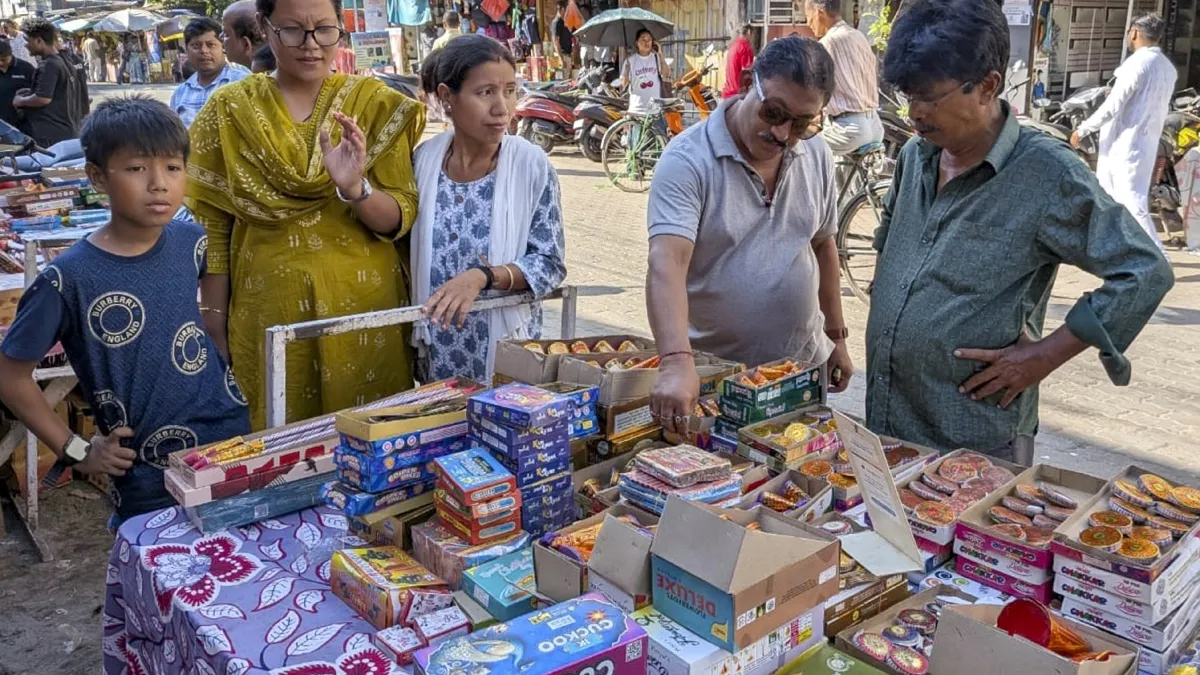
India's Diwali sales soared to a record Rs 6.05 lakh crore, according to the traders' lobby CAIT. This comprised Rs 5.40 lakh crore in goods and Rs 65,000 crore in services, representing a considerable increase from last year's Rs 4.25 lakh crore. The Confederation of All India Traders (CAIT) attributes this surge to the recent GST reform and strong consumer confidence. Notably, traditional and non-corporate physical markets powered this boom, accounting for 85 per cent of the total trade, signalling a powerful comeback for small traders across the country.
Sector-wise sales
Sector wise percentage of sales of prominent festive items included Grocery and FMCG 12 per cent, Gold & Jewellery 10 per cent, Electronics & Electricals items 8 per cent, Consumer Durables 7 per cent, Ready-made Garments 7 per cent, Gift Items 7 per cent, Home Decor 5 per cent, Furnishing & Furniture 5 per cent, Sweets & Namkeen 5 per cent, Textiles & Fabrics 4 per cent, Pooja Articles 3 per cent, Fruits & Dry Fruits 3 per cent, among others.
CAIT National President BC Bhartia said services sector added Rs 65,000 crore to the sales from sectors such as packaging, hospitality, cab services, travel, event management, tent & decoration, manpower, and delivery.
Higher sales volumes due to reduced GST
The report found that 72 per cent of surveyed traders attributed higher sales volumes directly to reduced GST rates on daily-use items, footwear, garments, confectionery, home décor, and consumer durables.
Consumers also expressed greater satisfaction with stable pricing, which encouraged sustained festive spending.
The report noted that this festive surge will continue through the winter, wedding, and upcoming festive season from mid-January.
According to CAIT, Diwali 2025 trade created 50 lakh temporary jobs in logistics, packaging, transport, and retail services. Rural and semi-urban India accounted for 28 per cent of the total trade, reflecting deeper economic participation beyond metros.
With PTI inputs
ALSO READ | Reserve Bank of India sold USD 7.7 billion in August - Here's why
