
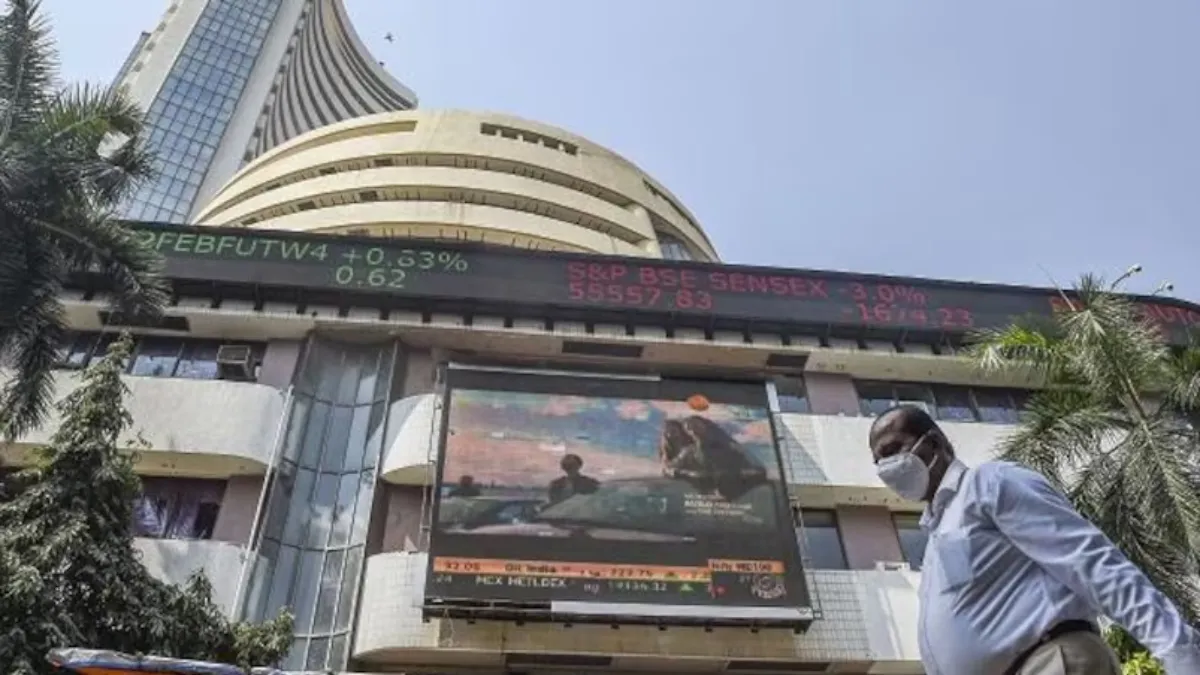
Indian equity benchmark indices, the Sensex and Nifty, opened in the red on Thursday, February 12, 2026, amid mixed global cues. While the 30-share BSE Sensex dropped 265.21 points to start the session at 83,968.43, the Nifty shed 47.15 points to open at 25,906.70. In the last trading session, the Sensex closed at 84,233.64 and the Nifty 50 at 25,953.85. Similarly, the broader indices traded in the red in the opening session. While the BSE Midcap Select Index dropped 83.26 points, or 0.48 per cent, in the early trading session, the BSE Smallcap Select Index was down by 41.36 points or 0.52 per cent, to trade at 7,873.65.
From the Sensex pack, Axis Bank, ICICI Bank, Power Grid, Larsen & Toubro and NTPC were among the gainers with Axis Bank leading the pack by gaining 0.57 per cent in the early trade. On the other hand, Infosys, HCL Tech, Tech Mahindra, Eternal and TCS were among the losers with Infosys shedding 3.77 per cent in the opening trade.
In early trade, market breadth was negative, with 1,341 stocks advancing against 844 stocks declining on the NSE. 138 stocks remained unchanged.
"We are of the view that, on the lower side, 25,900/84200 would be the crucial support zone, while 26,000/84500 would act as an immediate resistance area for the bulls. As long as the market is trading within this range, non-directional activity is likely to continue. On the higher side, a successful breakout of 26,000/84500 could push the market towards 26,100-26,150/84800-85000. On the flip side, below 25,900/84200, the selling pressure is likely to accelerate. Below this level, the market could retest the levels of 25,800-25,750/84000-83700," said Shrikant Chouhan, Head Equity Research, Kotak Securities.
What did Gift Nifty indicate?
Gift Nifty, an early indicator for the Nifty 50, indicated a strong start as it opened with a gain of 15.5 points at 25,988, compared to the previous close of 25,972.50. Foreign Institutional Investors (FIIs) continued their buying momentum for the fourth straight session on February 11, with net purchases worth Rs 943 crore, whereas DIIs shifted to selling mode, offloading equities worth more than Rs 125 crore.
(This article is for informational purposes only and should not be construed as investment, financial, or other advice.)
