
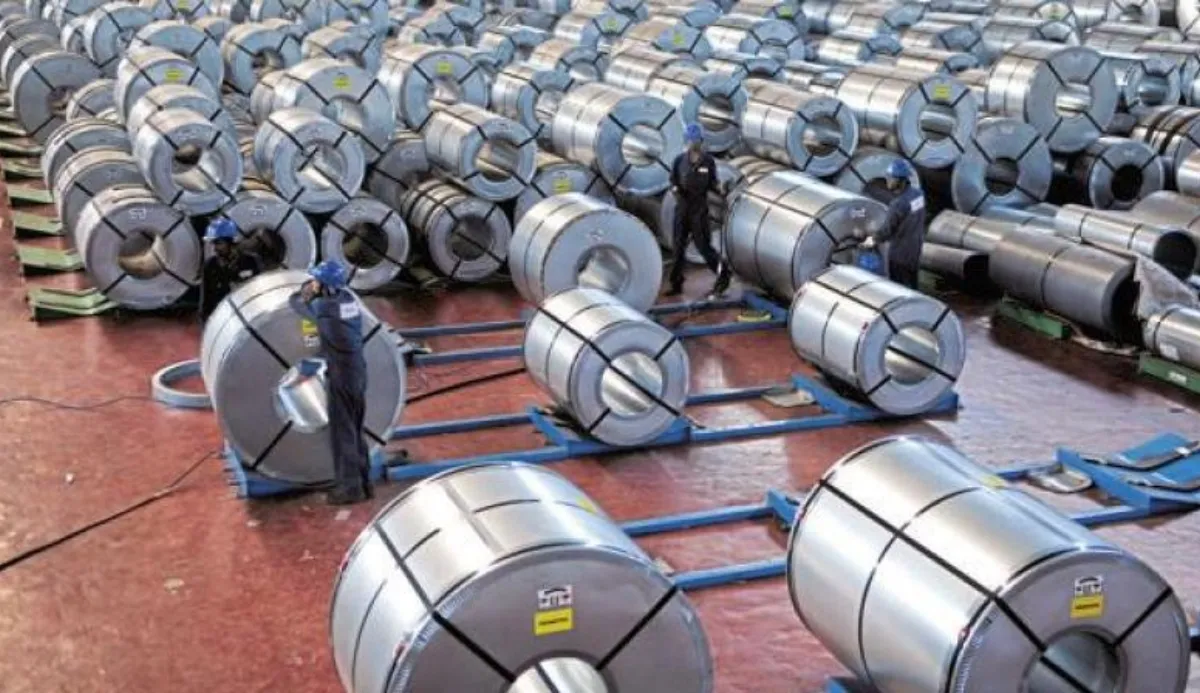
Ahead of the Union Budget, stakeholders from the domestic steel industry have urged the government to introduce measures to promote greater use of scrap in green steel production, a priority as India intensifies efforts to cut carbon dioxide emissions. Green steel production focuses on adopting low-carbon technologies and increasing the use of alternative raw materials, including scrap, to reduce the sector’s environmental footprint.
Steel Association seeks measures to promote increased use of scrap
In its pre-budget wishlist, the Indian Steel Association (ISA) has called for policy measures to encourage greater use of scrap in green steel production.
The apex industry body has also urged the government to extend the Goods and Services Tax (GST) reverse charge mechanism across the entire metal scrap supply chain, saying the move would simplify compliance, plug tax leakages, and enhance ease of doing business.
Meanwhile, rating agency ICRA said the shift towards low-carbon green steel is likely to be gradual and long-term, as high costs and technological limitations continue to slow the pace of decarbonisation.
According to Girishkumar Kadam, Senior Vice-President and Group Head, Corporate Sector Ratings at ICRA, merely switching to green power could cut emissions by around 13 per cent in blast furnace–basic oxygen furnace (BF-BOF) mills and by up to 22 per cent in direct reduced iron (DRI)-based steel plants.
Green steel central for industry's long-term trajectory
Sandeep Kumar Jalan, Co-founder and Managing Director of A-One Steel India Limited, said green steel is central to the industry's long-term trajectory, but managing higher capital intensity and energy costs in the initial phase remains a key challenge.
"Clear budgetary support for renewable power integration and cleaner production technologies would help steelmakers plan investments with greater confidence," he added.
Parmod Sagar, Chairman, MD and CEO of RHI Magnesita India, said the refractory industry is an indispensable enabler of infrastructure growth and should be recognised as a critical sector. He also called for a review of duties on essential raw materials and support for circular economy technologies to strengthen domestic manufacturing and supply chain resilience.
Former steel secretary Aruna Sharma said the steel industry has begun aligning with the Green Steel policy notified by the Ministry of Steel, but stronger fiscal intervention is needed to accelerate adoption. She said the industry is already investing in the transition, which is clearly futuristic, but budgetary support is essential to speed up production and usage of green steel.
Sharma added that production through non-coal routes such as DRI and electric arc furnaces should be incentivised, while coal-based induction furnaces need to be gradually disincentivised.
Mandating at least 20 per cent green steel usage in infrastructure projects and removing GST on green steel would help offset higher costs, she said.
Industry body ASSOCHAM has recommended fiscal support for hydrogen-based DRI production, access to concessional green finance, and incentives for captive renewable power, waste heat recovery and adoption of energy-efficient technologies.
GST rationalisation on inputs
India's steel sector witnessed robust demand in FY25, driven largely by infrastructure spending and construction activity, but rising imports have put pressure on domestic producers, especially secondary manufacturers, industry leaders said.
Harsh Bansal, Managing Director of BMW Industries Limited, said finished steel consumption stood at around 140 million tonnes in FY25, marking a strong 11–12 per cent growth. Crude steel production also crossed 145 million tonnes, reflecting sustained domestic demand. "However, steel imports surged by more than 30 per cent, primarily from East Asian countries, which has exerted downward pressure on prices, particularly impacting secondary steel producers," Bansal noted.
Against this backdrop, the industry is hopeful that the Union Budget 2026–27 will address key structural challenges to safeguard domestic players and improve cost competitiveness.
Industry stakeholders are seeking GST rationalisation on steel inputs, improved availability of scrap through recycling support, and easier access to long-term financing to enable capacity expansion.
According to industry players, targeted policy support in these areas would help reduce cost pressures, strengthen domestic production capabilities and protect Indian manufacturers amid rising global competition.
Also Read: Union Budget 2026: Education sector's expectations from this year's budget
Also Read: Union Budget 2026: Tracking defence allocations under Modi government since 2014
