
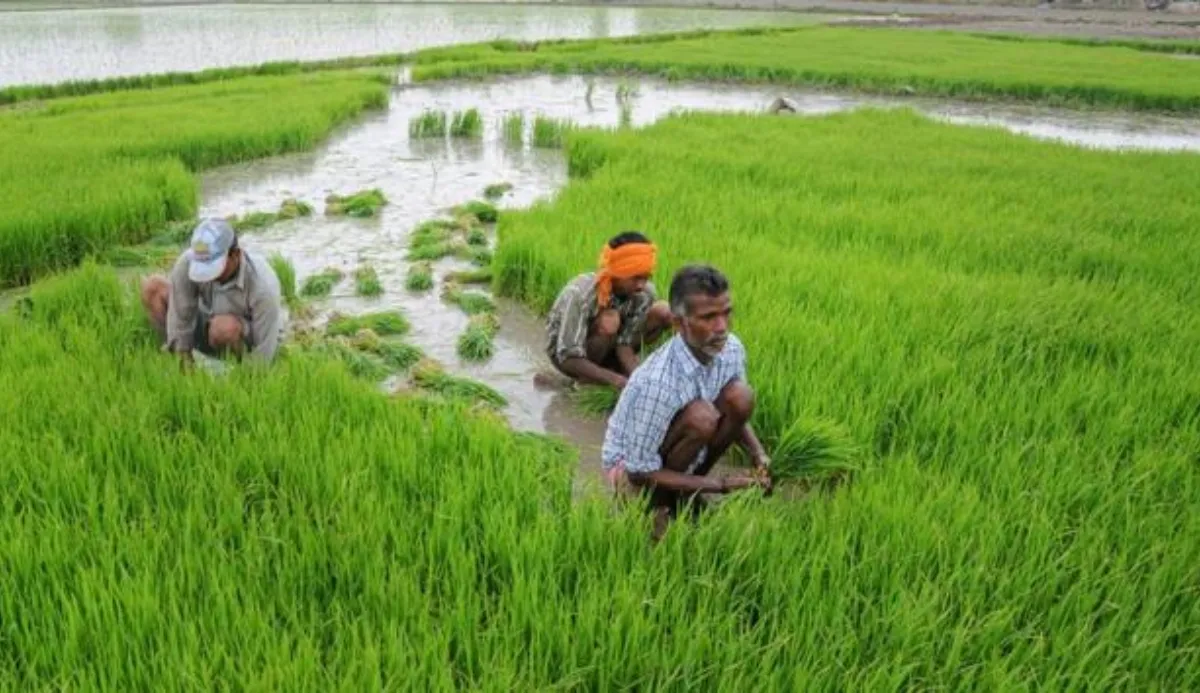
Ahead of the FY27 Union Budget, representatives of the agriculture and allied sectors have urged the government to announce tax relief, boost allocations for biofuels, and strengthen support for farmers as the sector grapples with rising climate-related challenges and seeks to improve rural incomes.
The demands come at a crucial time, with India nearing the midpoint of its agriculture goals for 2030 while simultaneously laying the foundation for the Viksit Bharat 2047 vision. Stakeholders have underlined the need for sustained investments in innovation, infrastructure, and market reforms to help Indian agriculture emerge as a globally competitive driver of growth.
Sugar sector reforms
In a representation submitted to Finance Minister Nirmala Sitharaman, the All India Sugar Trade Association (AISTA) has sought an allocation of Rs 2,500 crore to promote advanced biofuels, including sustainable aviation fuel (SAF) and green hydrogen.
The association has also demanded Rs 25 billion to support financially stressed sugar mills in setting up integrated bio-energy hubs, aimed at strengthening the sector’s transition towards cleaner energy and improving long-term viability.
The trade body said that India already imports vegetable oil, and ethanol can play an important role in alcohol-to-jet technology for SAF. "Producing one kilogram of hydrogen consumes 70 units of electricity, and infrastructure using ethanol for hydrogen production would benefit the sugar industry," it added.
Many sugar mills in the country, especially cooperative mills in Maharashtra, Uttar Pradesh, and Punjab, lack distilleries and depend on sugar and molasses sales to meet financial commitments, including cane price payments to farmers, wages, and salaries.
"The financial help is necessary for them to install distillation capacities to produce ethanol, which is a value addition. It will definitely increase their capacities to pay remunerative cane prices to cane farmers," AISTA said.
The association also sought a reduction in the goods and services tax (GST) on flex-fuel and strong hybrid vehicles to 5 per cent from the existing 18-40 per cent, bringing them at par with electric vehicles. In addition, it demanded an increase of Rs 6-8 per litre in ethanol procurement prices.
AISTA further called for a hike in the minimum selling price of sugar from the current ₹31 per kg, which has remained unchanged since 2019, and urged that the fair and remunerative price (FRP) of sugarcane be linked to the minimum support price (MSP) on an annual basis.
Fertiliser reforms
Rajib Chakraborty, national president of the Soluble Fertiliser Industry Association, said the upcoming budget is expected to advance a "3D Reform" of the Fertiliser Control Order - digitisation, decriminalisation, and deregulation.
Key expectations include promoting residue-free, nutrient-rich farming as an integrated national agriculture and health policy, and recognising non-subsidised soluble, organic, micro nutrient and stimulant fertilizers as strategic materials alongside subsidy reduction, he said in a statement.
Nishant Kanodia, chairman of Matix Fertilisers and Chemicals, said continued policy support for timely capacity addition and investment-friendly frameworks will help deepen self-reliance and reduce external vulnerabilities.
Coffee, crops and drones
Rana George, managing director of Kelachandra Coffee, said India's coffee sector is grappling with growing climate uncertainty, rising cultivation costs, and labour shortages, even as global demand remains strong.
He said Budget 2026 should focus on strengthening farm resilience through improved irrigation facilities, expanded crop insurance, long-tenure credit for replanting, and greater support for mechanisation. George also stressed the need for higher investment in research to develop climate-resilient coffee varieties and the creation of a national digital traceability system.
Simon Wiebusch, country divisional head of Bayer’s Crop Science Division for India, Bangladesh, and Sri Lanka, highlighted the need for stronger income and credit support for farmers, predictable trade policies, and sustained investment in agri-logistics and post-harvest infrastructure to stabilise the sector.
Arun Raste, managing director and CEO of NCDEX, said rationalising or removing the Commodity Transaction Tax, along with providing clarity on GST for commodity derivatives, would improve hedging options and risk management for farmers.
Preet Sandhu, founder and managing director of AVPL International, called for strengthening the 'Drone Shakti' initiative through incentive-led manufacturing, saying it would signal India’s transition from pilot projects to large-scale expansion of the drone economy.
R&D funding needs to increase
Dr RG Agarwal, Chairman Emeritus, Dhanuka Agritech Ltd, on pre-budget expectations, said, "We often talk about strengthening India's innovation ecosystem, but the reality is that India still spends only about 0.7 per cent on research and development. Countries like China, Israel, the US, and many European nations invest much more. If we genuinely want scientific progress and global competitiveness, R&D funding has to increase. Earlier, private-sector research was encouraged through income-tax deductions, which are no longer available. We hope this budget restores strong support for R&D for both public institutions and industry.
Pesticides are not luxury products. They are plant medicines and a form of crop insurance for farmers. Yet, they attract 18 per cent GST, similar to luxury items. Just as the GST on essential human medicines was reduced, we urge the government to bring the GST on pesticides down to 5 per cent, so farmers are not overburdened. At the same time, we recognise that several promises from the last Budget have moved from announcement to action. Other initiatives are underway, and the intent is positive. The key focus now should be execution and real impact at the farm level."
Also Read: Union Budget 2026: Education sector's expectations from this year's budget
