
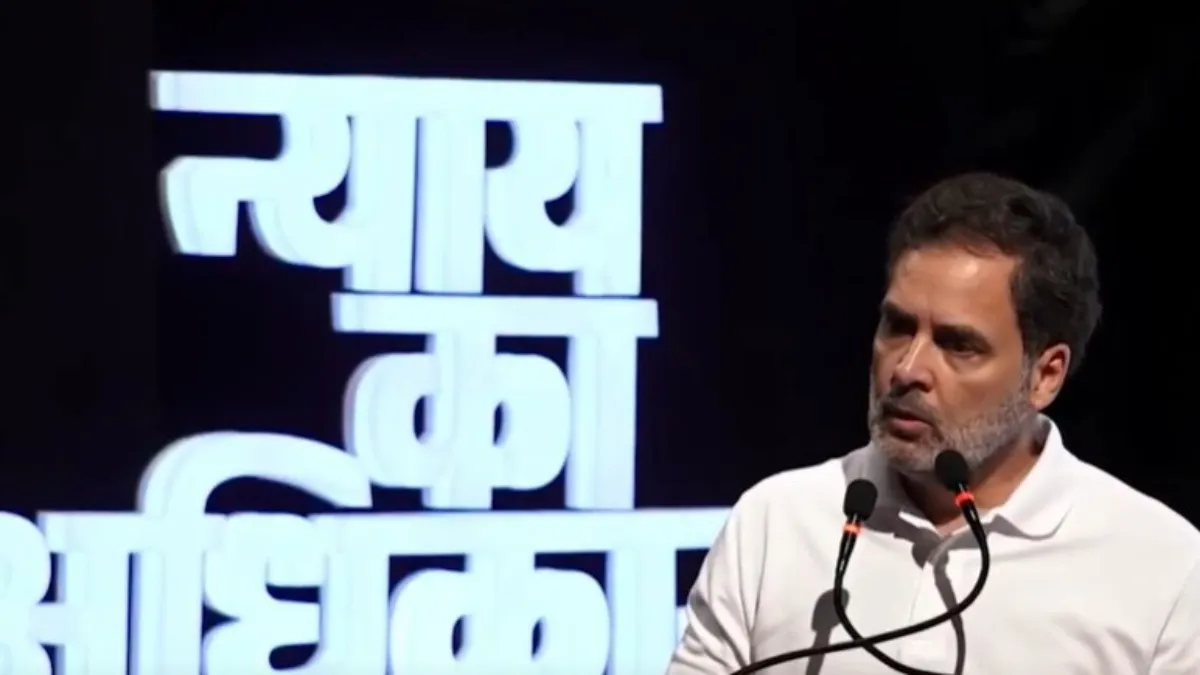
On Friday, Congress leader Rahul Gandhi emphasised his strong support for a caste-based census during his address at the ‘Samvidhan Suraksha Sammelan’ in Rajgir, Nalanda district. Gandhi highlighted that the Congress party had long advocated for such a survey, which ultimately led the central government to announce it. He also recalled personally raising the issue in the Lok Sabha, urging Prime Minister Narendra Modi to conduct the caste census. Gandhi expressed concerns about the Centre's ability to conduct the census effectively without proper representation of backward classes, Dalits, and tribals in finalising the questionnaire.
Bihar: A decline from peace to crime
In his address, Gandhi criticised the Nitish Kumar-led NDA government in Bihar, accusing the state of transforming from a land of peace and justice to the "crime capital of India." He argued that the law and order situation had worsened under the current government, with Bihar facing an alarming rise in criminal activities. Gandhi added that many people from the state were forced to migrate in search of jobs, with the lack of opportunities in their own state exacerbating the economic struggles of marginalised communities.
Economic inequality and reservation reform
Gandhi also raised concerns about economic inequality, pointing out the disparity in the treatment of large corporations and marginalized communities. While corporate loans were forgiven, the loans of Dalits, tribals, and backward classes were never waived, Gandhi remarked. The Congress leader went on to state that his party would push for the removal of the 50% cap on reservations once they form a government in the future, with Bihar serving as the starting point for the reform.
Engagement with Local Communities and Women
Earlier in the day, Gandhi visited Gahlour village, paid tribute to Dashrath Manjhi, and interacted with the Mountain Man’s son, Bhagirath Manjhi. He later travelled to Rajgir, where he met social leaders, and concluded the day with a special dialogue with women in Gaya, addressing issues related to women's rights, education, and social participation.
In his visit, Gandhi underscored Congress’ commitment to addressing caste-based discrimination, economic inequality, and the underrepresentation of marginalised communities.
