
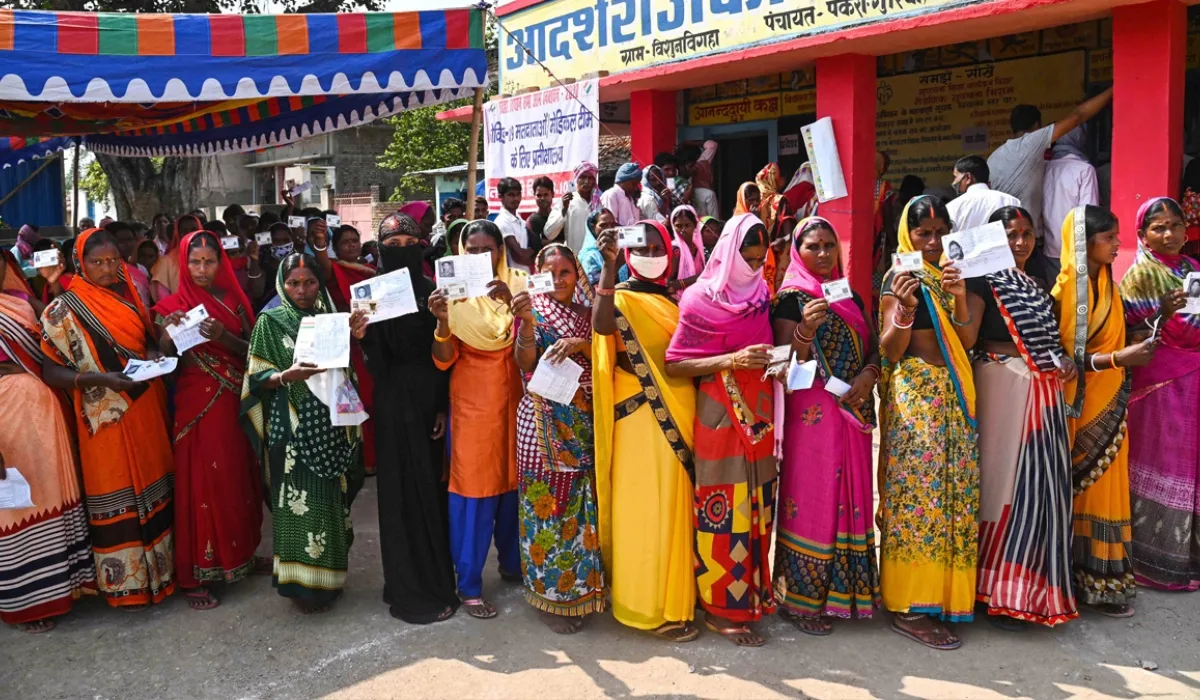
The Election Commission of India (ECI) announced on October 6 that Bihar will vote in two phases—November 6 and November 11—with results declared on November 14. The upcoming elections are set to witness a fierce contest among the ruling National Democratic Alliance (NDA), the opposition INDIA bloc, and the Prashant Kishor-led Jan Suraaj party. Bihar has witnessed frequent political and alliance shifts in recent years, with Chief Minister Nitish Kumar alternating between the BJP and the RJD alliances. His long tenure has been marked by both development initiatives and political realignments.
Employment and youth aspirations
Youth unemployment remains a major concern in Bihar. According to the Periodic Labour Force Survey (PLFS), the unemployment rate for those aged 15 and above rose from 7% in 2017–18 to 9.8% in 2018–19. Although it has declined in subsequent years, the issue remains central to voters, particularly amid migration from rural areas to urban centres. Opposition parties have focused on job creation, skill development, and local entrepreneurship, while the ruling NDA highlights infrastructure-led growth and industrial initiatives.
Infrastructure and urban development
Infrastructure has been a core theme of Nitish Kumar’s tenure. The state has seen landmark projects including the first double-decker flyover and the inauguration of the first phase of the Patna Metro. Prime Minister Narendra Modi recently opened a key highway, further bolstering the NDA’s development narrative. Urban infrastructure, road connectivity, electricity, and transportation improvements are being highlighted as indicators of governance and efficiency.
Rural and agricultural concerns
With 70% of Bihar’s population engaged in agriculture, farmers’ issues dominate the rural agenda. Irrigation facilities, fair crop prices, crop insurance, and access to markets are key demands. The opposition has emphasized strengthening the dairy sector, improving farm incomes, and expanding rural employment schemes. Water management and flood mitigation projects are also under voter scrutiny, particularly in flood-prone areas.
Women's empowerment and welfare programs
Women voters remain a decisive segment. Nitish Kumar has traditionally garnered their support through initiatives like the Mukhyamantri Cycle Yojana, free bicycle schemes for schoolgirls, panchayat reservations, and the Mukhyamantri Mahila Rojgar Yojna, which recently transferred ₹10,000 to 25 lakh women entrepreneurs. These welfare schemes are expected to continue shaping electoral outcomes.
Special intensive revision and electoral controversies
The Election Commission’s Special Intensive Revision (SIR) of voter rolls has stirred political debates. The opposition alleged that the exercise was biased to benefit the NDA, while the Supreme Court allowed it to proceed but questioned the timing. Voter rights and electoral transparency have become an additional concern for citizens amid this exercise.
Historical context and shifting politics
Since the 2005 elections, Bihar’s political narrative has shifted from identity-based mobilization to a development-focused agenda. Welfare schemes, infrastructure, and governance have now layered over traditional caste and community considerations. The 2015 Mahagathbandhan highlighted the continuing influence of caste alliances, while development projects and governance metrics are increasingly deciding voter sentiment.
Key issues for 2025
The 2025 elections will likely be shaped by a mix of traditional and emerging issues:
-
Youth employment and skill development
-
Infrastructure and urban connectivity
-
Agricultural support and rural welfare
-
Women’s empowerment and social welfare programs
-
Electoral transparency and governance credibility
As Bihar heads to the polls on November 6 and 11, voters are expected to weigh the state’s development trajectory, governance record, and welfare initiatives against political loyalties and caste dynamics, making the election a critical barometer of public sentiment in the region.
