
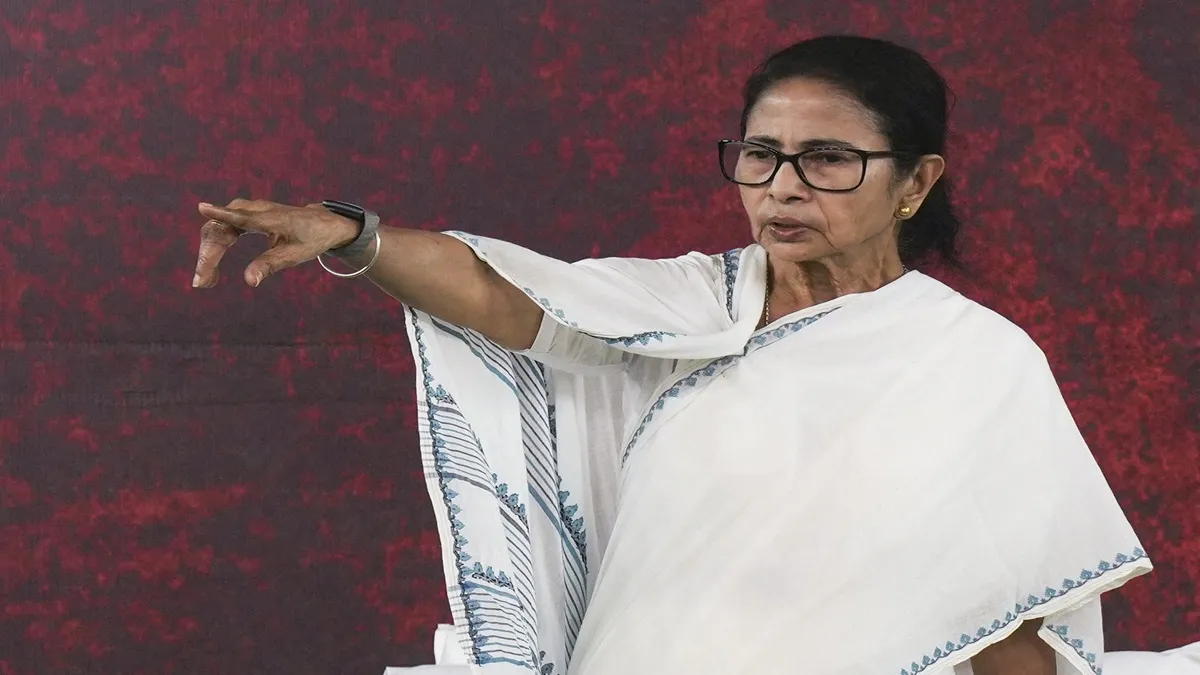
West Bengal's political landscape has transformed significantly from the 2016 assembly elections through 2021 and into the lead-up to 2026. Dominated by the Trinamool Congress (TMC) under Mamata Banerjee, the state's 294-seat assembly has seen swings between Left-Congress alliances, a Bharatiya Janata Party (BJP) surge and TMC consolidation, influenced by regional dynamics, demographics and voter roll changes.
2016: TMC's dominant hold amid Left-Congress challenge
In 2016, TMC secured a supermajority with 211 seats, building on its 2011 anti-Left wave. The Left Front-Congress alliance won just 32 seats (CPM 26, Congress 0 in alliance-adjusted terms), retaining pockets in Kolkata, Murshidabad and industrial belts like Ghatal.
Bharatiya Janata Party managed only 3 seats, mainly in Darjeeling and urban fringes, signalling its nascent presence. TMC swept South Bengal (Example- 31/31 in South 24 Parganas) and urban Kolkata (most of 11 seats), while Left strength lingered in Muslim-heavy districts like Murshidabad and rural Hooghly.
Key shift: Post-2011 delimitation stabilised 294 constituencies across 23 districts, favouring TMC's rural base.
2021: BJP's breakthrough and TMC's resilient sweep
The 2021 polls marked a seismic change, with BJP exploding to 77 seats on a Hindutva-NRC platform, gaining in Junglemahal (Paschim Medinipur, Jhargram, Purulia, Bankura: 30 seats) and North Bengal (Darjeeling, Jalpaiguri). TMC rebounded to 213 seats despite anti-incumbency over Sandeshkhali-like issues and COVID mishandling.
TMC dominated minority belts (Malda, Murshidabad, two 24 Parganas: substantial leads) and retained South 24 Parganas (31 seats), Howrah (16) and Hooghly (18). BJP flipped border and tribal areas but faltered in Muslim-dominated zones, where TMC's welfare schemes solidified 30 per cent + vote shares. Election map visually darkened for TMC gains (212 seats) and BJP's lighter retained/challenged zones.
2026 outlook: Voter roll pruning redraws battlegrounds
As of March 2026, elections loom in April–May, with the 15th Assembly's term ending May 7. Post-Special Intensive Revision (SIR) rolls pruned 63.66 lakh names (over 10 per cent of electorate), reshaping demographics in 125+ seats across border belts, Matua (Namashudra) axis and minority districts.
Impacts include BJP potential gains in pruned Matua and north Bengal areas, challenging TMC's minority strongholds like Murshidabad and Malda, where deletions hit hard. Districts like North and South 24 Parganas (64 seats total), Purba Bardhaman (16) and Purba Medinipur (16) face churn, with fiscal stress (Rs 62,000 crore deficit projected) fuelling opposition narratives.
| Region/District | 2016 TMC seats | 2021 TMC seats | 2026 key changes |
|---|---|---|---|
| Junglemahal (Paschim Medinipur 15, Jhargram 4, Purulia 9, Bankura 12) | ~35 | ~15 (BJP surge) | Pruning favours BJP tribal consolidation |
| North Bengal (8 districts) | ~40 | ~25 (BJP gains) | Budget neglect (Rs 920 crore vs. minorities Rs 5.7k crore) aids opposition |
| Minority Belts (Murshidabad, Malda, 24 Parganas) | ~50 | ~45 | High deletions offset TMC leads |
| Kolkata/Urban (11+16 Howrah) | ~20 | ~20 | Stable TMC hold |
What are the forces driving the transformation?
Regional polarisation intensified: BJP from 3 to 77 seats by exploiting the Citizenship (Amendment) Act, 2019-National Register of Citizens (CAA-NRC) fears among Hindus in border and Junglemahal areas, while TMC countered with Muslim consolidation (30–40 per cent vote bank). Delimitation post-2011 fixed boundaries, but 2026 SIR rolls act as a 'soft redraw,' boosting BJP in Matua (post-citizenship push) and testing TMC's welfare dominance.
Economic woes- rising deficits (Rs 49,000 crore in 2022–23 to Rs 1,05,000 crore borrowing in 2026–27)- and interim budget appeasements (Madrasa funds over North Bengal development) sharpen divides. North-South Bengal split deepens, with TMC eyeing 200+ seats but BJP aiming for 100+ via alliances. This evolution reflects West Bengal's shift from Left decay to bipolar TMC-BJP contests, with 2026 hinging on pruned rolls and border demographics.
Bengal Assembly Elections 2026
The legislative assembly elections are expected to be held in West Bengal in April-May this year to elect 294 members.
