
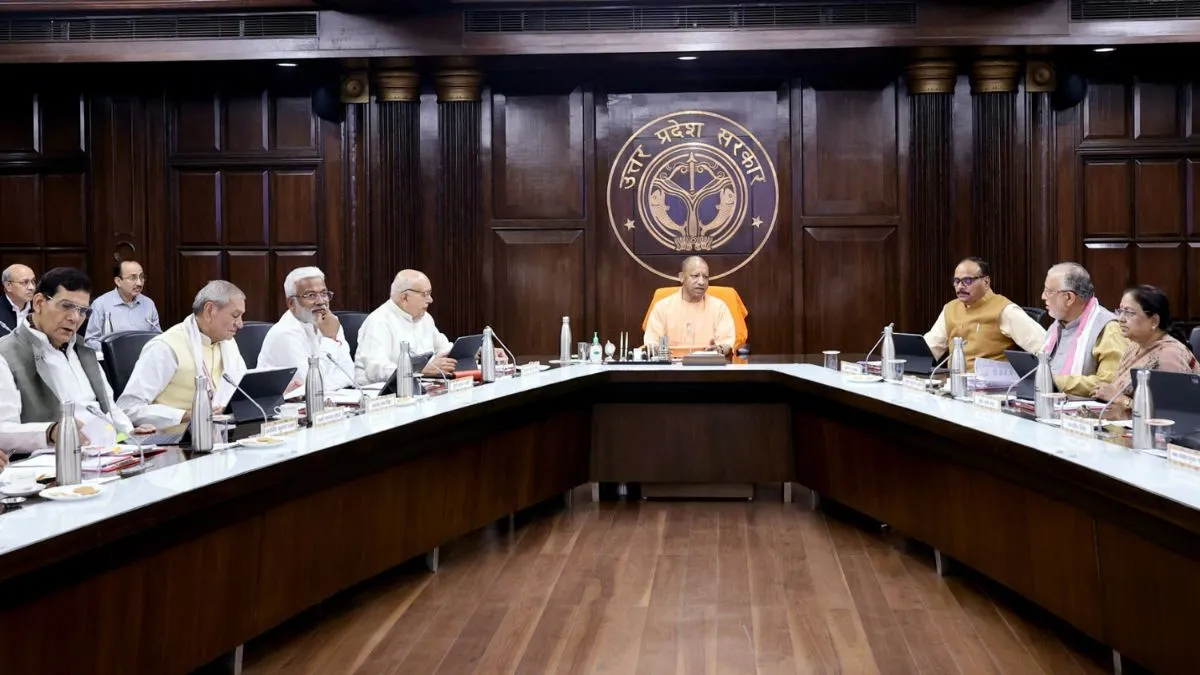
Uttar Pradesh Chief Minister Yogi Adityanath on Tuesday chaired a cabinet meeting at Lok Bhavan, where over 30 key proposals were approved. The state cabinet gave a nod to the Chief Minister Gram Transport Scheme–2026, a comprehensive plan designed to significantly improve mobility across villages in the state.
Under the scheme, 59,163 gram sabhas across Uttar Pradesh will be connected with bus services.
Announcing the decision, state Transport Minister Dayashankar Singh said the primary objective of the scheme is to establish direct transport links between villages and block, tehsil, and district headquarters, enabling rural residents to access education, healthcare, and other essential services more conveniently.
To ensure smooth implementation, the government will allow both the state transport corporation and private bus operators to run services under the scheme. Private operators will be permitted to operate buses on a contractual basis and will receive relaxations in permits and taxes as an incentive.
Applications from interested operators will be scrutinised and finalised by a district-level committee headed by the District Magistrate. The committee will also include the Chief Development Officer, the Assistant Regional Transport Officer (ARTO), and officials from the state transport corporation. The government has set a 45-day timeline to complete the selection process.
Trips to increase depending on demand
According to the operational plan, buses will depart from villages in the morning and reach district headquarters by 10:00 AM, ensuring that residents can complete official work during the day. The return services will operate between 4:00 PM and 8:00 PM. Depending on demand, the number of buses and trips may be increased.
The scheme is also expected to generate employment opportunities at the local level, as bus operations will primarily be handled by people from the same region.
Vehicles deployed under the scheme will be small buses with a seating capacity of 15 to 28 passengers and an approximate length of seven metres. The fleet will include diesel, CNG, and electric vehicles, while in the National Capital Region (NCR) only CNG or electric buses will be permitted to operate.
