
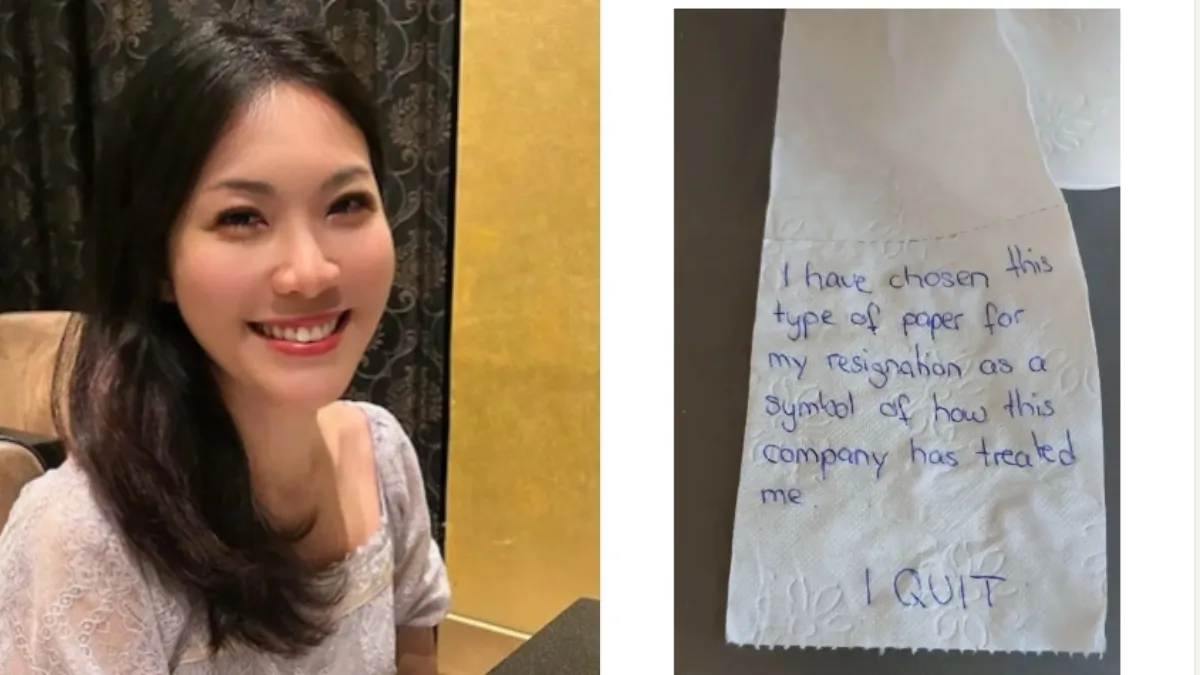
An employee at a Singaporean company wrote a resignation letter on toilet paper, which went viral on social media and sparked a discussion on toxic workplace culture.
The letter had been written on a strip of toilet paper, read as: “I have chosen this type of paper for my resignation as a symbol of this company has treated me. I QUIT."
Angela Yeoh, Director of Singapore-based talent acquisition company Summit Talent, posted an employee's resignation letter on LinkedIn. Yeoh did not identify the employee in her now-viral article, but she did disclose that it was written by a male employee.
Yeoh’s post began with a bold quote from the employee, who said: “I felt like toilet paper, used when needed, then discarded without a second thought."
“These were the exact words that stuck with me when a candidate explained why he was leaving his job," she wrote.
In her post, the businesswoman explained the importance of appreciation in the workplace: “Make your employees feel so genuinely appreciated that even when they decide to leave, they walk away with gratitude, not resentment. That kind of experience doesn’t speak to a lack of loyalty, it speaks volumes about the company’s culture."

“Appreciation isn’t just a tool for retention. It’s a reflection of how much a person is valued, not just for what they do but for who they are," she added.
To conclude the post, Yeoh wrote: “If people leave feeling undervalued, it’s time to reflect. Small changes in appreciation make a big impact. Start today."
Her post quickly garnered a lot of attention on LinkedIn. Several users commented on her post.
One user wrote: “Well said! Having said that, a company culture may be unhealthy, it is down to the manager to help create a safe and thriving space for the team."
"Sometimes, employees leave not because of the company, but because of the middle manager. And very often it is," another user wrote.
Disclaimer: (This information has been provided by a third party. India TV does not vouch for the authenticity of the claims made.)
ALSO READ: ChatGPT helps woman diagnose 4-year-old son's rare disease after 17 doctors failed