
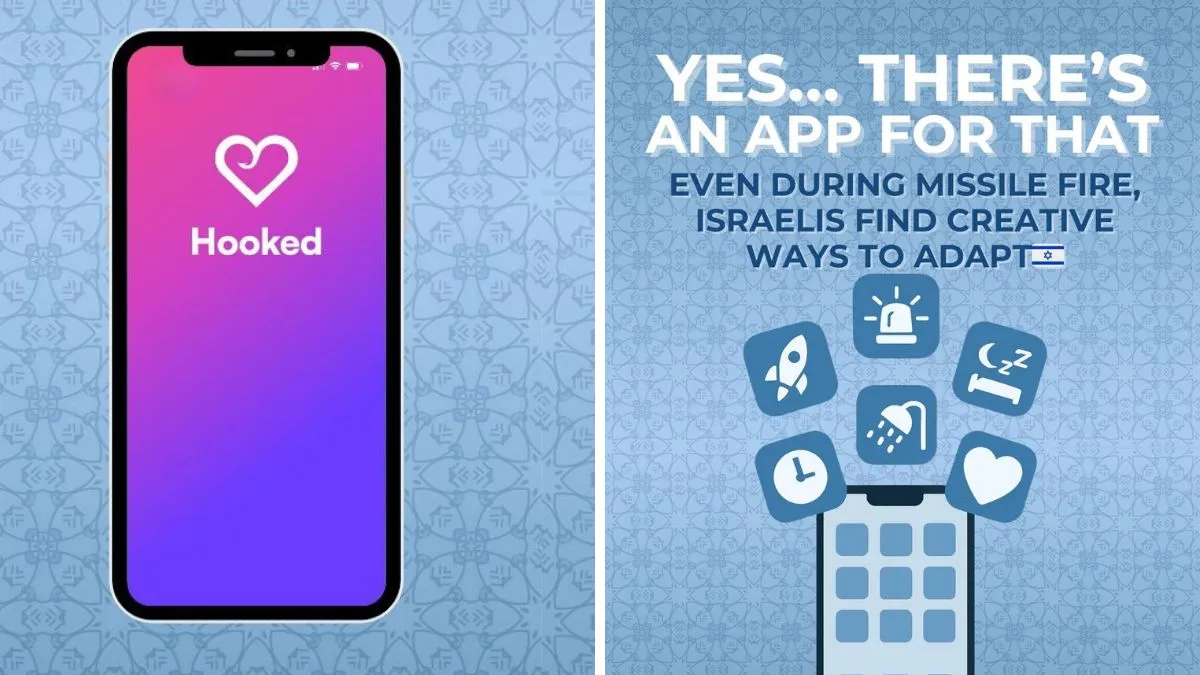
As tensions between Israel and Iran are still rising, a social media post made by Israel’s Ministry of Foreign Affairs has gone viral as it brought up a polarising concept, which is ‘bomb shelter dating apps’. The idea, which is part of a larger thread about new technological innovations being made during frequent missile alerts, is based on the idea that, despite the crisis, there is still innovation being made to help people live their lives.
Although there are people who see this as an interesting concept, there are also those who are questioning whether this is an appropriate tone considering the current circumstances.
What is the ‘bomb shelter dating’ concept all about
This concept is based on an application called Hooked, which is intended to be a speed-dating-style application. In the version highlighted online, QR codes are placed at the entrance of bomb shelters. When people enter during an air-raid siren, they can scan the code to view a list of other single users currently inside the same shelter.
The idea is meant to allow people taking refuge during missile alerts to connect with others nearby, turning an otherwise tense moment into an opportunity for conversation or companionship.
Part of a broader set of emergency apps
The post from Israel’s Ministry of Foreign Affairs framed the concept within a larger ecosystem of apps designed to help residents manage daily routines during periods of heightened security alerts. According to the ministry, several digital tools have emerged in response to frequent missile sirens. These include apps that help residents plan the safest time to take a shower between alerts, as well as trackers that monitor sleep disruption caused by repeated warning sirens.
The ministry said that these tools are "an example of how innovation can happen even in difficult circumstances."
Online reactions are mixed
The idea quickly gained traction on various social media sites, and users are reacting to it in several ways. Very few users saw it as an example of "how technology evolves in unusual circumstances," while others saw it as trivialising war and conflict with "dating in bomb shelters." One X user shared, "This is gross. People are dying. People are mourning. Don’t do this." Another one tweeted, "Now this is coping or more like copium overdose."

The conversation reflects a broader debate about how digital culture intersects with wartime experiences, particularly when content goes viral online.