
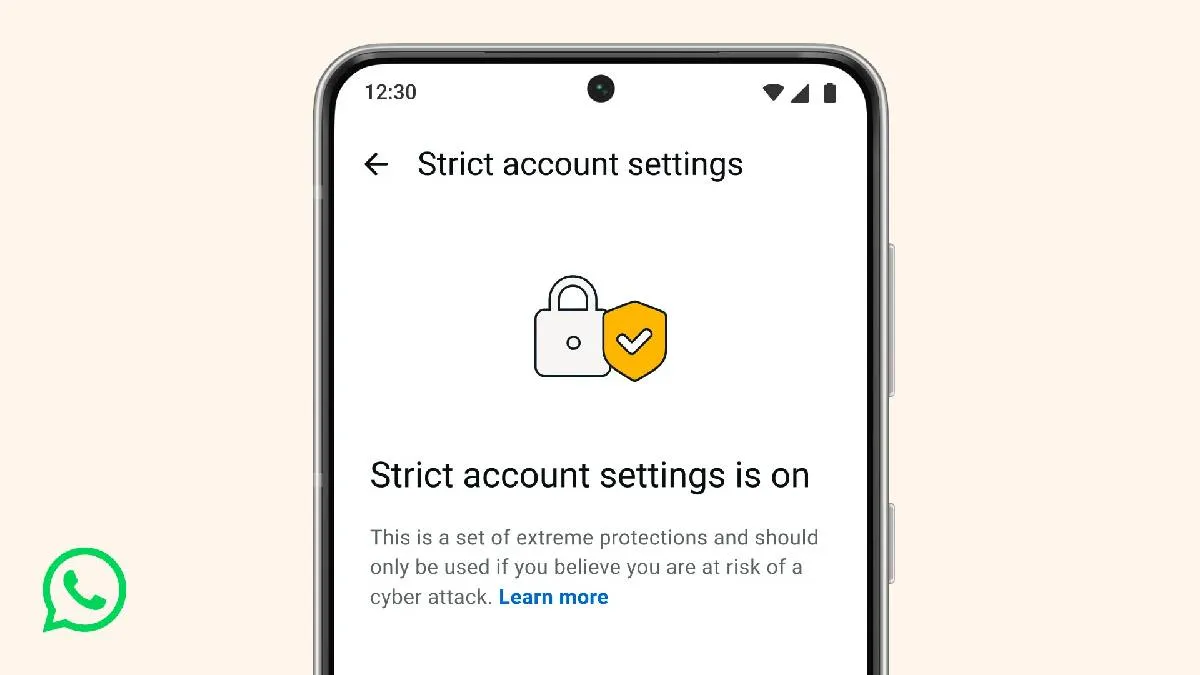
WhatsApp has rolled out a new security feature for its billions of users to help protect them from cyberattacks. The newly introduced feature is called “Strict Account Settings”, which activates a series of advanced security defences with a single tap. With this rollout, WhatsApp has become the latest major tech company to offer enhanced account protection, following similar initiatives by Google and Apple.
Who is the feature designed for?
According to WhatsApp, Strict Account Settings are primarily aimed at protecting users from rare and highly sophisticated cyberattacks. The company said the feature is especially useful for journalists, activists, and public-facing individuals who may be at higher risk of targeted surveillance or hacking attempts.
What Strict Account Settings do
Once enabled, the feature automatically activates multiple protective measures. These include blocking media files and attachments from unknown senders, disabling link previews, the thumbnails that appear when a URL is shared in a chat, and silencing calls from unknown contacts. WhatsApp said all three elements have been identified as potential vectors for surveillance and advanced cyberattacks.
One-Tap activation for existing security controls
While these security controls already exist individually on the platform, the new feature brings them together and enables them with a single tap. This simplifies the process for users who want stronger protection without manually adjusting multiple settings.
How to enable Strict Account Settings on WhatsApp
Users can enable Strict Account Settings by navigating to Settings > Privacy > Advanced within the WhatsApp app. If the option is not visible, users are advised to update the app to the latest version. If it still does not appear, the feature may not have reached their account yet, as it is being rolled out gradually and will become available to all users in the coming weeks.
Similar security features from Apple and Google
In 2022, Apple introduced Lockdown Mode, which the company described as an optional, extreme protection feature designed for a very small group of users who may face advanced digital threats. Lockdown Mode disables most message attachment types, link previews, and includes restrictions on FaceTime calls and web browsing.
Last year, Alphabet’s Android platform rolled out Advanced Protection Mode for users with heightened security awareness. Similar to Apple’s Lockdown Mode, Android’s feature prioritises security over convenience by restricting certain functionalities, including limiting the ability to download potentially risky apps from outside the Google Play Store.
ALSO READ: Union budget 2026: Telecom sector pushes for licence fee cuts, GST relief ahead of budget
