
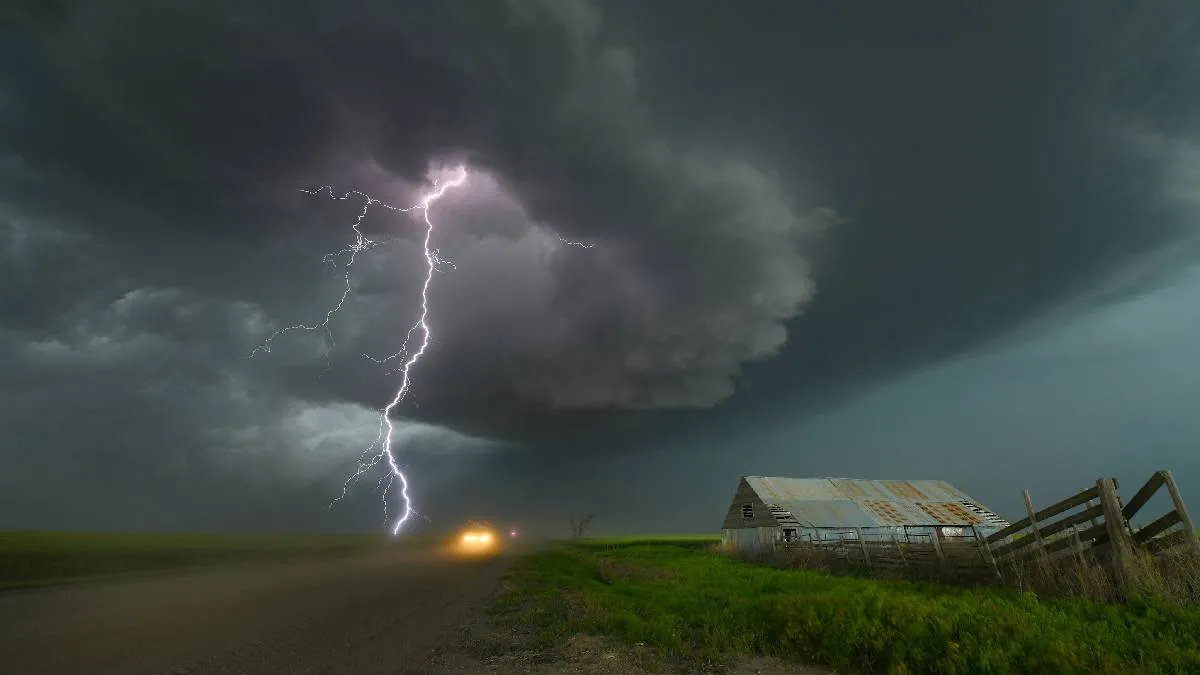
In North India, December and January are the coldest months of the year, known for their very low temperatures and thick fog. Sometimes, this chilly weather brings rain, which is caused by weather patterns from the Mediterranean Sea. While it's uncommon to see lightning during these winter rains in the north, the southern parts of India, like Tamil Nadu, Kerala, and coastal Andhra Pradesh, often get rain with strong lightning during this time.
The dangers of lightning
Lightning strikes are a significant safety hazard and a known cause of fatalities in India. During the monsoon season, numerous deaths are reported due to lightning strikes, particularly in states like Uttar Pradesh and Bihar. A lightning strike delivers a massive electrical shock that damages the nervous system, often leading to fatal cardiac or respiratory arrest.
Digital tools for safety: The DAMINI app
To help keep people safe from lightning, the India Meteorological Department (IMD) has introduced a special app that sends real-time alerts. This app, called DAMINI, was created by the Indian Institute of Tropical Meteorology (IITM) and comes with important features to help users stay informed and protected.
- Real-time Tracking: Provides the exact location of current lightning strikes.
- Predictive Alerts: Identifies probable locations for impending lightning within a 40 sq. km radius.
- Movement Tracking: Monitors the direction and speed of approaching thunderstorms.
- Safety Guidelines: Lists essential precautionary steps and general information to help users stay safe during a storm.
The app is available on Google Play Store and Apple App Store for download.
Integrated weather services
In an effort to make weather data more accessible, the IMD has integrated seven key services—including Current Weather, Nowcasts, City Forecasts, and Cyclone Warnings—into the 'UMANG' mobile app.
Additionally, the IMD has developed a suite of specialized apps for different sectors:
- 'MAUSAM': For general weather forecasting.
- 'Meghdoot': For disseminating agricultural advisories to farmers.
- Common Alert Protocol (CAP): Developed by the NDMA, this system is being implemented to ensure that emergency warnings reach the public instantly.
ALSO READ: Telecom in 2026: From tariff hike to satellite internet roll out, what you can expect next year
