
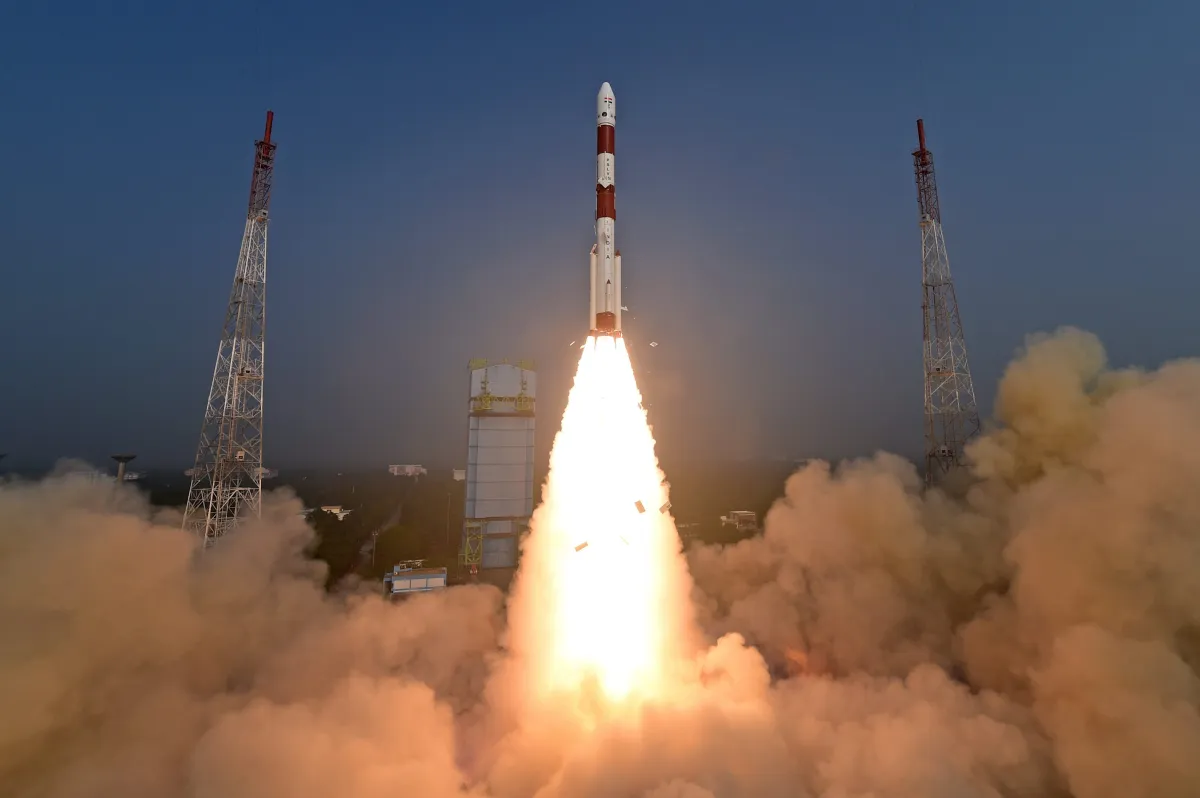
The Chairman of the Indian Space Research Organisation (ISRO), V. Narayanan, stated on Wednesday that the organisation is dedicated to ensuring the safety of citizens in the country, including the security of its land and sea borders. He mentioned that ISRO operates at least 56 functional satellites, with a significant number dedicated to the safety and security of the nation. Narayanan explained that ISRO's programs aim to leverage advanced space technology for the benefit of the common people across various fields such as telecommunications, education via remote learning, disaster warning and mitigation, weather forecasting, resource management, and ensuring food and water security, along with the overall safety of all citizens.
He emphasised the importance of monitoring the country's extensive coastline, which stretches nearly 11,500 kilometers, as well as its border areas. In response to an inquiry regarding ISRO's specific role in Operation Sindoor, Narayanan underscored that the organisation is actively engaged in various applications for security and safety, indicating that he could not divulge specific details.
Additionally, Narayanan mentioned that ISRO, in collaboration with other entities, holds the responsibility of safeguarding citizens and is committed to doing everything necessary within its capabilities. He also expressed that specific questions regarding ISRO's contributions should not be expected.
Regarding India’s space exploration initiatives, Narayanan disclosed that ISRO is currently focused on the Chandrayaan-4 mission, which aims to collect lunar surface samples and return them to Earth. He highlighted that this mission will enhance understanding of lunar geology and could assist in future space expeditions.
He further indicated that ISRO is collaborating with Japan on Chandrayaan-5, which is anticipated to be a more extensive mission than its predecessors. The launch weight for Chandrayaan-5 is expected to reach 6,400 kg, significantly higher than the 5,000 kg of Chandrayaan-3. Narayanan explained that the new rover for this mission will weigh 350 kg, a considerable increase from the previous rover's 25 kg. He noted that this mission phase will extend the rover’s operational duration from just 14 days to a full 100 days, allowing for a thorough exploration of the lunar surface.
In conclusion, he remarked that ISRO is also advancing its Gaganyaan mission, with the first uncrewed mission scheduled for launch later this year, followed by two crewed missions planned for the first quarter of 2027. Furthermore, he revealed that there would be two missions conducted in partnership with NASA.
ALSO READ: What led to the failure of PSLV-C61 mission? Know what ISRO chief V Narayanan said
Input from PTI
