
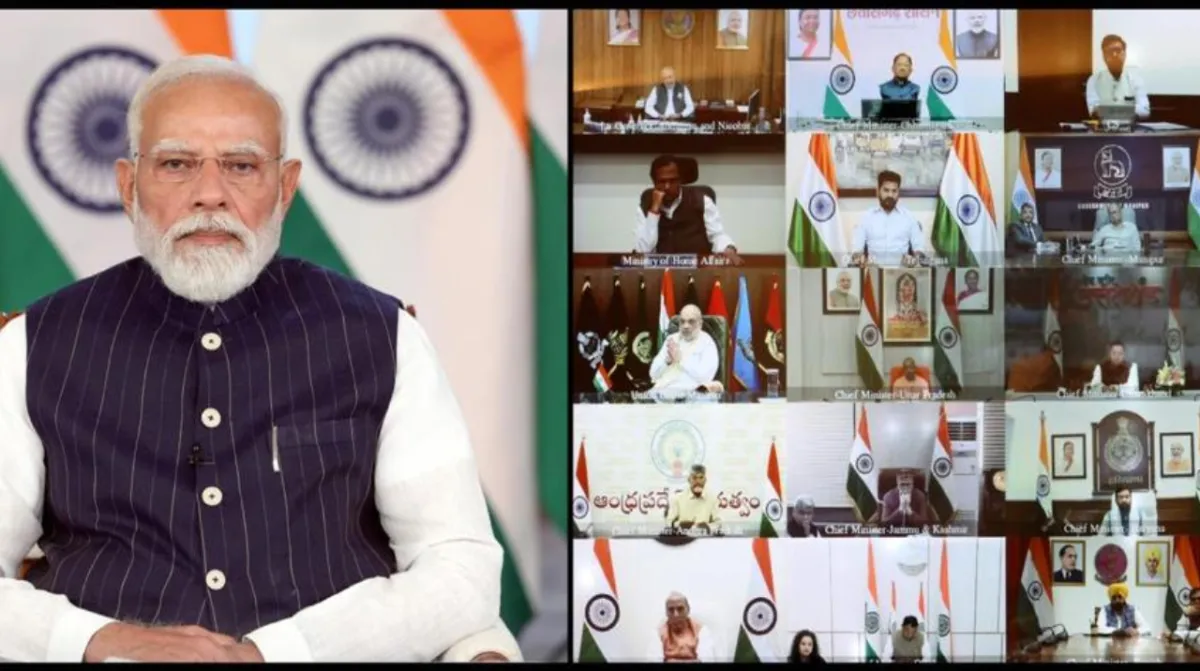
Prime Minister Narendra Modi has called upon states to carry out a collective response as they did in dealing with the COVID-19 pandemic, to tackle the challenging energy supply situation posed by the West Asia conflict, expressing optimism that "Team India will overcome this situation".
The remarks came during a virtual meeting of chief ministers and lieutenant governors chaired by the prime minister on Friday to review preparedness in the wake of the conflict and its potential impact on India.
The Prime Minister expressed his appreciation for the valuable suggestions shared by all Chief Ministers, noting that these inputs would be instrumental in effectively managing the evolving situation. He emphasised the need for vigilance, preparedness, and coordinated action to address the challenges ahead.

PM Modi highlights priorities
Referring to the ongoing situation in West Asia, PM Modi said India has prior experience in dealing with similar global disruptions. He stressed that the government’s priorities are to maintain economic and trade stability, ensure energy security, safeguard the interests of citizens, and strengthen industry and supply chains.
He also recalled the collective response during the Covid-19 pandemic, when the Centre and States worked together as “Team India” to mitigate the impact on supply chains, trade, and daily life. He underscored that the same spirit of cooperation and coordination remains India’s greatest strength in navigating the present circumstances.
PM Modi also highlighted that the situation remains dynamic, necessitating continuous monitoring and adaptive strategies. He said that an Inter-Ministerial Group has been operational since 3 March, reviewing the situation on a daily basis and taking timely decisions.
Centre–state coordination and implementation
Emphasising the critical role of States, Narendra Modi noted that effective implementation of decisions takes place at the State level. He called for constant communication and coordination between the Centre and States, along with timely sharing of information and joint decision making, so that responses remain swift and well-aligned.
Focus on supply chains, act against hoarding and misinformation
The Prime Minister urged States to ensure the smooth functioning of supply chains and to take strict measures against hoarding and profiteering. He highlighted the importance of activating control rooms at State and District levels and maintaining administrative alertness to prevent disruptions. He also stressed the need for advance planning in the agriculture sector, particularly in monitoring fertiliser storage and distribution, so that farmers do not face difficulties during the upcoming Kharif season.
He cautioned against the spread of misinformation and rumours, stating that the timely dissemination of accurate and credible information is essential to prevent panic. He also advised vigilance against online frauds and fake agents. The Prime Minister called for special attention in border and coastal States to address any emerging challenges related to shipping, essential supplies, and maritime operations.
Public confidence and citizen support mechanisms
He underscored the importance of maintaining public confidence, noting that assurance regarding the availability of essential commodities would help prevent unnecessary panic among citizens. He further suggested that States with citizens in West Asia should activate helplines, appoint nodal officers, and establish district-level support systems to assist affected families and ensure the timely flow of information.
Economic stability and industry engagement
The Prime Minister stated that efforts undertaken in recent years to strengthen India’s economic and supply systems are proving beneficial in the current context. He called for continued engagement with industry and MSMEs to address their concerns and ensure stability in production and employment. He also emphasised the need for robust coordination mechanisms at all levels, including regular reviews at the level of Chief Secretaries and continuous monitoring at the district level, to enable a quick response to evolving situations.
Long-term preparedness
He called for a parallel focus on immediate response and long-term preparedness. The Prime Minister urged States to accelerate efforts in promoting alternative energy sources such as biofuels, solar energy, the GOBARdhan initiative, electric mobility, as well as expanding piped natural gas connections. He also highlighted the importance of enhancing domestic exploration of oil and natural gas, with active cooperation from States.
Shared responsibility and ‘Team India’ approach
Reiterating that addressing the challenge is a shared responsibility, the Prime Minister expressed confidence that, working together as “Team India,” the nation will successfully overcome the situation.
During the meeting, Rajnath Singh highlighted that the government has been working actively under the leadership of the Prime Minister to tackle the crisis. He pointed to steps such as ensuring the timely availability of LPG and reducing excise duties on petrol and diesel, while also stressing the need for collective action by all States, Union Territories, and the Centre.
Chief ministers appreciated the measures taken by the central government under the Prime Minister’s leadership to address the situation. They also praised his diplomatic outreach to various countries during the crisis to safeguard the well-being of Indian citizens abroad.
Chief ministers of states heading into elections are not attending the meeting due to the enforcement of the Model Code of Conduct (MCC) ahead of the assembly elections in April.
This marks the first time Narendra Modi has convened a meeting with chief ministers specifically on the West Asia conflict, which began on February 28 when the United States and Israel launched coordinated strikes on Iran. Since then, Tehran has retaliated with missile and drone attacks targeting Israel as well as several Gulf countries.