
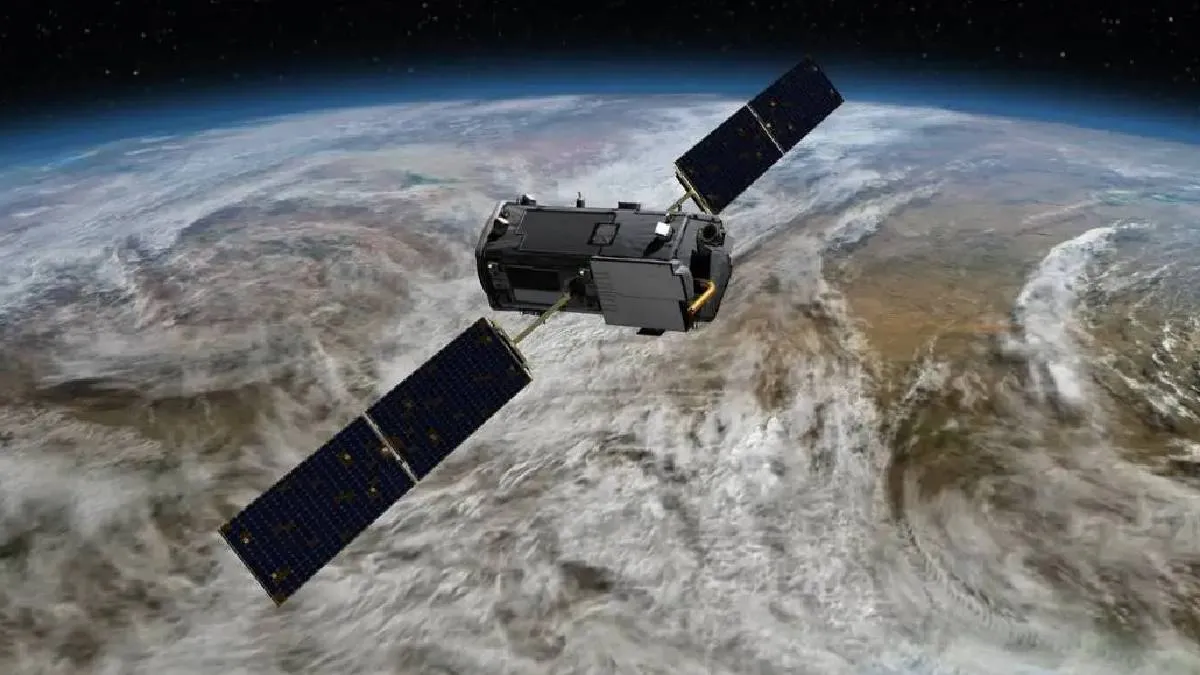
The Trump administration is moving to terminate two NASA missions that monitor a potent greenhouse gas and plant health, a decision that could cut off a vital source of data for scientists, policymakers, and farmers. The president’s budget request for the 2026 fiscal year includes no funding for the Orbiting Carbon Observatories. These missions are capable of precisely tracking where carbon dioxide is being emitted and absorbed and monitoring crop health.
In an email statement on Wednesday, NASA said the missions were "beyond their prime mission" and were being terminated "to align with the President's agenda and budget priorities".
However, David Crisp, a retired NASA scientist who led their development, argued that the missions are a "national asset" that should be preserved. The systems—which include a free-flying satellite launched in 2014 and an instrument attached to the International Space Station since 2019—are more sensitive and accurate than any other systems currently in operation or planned globally.
Mission key discoveries
Crisp highlighted some of the missions' key discoveries, such as finding that the Amazon rainforest now emits more carbon dioxide than it absorbs, while boreal forests in Canada and Russia absorb more than they emit. The observatories can also detect the ‘glow’ of photosynthesis in plants, which helps to monitor drought and predict food shortages that can lead to civil unrest and famine. "This is really critical," Crisp said. "We are learning so much about this rapidly-changing planet".
Jonathan Overpeck, a climate scientist at the University of Michigan, called the decision "extremely shortsighted," stating that the data provided by these satellites is "critical for managing growing climate change impacts around the planet, including in the US".
Looking to Congress
Crisp and other advocates hope Congress will vote to preserve funding for the missions, which is currently secured through the end of the fiscal year on September 30. While a House bill aligns with the president's request to eliminate the missions, a Senate version would preserve them. With Congress in recess, it is uncertain if a budget will be passed before the new fiscal year begins on October 1. If not, Congress could pass a resolution to continue current funding, though some lawmakers fear the Trump administration could delay or withhold those funds.
Last month, Congressional Democrats warned acting NASA Administrator Sean Duffy that it would be illegal to terminate missions or withhold funds already appropriated by Congress.
According to climate scientist Michael Mann of the University of Pennsylvania, the administration’s move to eliminate funding is consistent with other actions to suppress or cut climate science. "The principle seems to be that if we stop measuring climate change, it will just disappear from the American consciousness," Mann said.
Backup plan
As a backup plan, Crisp and others are trying to form a coalition of outside partners, including groups from Japan and Europe, to fund and operate the instrument on the space station. NASA announced it will accept outside proposals through August 29.
The free-flying satellite, which covers more of the globe, is at risk of being de-orbited and burning up in the atmosphere. National Public Radio was the first to report that NASA employees were already making plans to end the missions. Crisp said advocates hope NASA will also allow outside control of the satellite, though legal hurdles exist because it would mean ceding control of a U.S. satellite to a group that could include foreign partners.
"We are going out to billionaires. We are going out to foundations," Crisp said. "But... it is a really, really bad idea to try and push it off onto private industry or private individuals or private donors. It just does not make sense".
ALSO READ: SpaceX delivers four astronauts to space station in 15 hours
