
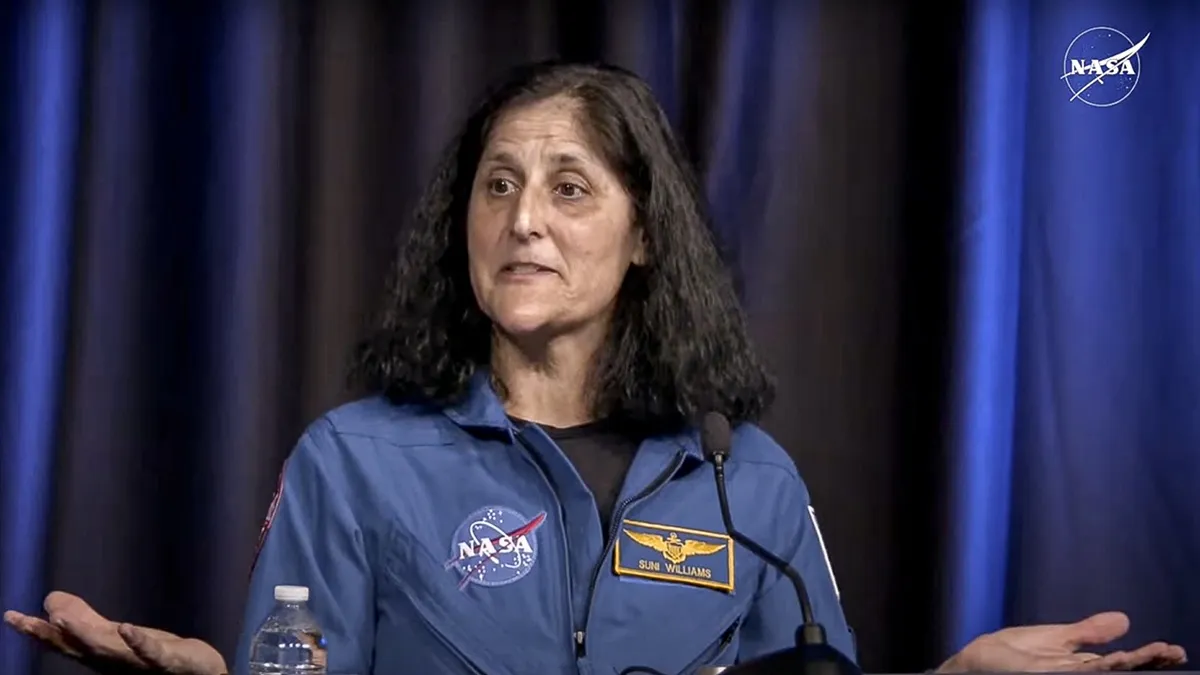
National Aeronautics and Space Administration's (NASA) trailblazing astronaut Sunita Williams, renowned for her record-breaking spacewalks and a harrowing nine-month ordeal aboard the International Space Station (ISS), has retired. The agency confirmed her departure on Tuesday, effective from December 31, 2025, capping a stellar career that spanned over 608 days in space. At the age of 60, the former Navy captain leaves behind a legacy of endurance amid Boeing's Starliner setbacks.
The Starliner Saga: From 8-day mission to 9-month ordeal
Williams and fellow astronaut Barry "Butch" Wilmore launched in June 2024 aboard Boeing's debut crewed Starliner capsule, intended as an eight-day test flight to the ISS. Technical woes- primarily thruster malfunctions and helium leaks- grounded the spacecraft, stranding them for over nine months. Wilmore departed NASA last summer, but Williams persevered until their dramatic return in March 2025 via SpaceX's Crew Dragon, highlighting NASA's backup strategies with rival providers.
A career of milestones and records
Over 27 years with NASA, Williams flew three ISS missions, accumulating 608 days in orbit—a testament to her grit. She holds the women's record for spacewalk time: 62 hours across nine excursions, during which she repaired solar arrays, swapped experiments, and advanced station operations. Her Navy background as a test pilot fueled her poise under pressure, making her a symbol of resilience in human spaceflight.
Tributes from NASA leadership and Boeing's road ahead
New NASA Administrator Jared Isaacman hailed Williams as "a trailblazer in human spaceflight," congratulating her on a "well-deserved retirement" in an official statement. Boeing, facing scrutiny over Starliner, plans a crewless cargo test later this year to iron out thruster and propulsion issues before risking passengers again. This uncrewed run aims to restore confidence in the program, which NASA co-developed to diversify U.S. space access.

Legacy of perseverance in the new space era
Williams' retirement closes a chapter on NASA's post-Shuttle transition, underscoring the risks of commercial crew vehicles. Her story inspires future explorers, proving that even extended isolation 250 miles above Earth can't dim a pioneer's spirit. As Boeing refines Starliner, her contributions ensure safer paths for those who follow.