
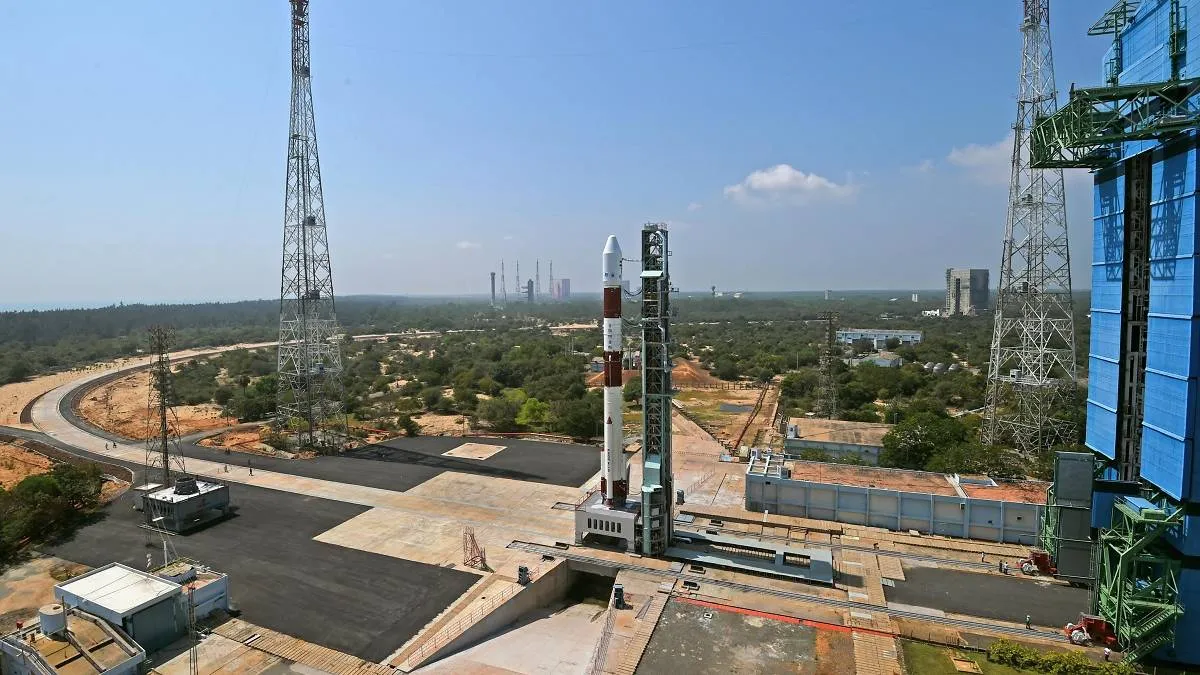
ISRO is gearing up for its first launch of the new year, with the PSLV-C62 mission scheduled to lift off on January 12 from Sriharikota, Andhra Pradesh. According to an ISRO official, the mission's primary payload is the EOS-N1, an imaging satellite developed by the Defence Research and Development Organisation (DRDO) for strategic purposes.
"The Launch of PSLV-C62 Mission is scheduled on 12 January 2026 at 10:17 hrs IST from First Launch Pad (FLP), SDSC SHAR, Sriharikota," ISRO said in a post on 'X'.
The rocket will also carry a small experimental device, the Kestrel Initial Demonstrator (KID). Developed by a Spanish startup, the KID will remain attached to the rocket's PS-4 stage. Additionally, sources confirmed that 17 commercial payloads from startups and research institutions across India, Mauritius, Luxembourg, the UAE, Singapore, Europe, and the United States are manifested for this flight.
Public viewing and registration
Space enthusiasts can witness the launch live from the Launch View Gallery at SDSC SHAR, Sriharikota. Registration is available online at lvg.shar.gov.in. ISRO advises visitors to have a government-issued ID (such as an Aadhaar card or driving license), a mobile number, and an email ID ready for a quick and seamless registration process.
ISRO recent successes
This upcoming mission follows a highly successful end to 2025. On December 24, ISRO launched the LVM3-M6 mission, delivering the BlueBird Block-2 satellite into orbit. This spacecraft is the heaviest payload ever deployed into Low Earth Orbit (LEO) by an LVM3 rocket. Featuring a massive 223-square-meter phased array antenna, it is also the largest commercial communications satellite ever placed into LEO.
The LVM3 continues to prove its reliability, having previously launched high-profile missions such as Chandrayaan-2, Chandrayaan-3, and two OneWeb constellations. The December 24 success followed shortly after the LVM3-M5/CMS-03 mission, which was successfully completed on November 2, 2025.
ALSO READ: ISRO’s dust detector successfully tracks interplanetary particles
